Sitharaman: India Must Lead Global Knowledge Economy, Not Just Host It
Synopsis
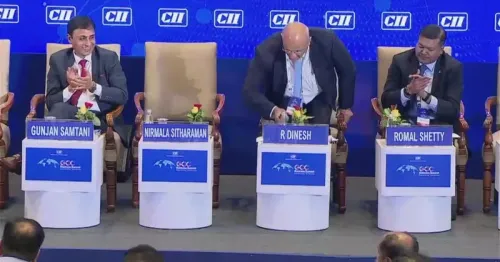
At the CII National GCC Business Summit 2026, Finance Minister Nirmala Sitharaman declared that India's ambition is not just to host Global Capability Centres but to lead next-generation technology creation — framing GCC growth as a pillar of the Viksit Bharat vision for 2047.
Key Takeaways
Nirmala Sitharaman spoke at the CII National GCC Business Summit 2026 on 9 July 2026 , calling for India to move 'from capability to leadership' in the global knowledge economy.
She described India's GCC journey as 'much larger than the story of one successful sector,' linking it to long-term economic resilience and strategic relevance.
India's GCC ecosystem has grown over two decades from low-end BPO services to high-value engineering, analytics and product development centres.
Policy foundations include the Digital India programme ( 2015 ) and liberalisation of FDI norms allowing 100 per cent automatic investment in IT and related sectors during 2014–2016 .
The Finance Minister explicitly tied GCC ambitions to the Viksit Bharat goal of making India a prosperous, innovative and globally respected developed economy by 2047 .
Follow-up policy measures in the next Union Budget and DPIIT guidelines on R&D incentives and data protection are being closely watched.
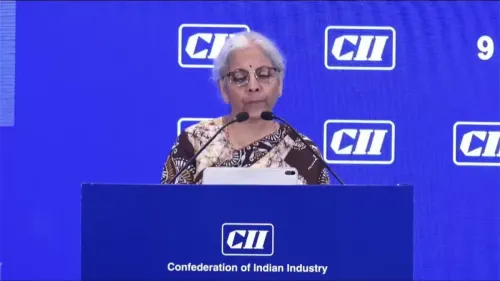
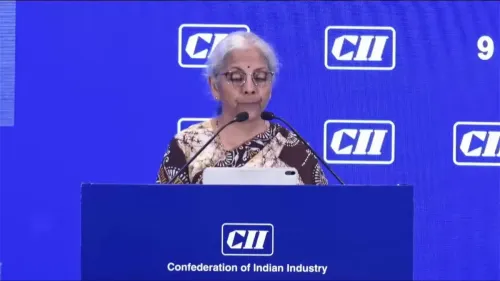
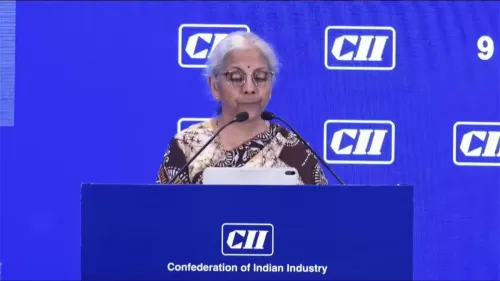
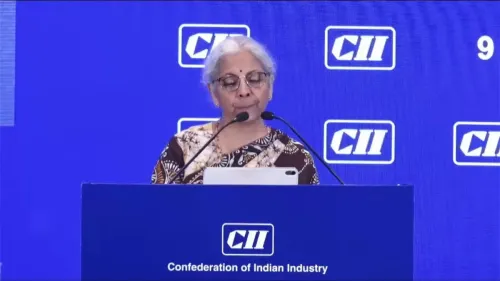
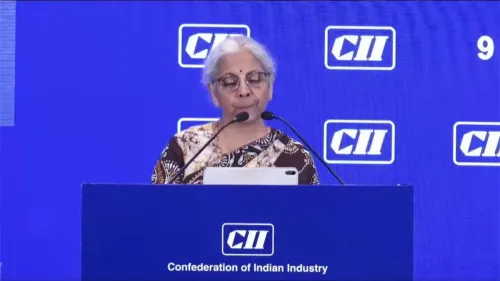
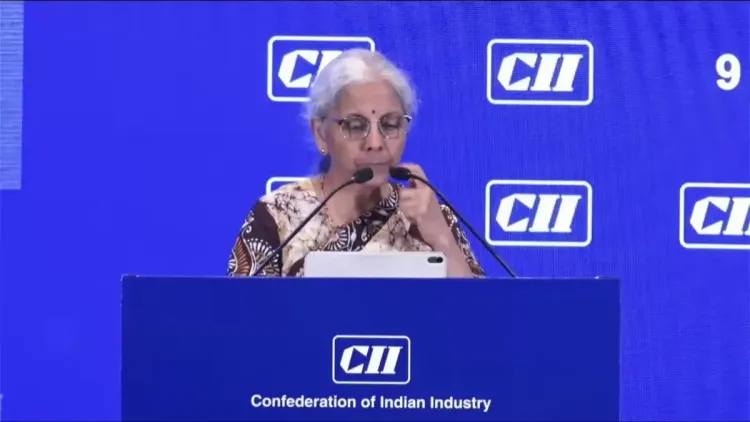
Union Finance Minister Nirmala Sitharaman on Thursday, 9 July 2026 called on India to move beyond merely hosting Global Capability Centres (GCCs) and instead shape next-generation technologies, products and enterprises, speaking at the CII National GCC Business Summit 2026 in her capacity as the country's chief economic steward.
Context
Addressing the summit organised by the Confederation of Indian Industry (CII), Sitharaman framed India's GCC story as far larger than a single successful sector. 'India's GCC journey is much larger than the story of one successful sector. It is about making India indispensable to the world's knowledge economy and strengthening our long-term economic resilience,' she said. The remarks signal a deliberate elevation of ambition — from service provider to strategic architect of global innovation.
She added that India's aspiration is 'not merely to host the world's capability centres, but to shape the next-generation technologies, products and enterprises of the future,' describing this as the path by which 'India moves from capability to leadership.'
Policy Backdrop
India's rise as a GCC destination has been two decades in the making. The country evolved from a hub for low-end BPO and software services into the world's largest concentration of high-value centres focused on engineering, analytics and product development. The Digital India programme launched in 2015 and the liberalisation of FDI norms in the services sector during 2014–2016 — which permitted 100 per cent automatic investment in IT and related areas — were foundational policy moves that accelerated this transformation.
Successive governments have framed GCC growth as part of a broader transition toward a knowledge-driven economy, one that reduces external vulnerabilities and deepens India's strategic leverage in global value chains. Sitharaman's remarks at the CII summit extend this policy lineage into an explicit call for technological leadership.
Stakeholders and Impact
Multinational corporations that have already established or are planning GCCs in India are the most immediate stakeholders, as the Finance Minister's remarks signal continued policy support for the sector. IT and R&D professionals — a large and growing workforce — stand to benefit from an environment that the government is positioning as a launchpad for high-value, innovation-led roles rather than execution-only functions.
State governments, which compete intensely to attract GCC investments through land, infrastructure and talent incentives, will also be watching for any follow-up fiscal or regulatory measures. Sitharaman linked the GCC push directly to the broader Viksit Bharat vision — the government's national goal of transforming India into a developed, prosperous and globally respected economy by 2047.
What's Next
The Finance Minister's address sets a clear directional signal ahead of the next Union Budget cycle and anticipated updates to guidelines from the Department for Promotion of Industry and Internal Trade (DPIIT). Observers will track whether R&D tax incentives, data-protection frameworks and intellectual property provisions are strengthened to support India's transition from capability delivery to product and technology creation.
If policy follows rhetoric, India's GCC ecosystem could see a structural shift — one that redefines the country's role in global value chains from an efficient back office to an originator of the technologies that power the next decade of global business.
Point of View
Not a short-term jobs play. Whether fiscal instruments in the next Budget match the rhetorical ambition will be the real test of this strategic pivot.
NationPress
8 Oct 2026
Frequently Asked Questions
What did Nirmala Sitharaman say at the CII GCC Summit 2026?
Finance Minister Nirmala Sitharaman said India's goal is not merely to host Global Capability Centres but to shape next-generation technologies, products and enterprises, framing this as how India moves 'from capability to leadership' in the global knowledge economy.
What is a Global Capability Centre (GCC) in India?
A Global Capability Centre is an offshore unit set up by a multinational corporation in India to handle high-value functions such as engineering, R&D, analytics and product development. India hosts the world's largest concentration of such centres.
What is Viksit Bharat and how does it relate to GCCs?
Viksit Bharat is the government's national vision to transform India into a developed, prosperous and globally respected economy by 2047. Sitharaman explicitly linked India's GCC ambitions to this goal, describing GCC leadership as an important step toward achieving it.
What policies helped India become a GCC hub?
Key policy milestones include the Digital India programme launched in 2015 and the liberalisation of FDI norms during 2014–2016, which allowed 100 per cent automatic foreign investment in IT and related sectors, accelerating the establishment of GCCs.
What policy changes can be expected for India's GCC sector?
Observers are watching for R&D tax incentives, updated data-protection frameworks and strengthened intellectual property provisions in the next Union Budget and through DPIIT guidelines, which could support India's shift from capability delivery to technology creation.