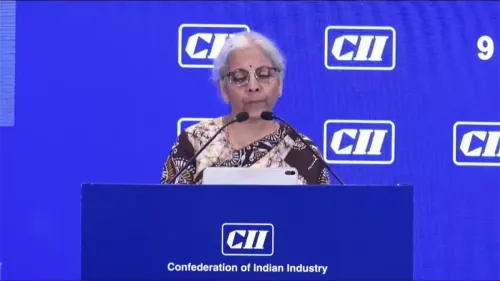
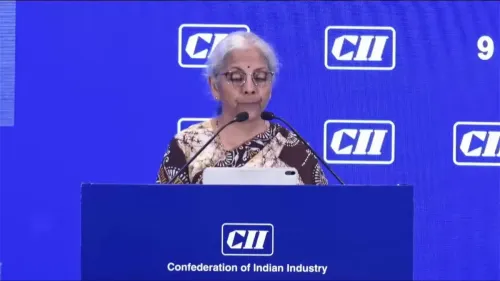
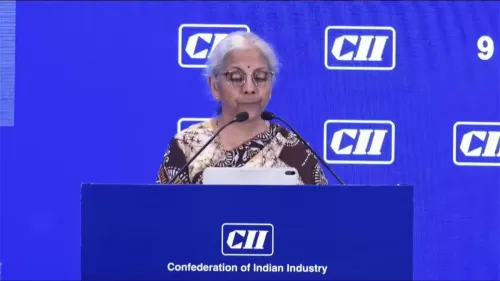
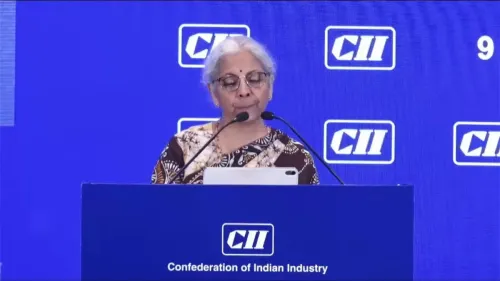
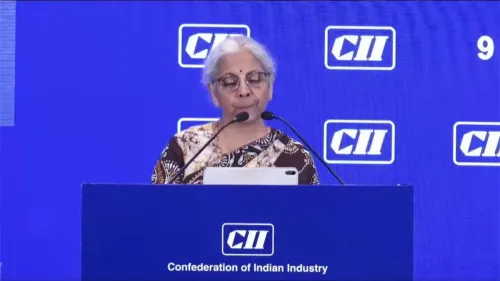
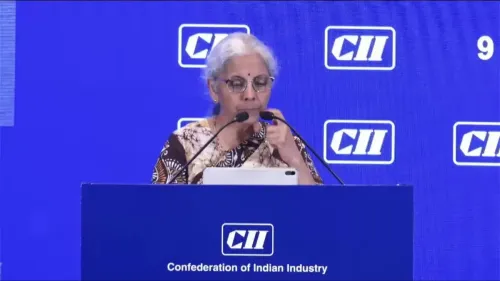
FM Sitharaman Addresses CII National GCC Business Summit 2026

Synopsis
Union Finance Minister Nirmala Sitharaman addressed the CII National GCC Business Summit 2026 on 9 July, spotlighting India's rapidly expanding Global Capability Center ecosystem. The address continues the Finance Ministry's direct engagement with apex industry on services exports, investment climate, and regulatory policy central to India's economic competitiveness.
Key Takeaways
Nirmala Sitharaman addressed the CII National GCC Business Summit 2026 on 9 July 2026 , streamed live on X.
The summit focuses on Global Capability Centers , the offshore innovation and delivery hubs of multinational corporations operating in India.
CII is India's apex industry body and a regular platform for Finance Ministry engagement on economic policy.
India's GCC sector has grown into a major contributor to services exports and skilled employment, anchored in cities like Bengaluru and Hyderabad .
The Finance Ministry's presence at a dedicated GCC summit signals the sector's continued priority in India's economic planning ahead of the next Union Budget cycle.
Union Finance Minister Nirmala Sitharaman addressed the CII National GCC Business Summit 2026 on Thursday, 9 July 2026, engaging directly with industry leaders on the expanding role of Global Capability Centers in India's services economy. The address, streamed live, underscores the Finance Ministry's continued direct engagement with apex industry bodies on economic competitiveness and investment policy.
Context
The Confederation of Indian Industry (CII) convened its National GCC Business Summit 2026 to bring together multinational corporations, services sector professionals, and policymakers around the theme of Global Capability Centers — the offshore delivery and innovation hubs that multinationals operate from Indian cities. Sitharaman has been a regular presence at CII forums since assuming charge of the Finance Ministry in 2019, using such platforms to signal the government's policy direction on investment and business climate.
Global Capability Centers, commonly referred to as GCCs, have grown from back-office support units into full-fledged centres handling research, analytics, engineering, and technology functions for global parent companies. The sector has become a significant contributor to India's services exports and white-collar employment.
Policy Backdrop
India's GCC ecosystem has expanded steadily over two decades, underpinned by progressive foreign direct investment liberalisation, IT export incentives, and infrastructure development in technology hubs such as Bengaluru, Hyderabad, Pune, and Chennai. Successive administrations have treated GCCs as a strategic pillar of the services export agenda, with regulatory easing enabling multinationals to deepen their India footprint.
The Finance Ministry has a direct stake in GCC policy through taxation frameworks, special economic zone regulations, and the broader ease-of-doing-business agenda. Sitharaman's presence at a dedicated GCC summit signals that the sector remains a priority in the government's economic planning, particularly as India competes with other emerging markets for high-value services mandates from global corporations.
Stakeholders and Impact
The summit's primary audience — multinational companies operating or planning GCCs in India, domestic IT and business-process firms, and industry associations — has a direct interest in any signals from the Finance Ministry on taxation, talent policy, and regulatory frameworks. CII, as an apex body representing a broad cross-section of Indian industry, serves as a key intermediary between the private sector and policymakers on these issues.
For the wider services workforce, the trajectory of GCC growth has tangible implications: the sector is among the largest employers of skilled professionals in metropolitan India. Any policy measures announced or foreshadowed at such summits can influence hiring, investment, and expansion decisions by global firms.
What's Next
Industry observers and policy analysts will watch for any specific references to GCC incentives, regulatory changes, or budgetary provisions that may emerge from or be signalled at this summit. With the next Union Budget cycle approaching, statements made at high-profile CII events have historically served as early indicators of the government's sectoral priorities. Subsequent CII consultations and Finance Ministry communications will be closely tracked for follow-through on themes raised at the 2026 summit.
Point of View
Which has become central to India's GDP and export story. By appearing at a summit dedicated specifically to GCCs, the government signals that it views these multinational hubs not as incidental beneficiaries of IT policy but as a strategic asset worth cultivating at the highest level. This engagement also serves a pre-Budget signalling function: industry associations use such forums to present wish-lists, and ministers use them to test policy messaging. The broader arc here is India's effort to move up the GCC value chain — from cost-arbitrage back offices to high-value innovation centres — a transition that requires active policy support on talent, taxation, and infrastructure.
NationPress
8 Oct 2026
Frequently Asked Questions
What is the CII National GCC Business Summit 2026?
The CII National GCC Business Summit 2026 is an industry event organised by the Confederation of Indian Industry focused on Global Capability Centers — the offshore hubs that multinational companies operate in India for technology, research, and business functions.
What are Global Capability Centers in India?
Global Capability Centers, or GCCs, are units set up by multinational corporations in India to handle functions such as technology development, analytics, finance, and research. They have grown from back-office support roles into strategic innovation hubs and are major employers of skilled professionals in cities like Bengaluru and Hyderabad.
Why did Finance Minister Nirmala Sitharaman address a GCC summit?
The Finance Ministry has a direct role in shaping GCC policy through taxation frameworks, FDI regulations, and the ease-of-doing-business agenda. Sitharaman's address reflects the government's strategic interest in growing India's GCC ecosystem as a driver of services exports and employment.
What is CII and why does it host such summits?
The Confederation of Indian Industry is India's apex industry association. It regularly convenes policy summits with government leaders to facilitate dialogue between the private sector and policymakers on economic and regulatory matters.
What should we watch for after Sitharaman's GCC summit address?
Analysts will monitor for any GCC-related measures in the next Union Budget, follow-up policy statements from the Finance Ministry, and subsequent CII consultations on services export incentives and regulatory frameworks for multinational operations in India.