Mandaviya: Sansad Khel Mahakumbh links sports to fitness in villages
Synopsis
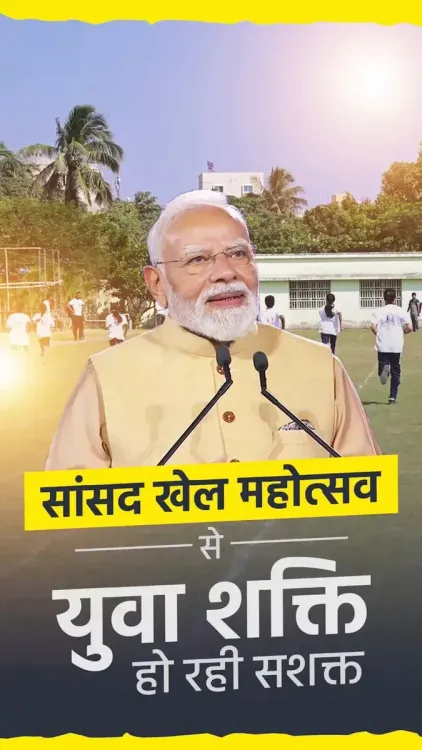
Sports Minister Mansukh Mandaviya on 9 July 2026 quoted PM Modi saying Sansad Khel Mahakumbh events are linking sports with fitness in villages across India, underscoring the government's decentralised, grassroots-first approach to sports promotion.
Key Takeaways
Mansukh Mandaviya shared a statement by PM Narendra Modi on 9 July 2026 highlighting the Sansad Khel Mahakumbh's role in grassroots sports.
The Sansad Khel Mahakumbh is a constituency-level multi-sport event organised by Members of Parliament to promote village-level sports participation.
The initiative is part of a broader policy framework that includes the Khelo India scheme (launched 2017 ) and the Fit India Movement (announced 2019 ).
The government's stated goal is to link sports with fitness at the village level, targeting rural youth and panchayats as primary beneficiaries.
State-level coordination on Khelo India 2.0 guidelines and the upcoming Union Budget sports allocation are the key near-term policy signals to watch.
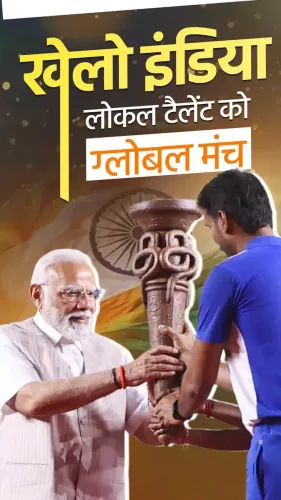
Union Labour and Sports Minister Mansukh Mandaviya on Thursday, 9 July 2026 shared a statement by Prime Minister Narendra Modi highlighting how constituency-level sporting events are connecting fitness with sports culture at the grassroots level across India.
Quoting PM Modi, the minister wrote on X: 'Sansad Khel Mahakumbh jaise aayojanon se gaon-gaon mein sports ko fitness se joda ja raha hai' — meaning, 'Through events like Sansad Khel Mahakumbh, sports is being linked to fitness in every village.'
Context
The Sansad Khel Mahakumbh is a constituency-level multi-sport competition organised by Members of Parliament to encourage mass participation in sports at the village and block levels. The initiative is designed to bring competitive sporting activity directly to rural communities rather than confining it to urban centres or established academies.
The post, shared on the evening of 9 July 2026, comes as the government continues to position sports promotion as a public health and community-development tool, not merely an elite pursuit.
Policy Backdrop
The Sansad Khel Mahakumbh fits within a broader policy architecture that includes the Khelo India scheme, launched in 2017, which aims to develop sports infrastructure, identify talent, and run competitions from the district to the national level. The scheme was conceived explicitly to widen the talent pipeline beyond traditional urban strongholds.
Complementing it is the Fit India Movement, announced in 2019, which encourages daily physical activity and seeks to embed a fitness culture across all age groups. Together, these two programmes form the policy spine on which constituency-level events like the Sansad Khel Mahakumbh are threaded.
The central government's approach has been to decentralise sports promotion by involving elected representatives — Members of Parliament and local bodies — so that outreach is both wider and more accountable to local conditions.
Stakeholders and Impact
Rural youth and village panchayats are the primary stakeholders of this initiative. By anchoring competitions at the constituency level, the programme lowers the barrier to entry for young athletes who may lack the resources or connections to access state or national-level competitions directly.
The fitness-sports linkage articulated in PM Modi's quoted statement also carries a public health dimension: mass participation in sport is increasingly being framed by the government as a preventive health strategy, particularly relevant for rural populations where organised fitness infrastructure remains limited.
For Minister Mandaviya, who holds charge of both the Labour and Sports portfolios, amplifying this message signals continued ministerial momentum behind grassroots sports policy ahead of any forthcoming budget or legislative cycle.
What's Next
Observers will watch for state-level coordination meetings on Khelo India 2.0 guidelines, which are expected to further refine how constituency-level events integrate with national talent pipelines. The sports component of the next Union Budget will also be a key indicator of how much fiscal weight the government attaches to this decentralised model.
If the Sansad Khel Mahakumbh model is formally scaled or institutionalised, it could represent a significant structural shift in how India's sports ecosystem is governed — moving from a top-down, academy-centric model to one that is parliamentary-constituency-driven and fitness-first in its framing.
Point of View
Lending it both authority and electoral salience ahead of budget season. The fitness-sports linkage is also a rhetorical bridge between the Health and Sports portfolios, signalling possible cross-ministry convergence. For the BJP, constituency-level sports events double as visibility tools for sitting MPs, making the Sansad Khel Mahakumbh as much a political outreach instrument as a sporting one. The broader arc points toward a government that sees decentralised sports promotion as a durable vote-of-confidence in its 'last-mile delivery' governance narrative.
NationPress
8 Oct 2026
Frequently Asked Questions
What is Sansad Khel Mahakumbh?
Sansad Khel Mahakumbh is a constituency-level multi-sport competition organised by Members of Parliament to promote grassroots sports participation at the village and block levels across India.
What did PM Modi say about Sansad Khel Mahakumbh?
PM Modi stated that events like Sansad Khel Mahakumbh are linking sports with fitness in every village, a quote shared by Sports Minister Mansukh Mandaviya on 9 July 2026.
How does Sansad Khel Mahakumbh relate to Khelo India?
Sansad Khel Mahakumbh functions as a grassroots feeder within the broader Khelo India framework, which was launched in 2017 to develop sports infrastructure and talent from the district to the national level.
What is the Fit India Movement?
The Fit India Movement, announced in 2019, is a central government initiative that encourages daily physical activity and aims to embed a fitness culture across all age groups in India.
Who is Mansukh Mandaviya?
Mansukh Mandaviya is a senior BJP leader who serves as Union Minister of Labour and Employment and Youth Affairs and Sports, holding responsibility for sports policy implementation in India.