Mandaviya: Khelo India gets ₹36,441 cr, eyes top-5 by 2047
Synopsis
Union Minister Mansukh Mandaviya has written that the newly approved Khelo India scheme carries a ₹36,441 crore outlay — the largest sports development programme since Independence — with a stated goal of making India a top-5 sporting nation by 2047.
Key Takeaways
Union Minister Mansukh Mandaviya authored an article on 1 August 2026 outlining India's expanded Khelo India sports scheme.
The newly approved scheme carries an outlay of ₹36,441 crore , described as the biggest sports development programme since Independence.
The stated goal is to make India a top-5 global sporting nation by 2047 , aligned with the centenary of Independence.
Khelo India was first launched in 2017 to revive grassroots sports culture and identify talent across the country.
State sports departments and young athletes at the district level are the primary beneficiaries of the expanded funding.
The 2028 and 2032 Olympics are the near-term benchmarks against which progress toward the top-5 target will be measured.
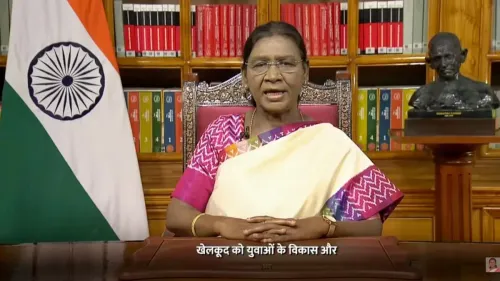
India's most ambitious sports investment since Independence has a number attached to it — and it is staggering. Union Minister of Labour, Employment, Youth Affairs and Sports Mansukh Mandaviya has penned an article arguing that the newly approved Khelo India scheme, backed by an outlay of ₹36,441 crore, marks a fundamental reimagining of how India develops, funds, and thinks about sport.
From grassroots pitches to a top-5 sporting nation
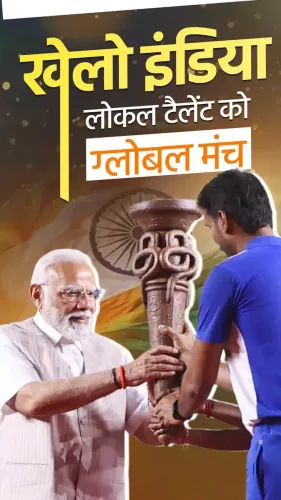
Writing on Saturday, 1 August 2026, Mandaviya frames the expanded scheme not as a budget line but as a civilisational bet — one rooted in Prime Minister Narendra Modi's vision of sport as an engine of youth development and nation-building. The piece argues that the new outlay, the largest ever committed to a single sports development programme in independent India, will strengthen grassroots infrastructure while simultaneously pushing India toward a top-5 global sporting ranking by 2047 — the centenary of Independence.
Khelo India was first launched in 2017 as a flagship Central government scheme to revive sports culture at the grassroots level, with an initial focus on talent identification and competitive pathways. What began as a corrective to decades of ad-hoc, event-driven sports funding has, over successive budget cycles, grown into a structured, multi-year programme spanning infrastructure, coaching, and competitive exposure for young athletes across states.
The ₹36,441 crore mandate and what it signals
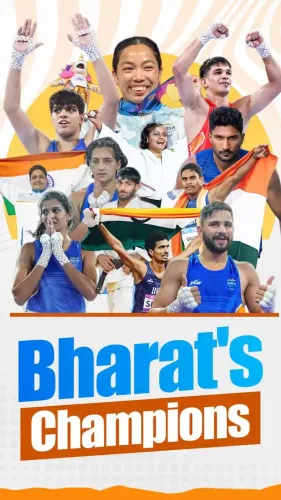
The scale of the newly approved outlay is the headline, but the direction is the story. Mandaviya's article signals a deliberate pivot: India is no longer content to celebrate individual champions who emerged despite the system — it wants a system that produces them by design. State sports departments and young athletes at the district level are the primary beneficiaries, with funding intended to flow down to infrastructure that has historically been the weakest link in India's sporting pipeline.
The 2047 target is not arbitrary. It aligns with Viksit Bharat — the broader government framework for India's centenary of Independence — and mirrors the strategic horizon set for economic and infrastructure ambitions. In sport, it maps directly onto the 2028 Los Angeles Olympics and the 2032 Brisbane Olympics, the two Games where India's medal trajectory will be most closely watched as a measure of whether the investment is converting into podium finishes.
The road from aspiration to medal table
India's Olympic medal count has improved incrementally over the past two decades, but the gap between the country's population, its sporting budget, and its international results has long been a source of national frustration. A phased rollout of the new Khelo India components — and measurable movement toward that top-5 ranking — will be the real test of whether this outlay delivers structural change or remains a well-funded aspiration.
The minister's decision to write publicly about the scheme's ambitions, rather than simply announce them, is itself a signal: the government is staking political credibility on sports performance in a way that has no real precedent in post-Independence India.
If the infrastructure gets built, the talent pipelines fill, and the medals follow — 2047 will look like a plan, not a promise.
Point of View
441 crore Khelo India outlay represents a qualitative shift in how the Indian state frames sport — moving it from a welfare gesture to a strategic national priority with a hard deadline. Anchoring the target to 2047 ties sports performance to the 'Viksit Bharat' political brand, meaning the government now has reputational skin in the game across two Olympic cycles. Mandaviya's choice to publish a bylined article rather than issue a press release is a deliberate act of ownership — useful for political credit if the medals come, but equally a hostage to fortune if the infrastructure spending does not convert. The real test will be whether state-level delivery mechanisms, historically the weakest link in Central sports schemes, can absorb and deploy funds at the pace the ambition demands.
NationPress
15 Sept 2026
Frequently Asked Questions
What is the new Khelo India scheme outlay announced in 2026?
The newly approved Khelo India scheme carries an outlay of ₹36,441 crore , making it the largest sports development programme sanctioned since India's Independence, according to Union Minister Mansukh Mandaviya.
What is India's target under the new Khelo India scheme?
India aims to become a top-5 global sporting nation by 2047 , the centenary of Independence, through strengthened grassroots infrastructure and a structured talent development pipeline under the expanded Khelo India scheme.
When was Khelo India first launched?
Khelo India was first launched in 2017 as a Central government flagship scheme focused on reviving sports culture at the grassroots level, identifying talent, and building competitive pathways for young athletes.
What did Mansukh Mandaviya write about sports in August 2026?
Union Minister Mansukh Mandaviya penned an article on 1 August 2026 arguing that PM Modi's vision harnesses sport for youth development and nation-building, and that the new ₹36,441 crore Khelo India scheme fundamentally reimagines Indian sports.
How does Khelo India connect to the 2028 and 2032 Olympics?
The 2028 Los Angeles and 2032 Brisbane Olympics are the near-term milestones against which India's progress toward a top-5 sporting ranking will be measured, with the full Khelo India programme geared toward building a pipeline that delivers medals at both Games.