Mandaviya shares Modi's call to scout sports talent from villages
Synopsis
Sports Minister Mansukh Mandaviya shared a quote from PM Narendra Modi declaring that India's 'real' sporting talent lives in its villages and small towns — keeping the spotlight on grassroots talent scouting as India builds toward the 2028 Olympic cycle.
Key Takeaways
Union Minister Mansukh Mandaviya shared a quote attributed to PM Narendra Modi on 27 September 2026 stressing that India's core sports talent is rural.
The quoted remark — 'Desh ki asli khel pratibhayen hamare gaanvon aur kasbon mein basti hain' — frames rural scouting as a national priority, not an afterthought.
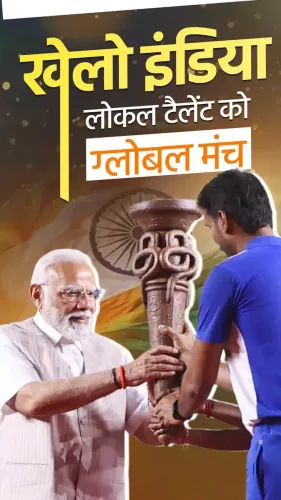
The Khelo India scheme , launched in 2017 , is the primary mechanism for grassroots talent identification and district-level competition funding.
India's ambition for stronger medal tallies at the 2028 Los Angeles Olympics depends on deepening the talent pipeline beyond metropolitan centres.
Implementation remains uneven across states, with some governments embedding grassroots scouting more consistently than others.
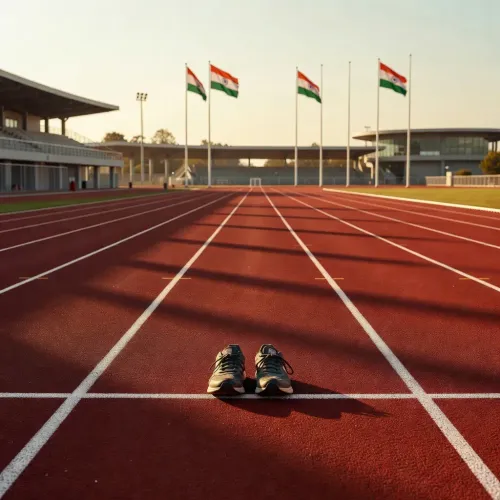
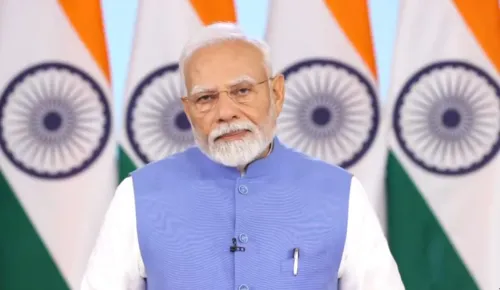
India's next Olympic champion may be training barefoot on a mud pitch in a village no one has mapped yet. That is the conviction Union Minister of Labour, Youth Affairs and Sports Mansukh Mandaviya amplified on Sunday, 27 September 2026, sharing a pointed quote attributed to Prime Minister Narendra Modi: 'Desh ki asli khel pratibhayen hamare gaanvon aur kasbon mein basti hain' — 'The country's real sporting talent lives in our villages and small towns.'
The quote, shared on Mandaviya's official X account, distils a philosophy that has quietly shaped India's sports policy for nearly a decade — and signals that the message is still being pushed with urgency at the highest levels.The idea behind the quote and what it demands
The logic is straightforward but the execution is hard. India's metropolitan centres — Delhi, Mumbai, Bengaluru, Hyderabad — have coaching academies, synthetic tracks, and well-connected sports federations. Villages and small towns have raw talent but far fewer structured pathways. Bridging that gap has been the stated purpose of the Khelo India scheme, launched in 2017, which funds district-level competitions, local academies, and annual talent identification drives.
The scheme has steadily expanded its footprint, extending Khelo India Youth Games, University Games, and Winter Games to pull competitive exposure further from city centres. Modi's framing — that the 'real' talent is rural — is a political and programmatic bet: invest where the numbers are largest and the discovery rate is lowest.
Why the reminder matters now
As India eyes stronger medal hauls at the 2028 Los Angeles Olympics and future Asian Games cycles, the pressure to deepen the talent pipeline is real. The current generation of medal-winning athletes — many of whom were identified through state-level competitions or national schemes in smaller towns — validates the approach in broad strokes. But sports administrators have long noted that grassroots scouting remains inconsistent across states, with some governments embedding it deeply and others treating it as a box-ticking exercise.
Mandaviya's decision to amplify Modi's words keeps that accountability live — and signals to state sports bodies that the Centre's attention has not drifted.
What rural athletes and coaches will be watching
For young athletes in district towns, the promise embedded in the quote is about more than inspiration. It translates — or should translate — into stipends under the Khelo India athlete support programme, upgraded sports infrastructure at the block and district level, and coaches placed where talent concentrates rather than where facilities already exist. Whether the ministerial social-media moment accelerates any of those concrete steps is the question coaches and state academies will be asking.
India's sporting ambitions will ultimately be measured in podium finishes, not posts. But the conversation Mandaviya has pushed back into the public feed is the right one — and the villages are listening.
Point of View
Spanning agriculture, education, and now sport. The Khelo India architecture exists, the funding flows, but the minister's signal suggests the Centre believes the cultural and administrative shift toward village-first scouting still needs reinforcing. The real test will be whether this translates into measurable expansion of district-level academies and athlete stipends rather than remaining an aspirational talking point.
NationPress
27 Sept 2026
Frequently Asked Questions
What did PM Modi say about rural sports talent in India?
PM Modi has publicly stated that India's 'real' sporting talent lives in its villages and small towns, a view Sports Minister Mansukh Mandaviya amplified on social media on 27 September 2026.
What is the Khelo India scheme and how does it help village athletes?
Khelo India, launched in 2017, is a central government programme that funds district-level competitions, grassroots academies, and annual talent identification drives to bring structured sporting pathways to athletes outside major cities.
What is Mansukh Mandaviya's role in Indian sports?
Mansukh Mandaviya is the Union Minister of Youth Affairs and Sports (as well as Labour and Employment) and is responsible for national sports policy, including overseeing the Khelo India scheme.
How is India preparing for the 2028 Los Angeles Olympics?
India is working to deepen its athlete pipeline through schemes like Khelo India, with an emphasis on identifying talent at the district and village level to improve medal prospects at the 2028 Olympics.
Why is rural talent identification important for Indian sports?
Metropolitan areas already have established coaching infrastructure, but the largest untapped pool of athletes is in smaller towns and villages; reaching them earlier is considered key to raising India's international medal count.