Mandaviya shares Modi's call for world-class players and sports gear
Synopsis
Sports Minister Mansukh Mandaviya shared PM Modi's statement calling for India to produce world-class players and sports equipment, linking para-athlete excellence with the Make in India manufacturing drive ahead of the 2028 Paralympic cycle.
Key Takeaways
PM Modi stated India must produce both world-class players and world-class sports equipment, quoted by Minister Mandaviya on 5 November 2026 .
The post was tagged #PMWithParaChampions , placing the statement in the context of India's para-sports community.
The Target Olympic Podium Scheme (TOPS) , launched in 2014 , provides targeted support to elite para athletes including equipment funding.
The Khelo India programme (from 2017 ) builds the grassroots talent pipeline that feeds into the para-elite pathway.
High-performance adaptive equipment — racing wheelchairs, prosthetic blades — remains largely imported; domestic production is the implicit policy gap Modi's words address.
Policy watchers expect possible new incentives for sports-goods manufacturing clusters ahead of the 2028 Los Angeles Paralympics .
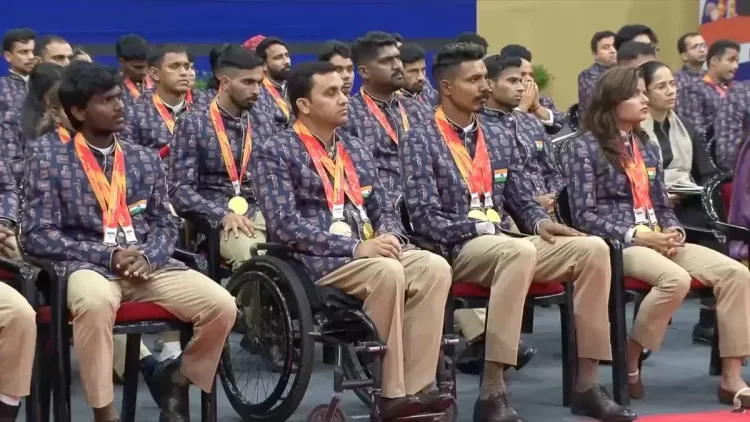
India should produce world-class athletes and world-class sports equipment — that twin ambition, voiced by Prime Minister Narendra Modi, is now front and centre of the country's para-sports conversation. Union Minister for Labour, Youth Affairs and Sports Mansukh Mandaviya amplified the Prime Minister's words on Thursday, 5 November 2026, posting the quote under the hashtag #PMWithParaChampions, signalling that the meeting or event was anchored around India's para-athlete community.
The post quotes Modi directly: 'हम चाहते हैं कि भारत World-class players भी दे और World-class sports equipment भी बनाए!' — 'We want India to produce world-class players as well as world-class sports equipment!' The pairing is deliberate and familiar: for the current government, athletic excellence and indigenous manufacturing are not separate goals but two sides of the same national-ambition coin.
Para champions at the centre of a bigger policy frame
The hashtag #PMWithParaChampions places this statement squarely in the context of India's para-sports ecosystem, which has expanded rapidly over successive Paralympic cycles. The Target Olympic Podium Scheme (TOPS), launched in 2014, extended support to para athletes alongside their Olympic counterparts, funding personalised training, equipment, and international exposure. The Khelo India programme, rolled out from 2017, added a grassroots talent-identification layer that now feeds into the elite para pipeline.
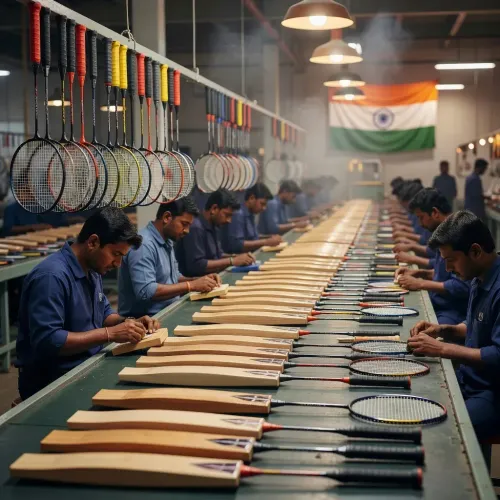
What Modi's framing does — and what Mandaviya's amplification reinforces — is connect that athlete-development story to the Make in India manufacturing agenda. India has traditionally been an exporter of basic sports goods (javelins, hockey sticks, cricket bats from clusters in Jalandhar and Meerut), but high-performance adaptive equipment — racing wheelchairs, prosthetic blades, specialised throwing frames — has largely been imported. Closing that gap is the implicit challenge in the Prime Minister's words.
Manufacturing ambition meets athletic momentum
The logic is straightforward: as Indian para athletes push toward 2028 Paralympic glory, dependence on foreign equipment supply chains creates both a performance risk and a missed industrial opportunity. Domestic production of elite sports goods — if quality can match international standards — would serve athletes, generate exports, and embody the Atmanirbhar Bharat self-reliance doctrine in a high-visibility sector.
Policy watchers have flagged the possibility of fresh incentives for sports-goods manufacturing clusters and updated preparation schemes in the lead-up to Los Angeles 2028. Mandaviya, as the minister overseeing both youth affairs and sports, sits at the intersection of those two threads — talent and tools — making his decision to amplify this particular quote more than a routine social-media share.
India's para athletes have delivered medal hauls that would have seemed implausible a decade ago. The question the Prime Minister is now publicly asking is whether the equipment under those athletes can one day carry a 'Made in India' stamp — and whether that standard will be good enough to win.
Point of View
Ensuring that every medal moment also becomes an industrial-policy talking point. Mandaviya's choice to amplify it under a para-sports hashtag is strategic — para athletics is the one arena where India has posted indisputably strong international results recently, giving the manufacturing aspiration a credible hook rather than an aspirational one. The underlying policy gap — elite adaptive equipment still flowing mostly from overseas suppliers — is real, and framing it as a national ambition is the first step toward committing budget and regulatory muscle to close it. Watch for whether this translates into specific cluster-development incentives or TOPS equipment-sourcing mandates before the 2028 cycle begins in earnest.
NationPress
5 Nov 2026
Frequently Asked Questions
What did PM Modi say about India and sports equipment?
PM Modi said India should produce both world-class players and world-class sports equipment, expressing the ambition that domestic manufacturing must rise to elite performance standards alongside athletic excellence.
What is the Make in India sports goods initiative?
Make in India, launched in 2014 , is a national programme to boost indigenous manufacturing across sectors. It has been extended to sports goods, aiming to reduce dependence on imported equipment and grow India's sports-manufacturing export base.
What is the Target Olympic Podium Scheme and does it cover para athletes?
The Target Olympic Podium Scheme (TOPS) , introduced in 2014 , provides targeted funding — including for equipment, training, and international competition — to both Olympic and para athletes identified as podium contenders.
What is Khelo India and how does it support para sports?
The Khelo India programme, launched in 2017 , builds grassroots sports infrastructure and identifies talent at the school and college level, including in para disciplines, feeding athletes into the elite development pipeline.
Why is India still importing high-performance adaptive sports equipment?
High-performance adaptive equipment such as racing wheelchairs and prosthetic blades requires precision engineering and specialised materials that India's current sports-goods manufacturing clusters — historically focused on basic goods — have not yet matched at international standards, making imports the default for elite para athletes.