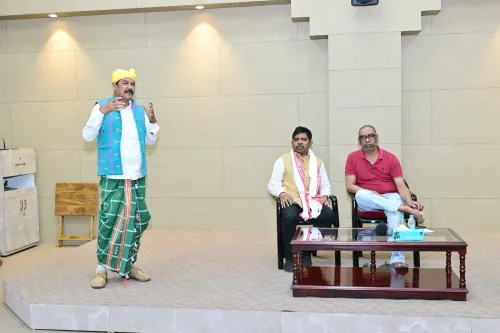
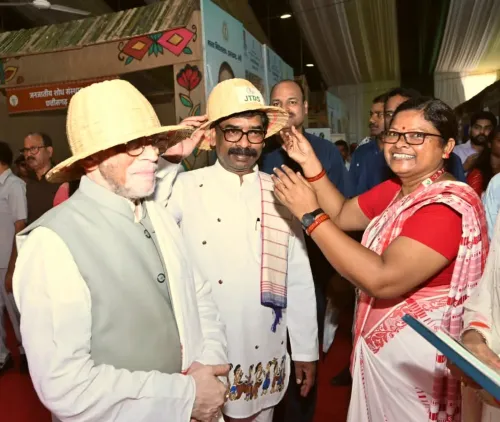
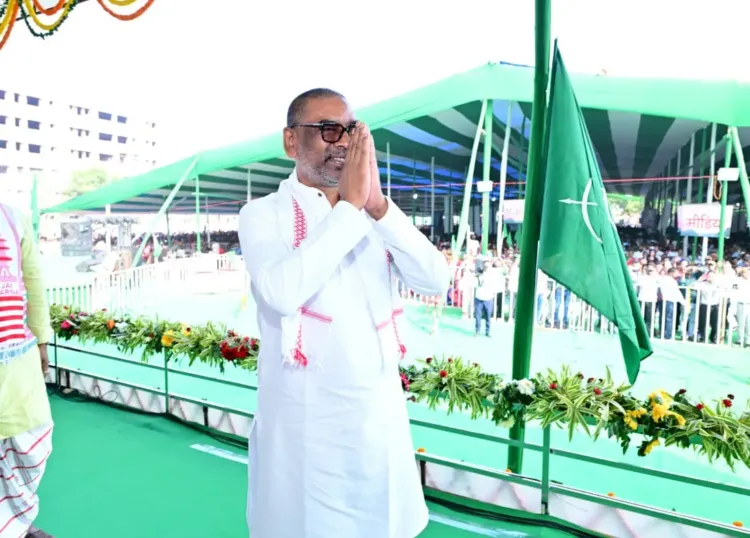
CM Hemant Soren at Marang Buru Mahasammelan, Giridih
Synopsis
Jharkhand CM Hemant Soren addressed a large multi-state Adivasi congregation at Marang Buru in Giridih on 5 November 2026, calling for unity to protect tribal faith, culture and identity, and invoking the unresolved demand for a separate Sarna census code.
Key Takeaways
Hemant Soren addressed the Marang Buru Dhormgadh Mahasammelan in Giridih, Jharkhand on 5 November 2026 .
Participants travelled from five states : Jharkhand, Bihar, West Bengal, Odisha and Chhattisgarh.
Soren called Marang Buru 'a symbol of our faith and identity' and urged all communities to stand united.
The Jharkhand Assembly passed a resolution in 2020 demanding a separate Sarna religion code in the national census — a demand still unmet.
The event reflects JMM's cross-state tribal solidarity strategy amid ongoing pressure on Adivasi land, forests and religious sites.
Soren's message carried a pointed political edge, warning that united communities would be too powerful for opponents to count.
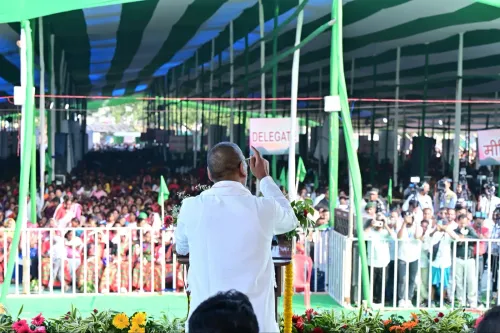
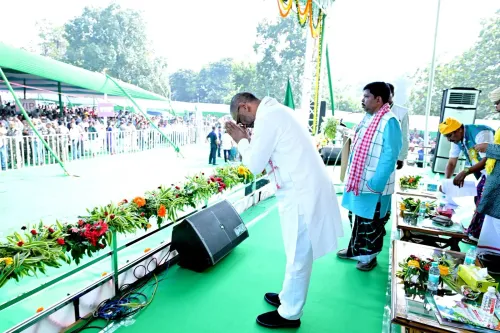
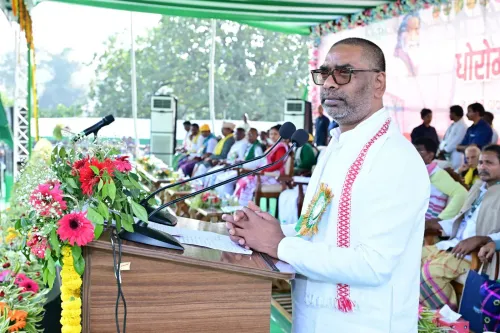
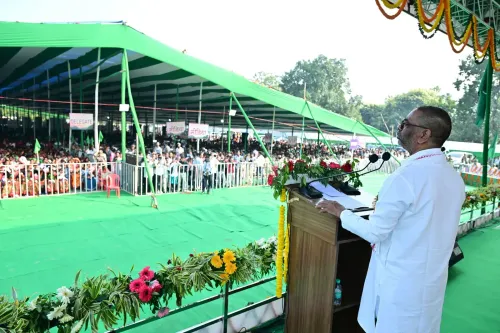
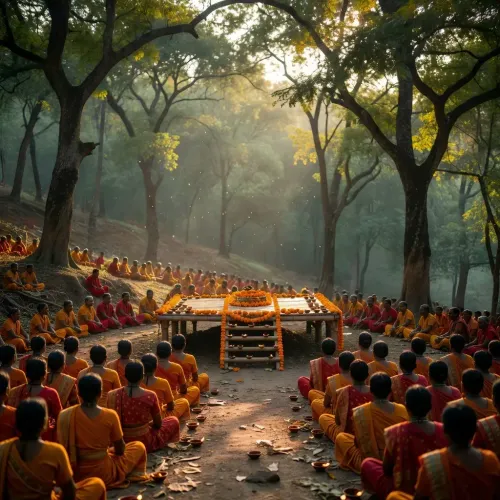
Thousands of Adivasi leaders and community members gathered on the sacred soil of Marang Buru in Giridih, Jharkhand, on Thursday, 5 November 2026 — and Jharkhand Chief Minister Hemant Soren stood before them with a single, urgent message: unity is the only shield.
Addressing the Marang Buru Dhormgadh Mahasammelan, Soren welcomed leaders, brothers and sisters who had travelled from Jharkhand, Bihar, Bengal, Odisha and Chhattisgarh for the congregation. 'Marang Buru hamari aastha aur pehchaan ke prateek hain' (Marang Buru is a symbol of our faith and identity), he said, calling on every community member to 'stand united' in preserving the sacred site and the culture it represents. His closing line carried a sharp political edge: 'When we stay together, our strength will be so great that our opponents will not even be able to count us.'
Why Marang Buru carries the weight of an entire civilisation
Marang Buru — literally 'Great Mountain' — is the supreme deity and sacred highland at the centre of Santhal and broader Adivasi cosmology across eastern India. Far more than a religious site, it functions as a living anchor of indigenous identity: the axis around which land rights, forest access, language and spiritual sovereignty all turn. For communities facing sustained pressure from industrial expansion and mining operations across the Chota Nagpur plateau, the symbolism is not abstract. It is existential.
Soren's Jharkhand Mukti Morcha (JMM) has long argued that Adivasi faith deserves formal recognition at the national level. In 2020, the Jharkhand Assembly passed a resolution demanding inclusion of the Sarna religion as a separate code in the national census — a demand that would distinguish Adivasi spiritual practice from Hinduism and ensure communities are counted, and therefore counted upon, in policy planning. That battle remains unresolved.
A five-state gathering, one political signal
The scale of today's mahasammelan was deliberate. By drawing tribal leaders across five states — Jharkhand, Bihar, West Bengal, Odisha and Chhattisgarh — Soren demonstrated that JMM's tribal solidarity project extends well beyond Jharkhand's borders. Cross-state congregations of this kind have been a periodic feature of Adivasi political mobilisation in eastern India, building a shared vocabulary of resistance around land, forests and religious sites.
The timing sharpens the signal. With political cycles in several of these states in motion, a gathering that fills the frame with community elders, grassroots leaders and ordinary families is as much about electoral arithmetic as it is about faith. Soren chose his language carefully — 'opponents will not even be able to count us' is a phrase that speaks simultaneously to cultural assertion and to the ballot box.
Marang Buru will keep drawing these crowds. The question is what resolutions follow — on the Sarna code, on forest rights, on mining encroachments. Soren has set the stage; the congregation now watches for what comes next.
Point of View
Reinforcing the JMM's claim to be the custodian of a broader Adivasi political identity. The unresolved Sarna code demand gives the cultural rhetoric a concrete policy hook, allowing Soren to hold the Centre accountable while consolidating his base. Watch for whether the congregation produces a formal resolution or coordinated cross-state petition — that would shift this from ceremonial solidarity to actionable pressure.
NationPress
6 Nov 2026
Frequently Asked Questions
What is the Marang Buru Dhormgadh Mahasammelan?
The Marang Buru Dhormgadh Mahasammelan is a large congregation of Adivasi community leaders and members held at the sacred Marang Buru site in Giridih, Jharkhand, to deliberate on tribal faith, culture and collective identity.
What is Marang Buru and why is it significant?
Marang Buru, meaning 'Great Mountain,' is the supreme deity and sacred highland central to Santhal and broader Adivasi religious traditions. It represents the spiritual, cultural and territorial identity of indigenous communities across eastern India.
What is the Sarna religion census code demand?
The Sarna code demand calls for Adivasi nature-worshippers to be recorded as a distinct religious category in India's national census, separate from Hinduism. The Jharkhand Assembly passed a resolution supporting this in 2020, but the Centre has not yet acted on it.
Which states were represented at the Giridih mahasammelan?
Leaders and community members from Jharkhand, Bihar, West Bengal, Odisha and Chhattisgarh attended the event, reflecting the cross-regional scope of Adivasi solidarity that JMM seeks to build.
What did Hemant Soren say at the Marang Buru event?
Soren welcomed participants from five states, called Marang Buru a symbol of Adivasi faith and identity, and urged the community to stand united — warning that a united Adivasi front would be too powerful for any opponent to count.