CM Hemant Soren Urges Adivasi Youth: Dialogue, Not Force
Synopsis
At Adivasi Mahotsav 2026 on World Tribal Day, Jharkhand CM Hemant Soren urged tribal youth to pursue change through dialogue and constitutional means, pledged visible justice, and reaffirmed the JMM's foundational commitment to jal, jungle, zameen.
Key Takeaways
CM Hemant Soren spoke at Adivasi Mahotsav 2026 on 9 August 2026 , World Tribal Day.
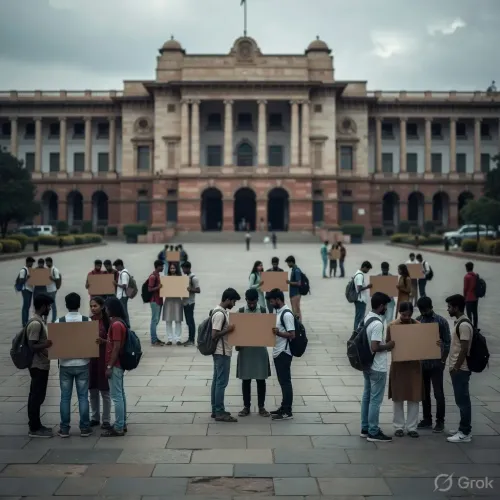
He warned that using 'lathis and sticks' against one's own people causes harm, not solutions — urging constitutional dialogue instead.
Soren pledged that justice would be delivered with full transparency and would be visibly seen by tribal communities.
He invoked jal, jungle, zameen — the foundational demand behind Jharkhand's statehood movement and the Forest Rights Act, 2006.
The CM closed with the Adivasi salutation 'Johar' , reinforcing the JMM's cultural and political identity with tribal communities.
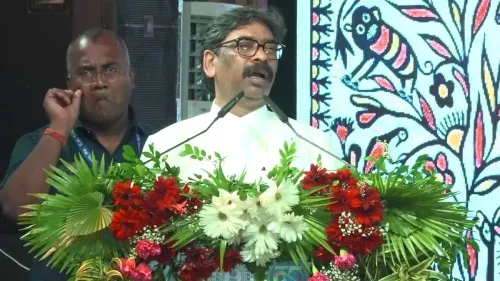
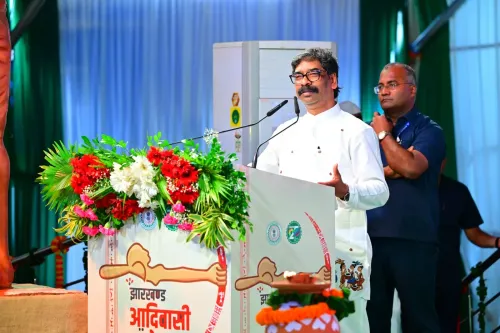
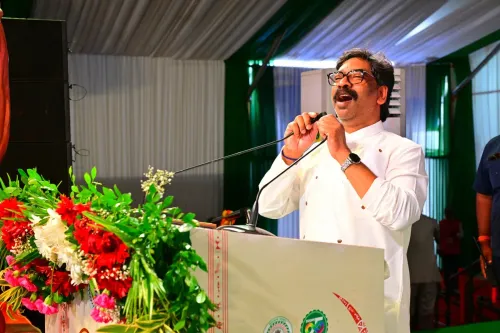
At Adivasi Mahotsav 2026, Jharkhand Chief Minister Hemant Soren delivered a pointed message to the state's tribal youth on Sunday, 9 August 2026 — that no problem is solved with a lathi, and every grievance has a constitutional answer.
Speaking from the festival stage, Soren addressed the crowd in Hindi, saying: 'हर समस्या का समाधान संवाद और संवैधानिक तरीके से होता है' — 'every problem finds its solution through dialogue and constitutional means.' The warning against force was direct: 'Using lathis and sticks against your own people does not solve any problem — it only causes harm.'
Soren to Adivasi Youth: 'Your Concerns Are Mine'
The Chief Minister was deliberate in positioning himself as a peer, not a patriarch. 'I am not some old man, friends,' he said. 'I belong to your generation. Your emotions and your concerns are my concerns.' It was a calculated move — an elected leader on a constitutional platform choosing solidarity over authority.
He followed it with a public commitment: transparency and justice would not merely be delivered, they would be seen to be delivered. In a political climate where tribal communities in Jharkhand have long watched land and forest promises dissolve in bureaucratic corridors, that distinction — visible justice — carries weight.
Jal, Jungle, Zameen: The Phrase That Built a State
At the heart of Soren's address was the triad that has defined Jharkhand's political identity since before the state was carved out of Bihar in 2000: jal, jungle, zameen — water, forest, land. 'This water, this forest, this land is both the beginning and the end of our lives,' he told the gathering.
The phrase is not rhetorical decoration. It is the foundational demand that drove Jharkhand's statehood movement and later underpinned the Scheduled Tribes and Other Traditional Forest Dwellers (Recognition of Forest Rights) Act, 2006 — federal legislation that formally recognised Adivasi claims over forest land after centuries of dispossession. Soren's invocation of it at a cultural festival signals that the political compact between the JMM and tribal communities rests on this ground, and he intends to keep it there.
'We are proud that we are Adivasi,' he declared — 'हमें गर्व है कि हम आदिवासी हैं' — closing the loop between cultural pride and political assertion.
A Festival as a Political Moment
Adivasi Mahotsav 2026 falls on World Tribal Day, the internationally observed date marking the adoption of the ILO's Indigenous and Tribal Peoples Convention. Holding a large-scale celebration on this date is itself a political statement — one that Soren's administration has clearly chosen to amplify. The Governor, Soren noted, had a busy schedule but his 'guidance remains important for all of us,' a courteous acknowledgement that kept the event's tone above partisan lines.
The Chief Minister closed with a greeting that doubles as a political signature: 'Johar' — the traditional Adivasi salutation that the JMM has made central to its public identity. For Jharkhand's tribal communities, it is more than a word. It is a claim of belonging.
Point of View
Paired with a promise of 'visible justice,' suggests the administration is managing real undercurrents of discontent among younger Adivasi communities. By positioning himself as a peer of the youth rather than an authority figure, Soren is attempting to redirect energy from street protest to institutional faith — a bet that pays off only if the transparency pledge translates into executive action on pending land-rights cases.
NationPress
24 Sept 2026
Frequently Asked Questions
What did Hemant Soren say at Adivasi Mahotsav 2026?
CM Hemant Soren urged tribal youth to resolve grievances through dialogue and constitutional means, warned against the use of force, and pledged transparent and visible justice for Adivasi communities.
What is Adivasi Mahotsav 2026?
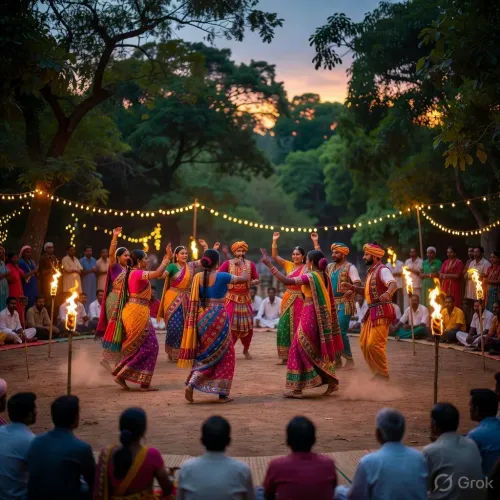
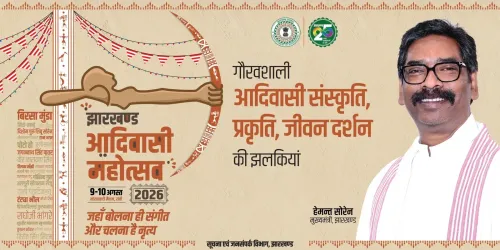
Adivasi Mahotsav 2026 is a cultural festival in Jharkhand celebrating Adivasi heritage, identity and traditions, held on World Tribal Day, 9 August.
What does jal jungle zameen mean in Jharkhand politics?
'Jal, jungle, zameen' — water, forest, land — is the foundational demand of Jharkhand's tribal movement, central to the state's formation in 2000 and the Forest Rights Act of 2006.
What is 'Johar' and why does Hemant Soren use it?
'Johar' is a traditional Adivasi salutation that the Jharkhand Mukti Morcha has made central to its public identity, signalling solidarity with tribal communities.
What is the Forest Rights Act and how does it relate to Jharkhand?
The Scheduled Tribes and Other Traditional Forest Dwellers (Recognition of Forest Rights) Act, 2006 formally recognised Adivasi claims over forest land. Jharkhand, with its large tribal population, is one of the states most directly affected by its implementation.