CM Hemant Soren Pledges Transparent Justice for Tribal Youth on World Indigenous Day
Synopsis
On World Indigenous Peoples' Day, Jharkhand CM Hemant Soren pledged that tribal youth will receive transparent justice — and that it will be visibly seen to happen. The statement, paired with the traditional Adivasi greeting Johar, renews the JMM's core governance promise to the state's indigenous communities.
Key Takeaways
Jharkhand CM Hemant Soren posted on X on 9 August 2026 , World Indigenous Peoples' Day .
He pledged that justice for tribal youth will be delivered 'with transparency' and will 'visibly be seen to happen.' The message was addressed to his 'young companions' and closed with Johar , the traditional Adivasi salutation.
Jharkhand was created in November 2000 to address tribal demands for self-governance and resource control.
The Jharkhand Mukti Morcha (JMM) has consistently linked administrative transparency to Adivasi empowerment across its tenures in government.
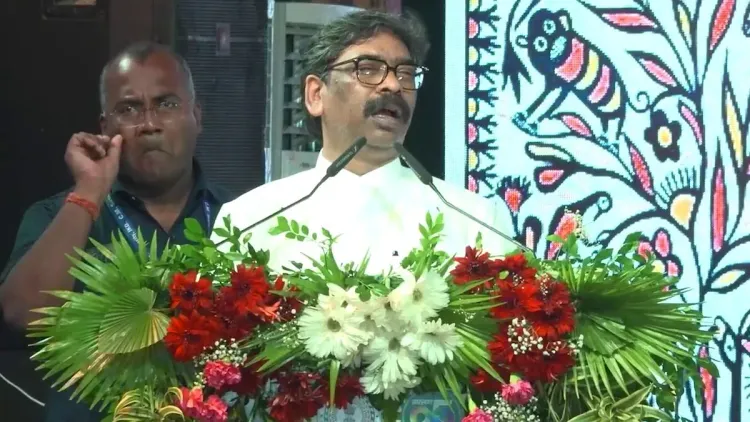
On World Indigenous Peoples' Day, 9 August 2026, Jharkhand Chief Minister Hemant Soren sent a pointed message to the state's Adivasi communities: justice for young people will not only be delivered — it will be seen to be delivered.
Posting on X, Soren wrote in Hindi: 'मेरे युवा साथियों के साथ पारदर्शिता के साथ न्याय होगा और न्याय होते हुए दिखाई भी देगा।' — 'My young companions will receive justice with transparency, and that justice will also be visibly seen to happen.' He followed the pledge with greetings and the traditional Adivasi salutation Johar to mark the day.
Why 'Visible Justice' Is a Deliberate Choice of Words
The phrasing is not incidental. In Jharkhand — a state carved out in November 2000 specifically to give tribal communities greater control over their land, resources and governance — the gap between promised and delivered justice has long been a political flashpoint. Soren's Jharkhand Mukti Morcha (JMM), which has championed Adivasi rights since its founding, has consistently framed administrative transparency as the bedrock of tribal empowerment. By invoking both 'transparency' and 'visible' justice in the same breath, Soren signals that accountability must be observable, not just procedural.World Indigenous Peoples' Day and Jharkhand's Adivasi Stakes
World Indigenous Peoples' Day, observed every 9 August under a United Nations mandate, is more than a ceremonial date in Jharkhand. The state holds one of the largest Adivasi populations in India, and the day regularly serves as a platform for state governments to reaffirm commitments on land rights, representation and welfare. For Soren — himself a member of the Santali community and the JMM's executive president — the occasion carries both political and personal weight. His message to tribal youth is a renewal of the founding promise the state was built on. The broader pattern across JMM-led administrations has been to tie governance pledges directly to this annual observance, using it as a checkpoint moment rather than a symbolic one. Whether specific transparency mechanisms or youth-focused justice initiatives follow this statement is the question Jharkhand's tribal districts will be watching.Point of View
World Indigenous Peoples' Day functions as an annual accountability moment, not a ceremonial one, and Soren is using it to pre-empt criticism over governance gaps in tribal districts. The pledge to youth specifically signals awareness that Jharkhand's young Adivasi population is an increasingly assertive political constituency. Whether concrete transparency mechanisms follow will determine if this remains rhetoric or becomes a governance marker for his administration.
NationPress
23 Sept 2026
Frequently Asked Questions
What did Hemant Soren say on World Indigenous Peoples' Day 2026?
CM Hemant Soren pledged that tribal youth will receive justice with full transparency and that this justice will be visibly seen to happen. He also extended greetings and the traditional Adivasi salutation Johar on the occasion.
When is World Indigenous Peoples' Day observed?
World Indigenous Peoples' Day is observed every year on 9 August , as recognised by the United Nations, to highlight the rights and contributions of indigenous communities worldwide.
Why is World Indigenous Peoples' Day significant for Jharkhand?
Jharkhand has one of the largest Adivasi populations in India and was created in November 2000 specifically to address tribal demands for self-governance and resource control, making the day a key political and cultural moment in the state.
What is the Jharkhand Mukti Morcha?
The Jharkhand Mukti Morcha (JMM) is a regional political party founded to advocate for tribal rights and statehood in Jharkhand. CM Hemant Soren serves as its executive president.