Pralhad Joshi defends 20% ethanol blending, calls Congress opposition anti-farmer
Synopsis
Union Minister Pralhad Joshi declared India has achieved 20% ethanol blending in petrol, consistent with national biofuel policy, and attacked Congress and Rahul Gandhi for opposing the programme, calling their stance anti-farmer and against the goal of reducing crude-oil imports.
Key Takeaways
Minister Pralhad Joshi stated India is currently blending 20% ethanol in petrol, within the accepted range of 19–21% .
The National Policy on Biofuels (2018) originally targeted 20% blending by 2030 ; the government claims early achievement.
Sugar mills are legally required to prioritise farmer payments from ethanol revenue before other expenditures.
The programme is framed as reducing India's dependence on imported crude oil and advancing Atmanirbhar Bharat goals.
Joshi directly accused Congress and Rahul Gandhi of running an anti-farmer campaign by opposing ethanol blending.
Monthly blending data from oil marketing companies and parliamentary records on mill payments will be the key verification metrics to watch.
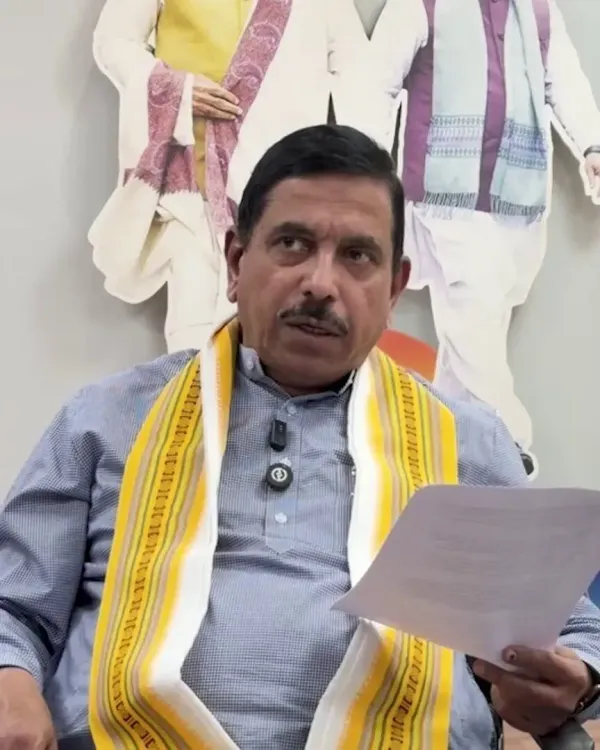
India's petrol pumps are now dispensing fuel blended with 20% ethanol — and Union Consumer Affairs and New and Renewable Energy Minister Pralhad Joshi wants every sugarcane farmer in the country to know who is standing in the way of that milestone. In a pointed post on Saturday, 7 November 2026, Joshi defended the government's ethanol blending programme and turned his fire squarely on the Congress party and its leader Rahul Gandhi.
What 20% blending actually means at the pump
Posting in Kannada, Joshi stated that India is currently achieving 20% ethanol blending in petrol — a range of 19% to 21% that the government considers acceptable under its national policy — and that this standard has been recognised by the global automobile industry. The National Policy on Biofuels, notified in 2018, had originally set a 20% blending target by 2030, making the claimed achievement, if confirmed by official oil-marketing-company data, a significant advancement of that deadline.
The minister framed the programme not merely as an energy metric but as a direct income intervention: ethanol production, he argued, creates a substantial benefit for sugarcane farmers, and existing rules mandate that sugar mills prioritise and pay farmers first before meeting other obligations.
Crude-oil dependence and the Atmanirbhar argument
India imports the vast majority of its crude oil, making every rupee-per-barrel swing on global markets a fiscal event for the national budget. Joshi cast ethanol blending as a structural answer to that vulnerability — reducing dependence on imported crude while channelling money into the domestic agricultural economy. The logic is straightforward: ethanol derived from sugarcane molasses or grain replaces a volume of petrol that would otherwise have to be refined from imported oil, simultaneously giving sugar mills an alternative revenue stream that flows back to farmers.
The Ethanol Blended Petrol programme, first launched in 2003, has been steadily expanded over two decades, with the current government accelerating targets and procurement prices for ethanol to incentivise mill participation.
Joshi's direct attack on Congress and Rahul Gandhi
The minister did not confine his post to policy facts. He stated explicitly that the opposition and agitations being run by the Congress party and Rahul Gandhi on the ethanol issue amount to an 'raita virodhi dharane' — an anti-farmer stance. It is a combative framing designed to recast a political dispute over biofuel policy as a referendum on whose side the opposition truly stands on when it comes to rural livelihoods.
The Congress has periodically raised concerns about ethanol policy implementation, including questions around diversion of sugarcane from food and the adequacy of farmer payments by mills. The government's counter-narrative, now amplified by Joshi, is that opposing ethanol expansion is, in effect, opposing a guaranteed income stream for millions of cane growers.
What to watch: blending data and mill payment records
The 20% blending claim will be tested against monthly blending percentage reports published by oil marketing companies — the definitive public record of actual fuel composition at the national level. Equally, parliamentary questions on whether sugar mills are honouring the farmer-first payment mandate will determine whether the policy's farmer-benefit promise is being met in practice, or remains a target on paper.
With Karnataka — Joshi's home state and a significant sugarcane-growing region — heading into agricultural cycles, the political stakes of this debate are anything but abstract for the farmers listening.
Point of View
A terrain both parties recognise as electorally decisive in cane-growing states like Karnataka, Uttar Pradesh, and Maharashtra.
NationPress
7 Nov 2026
Frequently Asked Questions
What is India's ethanol blending target and has it been achieved?
India's National Policy on Biofuels set a target of 20% ethanol blending in petrol by 2030. Minister Pralhad Joshi has stated the country is currently achieving 20% blending (within an acceptable range of 19–21%), though this requires verification from official oil marketing company reports.
How does ethanol blending benefit sugarcane farmers in India?
Ethanol blending creates additional demand for sugarcane-derived ethanol, giving sugar mills an alternative revenue stream. Government rules mandate that sugar mills must prioritise and pay farmers first from ethanol proceeds, providing a more reliable income channel for cane growers.
Why is Congress opposing ethanol blending, and what is the BJP's response?
The Congress party has raised concerns about ethanol policy implementation, including questions about food-crop diversion and farmer payment adequacy. The BJP, through Minister Joshi, has labelled this opposition as anti-farmer, arguing that ethanol blending directly supports sugarcane grower incomes.
What is India's Ethanol Blended Petrol programme?
The Ethanol Blended Petrol programme was launched in 2003 to mix domestically produced ethanol with petrol, reducing crude oil imports and supporting the domestic sugar and agriculture sector. It has been progressively scaled up, with the 2018 biofuel policy formalising a 20% blending target.
How does ethanol blending reduce India's crude oil import dependence?
Every percentage point of ethanol blended into petrol displaces an equivalent volume of petrol that would otherwise be refined from imported crude oil. At 20% blending, India saves significant foreign exchange and reduces its exposure to global crude price volatility.