Pralhad Joshi at CII Energy Conf: India's 2030-2047 Roadmap
Synopsis
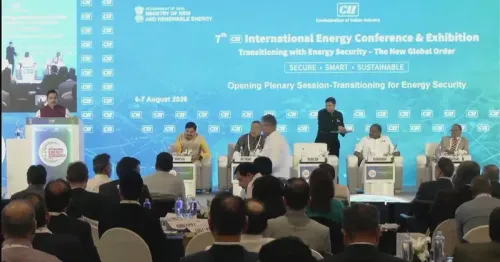
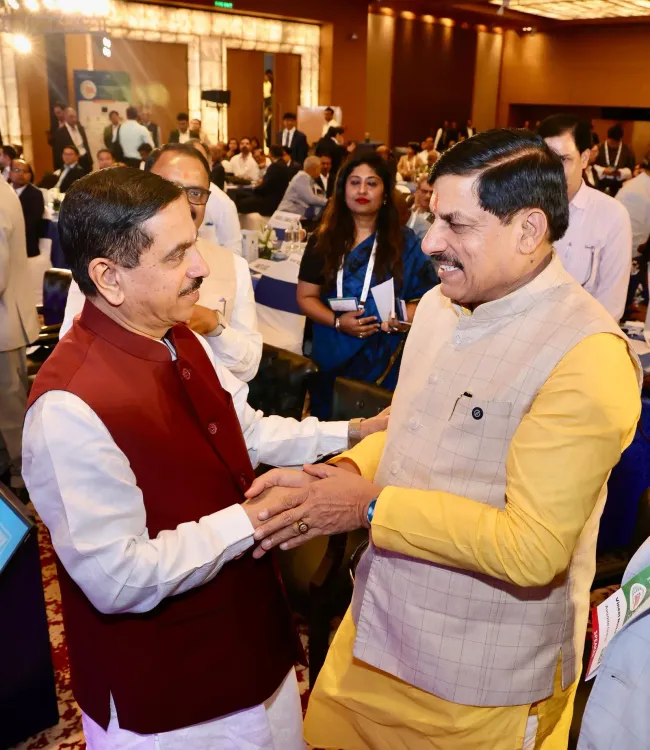
Union Minister Pralhad Joshi addressed the 7th CII International Energy Conference on 6 August 2026, releasing the report 'India's Energy Technology Choices for 2030–2047' and inaugurating a clean-tech exhibition, with MP CM Mohan Yadav and Union Minister H.D. Kumaraswamy also present.
Key Takeaways
Union Minister Pralhad Joshi addressed the 7th CII International Energy Conference and Exhibition on 6 August 2026 , attended by delegates from over 20 countries .
MP Chief Minister Mohan Yadav and Union Minister H.D.
Kumaraswamy (Heavy Industries and Steel) were present, reflecting a coordinated federal approach to energy policy.
Joshi released the report 'India's Energy Technology Choices for 2030–2047' , outlining the technological roadmap for India's sustainable energy future.
He also inaugurated an exhibition showcasing cutting-edge clean-energy technologies at the CII event.
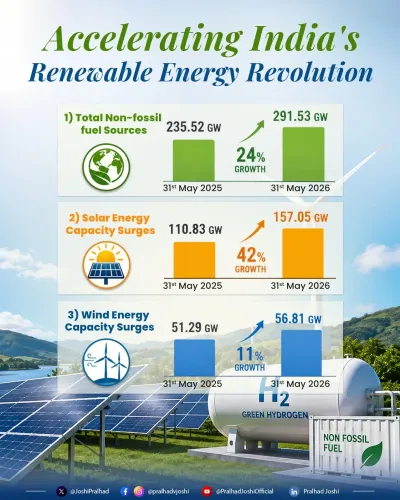
India's clean-energy commitments include 500 GW non-fossil fuel capacity by 2030 and net-zero emissions by 2070 , under the Panchamrit strategy announced at COP26.
India's clean-energy ambitions got a high-powered platform on Thursday, 6 August 2026, as Union Minister for New and Renewable Energy Pralhad Joshi addressed the 7th CII International Energy Conference and Exhibition — a gathering that pulled in policymakers, industry leaders, and energy experts from over 20 countries. The message from the podium was unambiguous: India is accelerating its transition to clean energy, and it intends to lead.
Three ministers, one stage — and what it signals
Madhya Pradesh Chief Minister Mohan Yadav and Union Minister of Heavy Industries and Steel H.D. Kumaraswamy were also present at the event, organised by the Confederation of Indian Industry (CII). The convergence of central and state leadership on a single energy forum is itself a signal — India's clean-energy push is no longer a single-ministry affair but a coordinated federal project, with both manufacturing and state-level implementation now explicitly in the frame.
The 2030–2047 roadmap: what was released
The headline deliverable of the conference was the release of a report titled 'India's Energy Technology Choices for 2030–2047' — a document that lays out the technological pathways India intends to follow on its road to a sustainable energy future. Joshi also inaugurated an exhibition showcasing cutting-edge clean-energy technologies running alongside the conference. Together, the report and the exhibition underscore a shift in India's energy conversation: from targets to technology choices, from ambition to implementation architecture.
Panchamrit commitments and the long arc of India's renewable push
The backdrop to Thursday's conference stretches back years. At COP26 in 2021, India announced its Panchamrit strategy — a five-point climate commitment that includes achieving 500 GW of non-fossil fuel energy capacity by 2030 and reaching net-zero emissions by 2070. The National Solar Mission, launched in 2010, laid the early foundation for what has since become one of the world's fastest-growing renewable energy programmes. The 2030–2047 report released at the CII conference now extends that arc — bridging the near-term 2030 capacity targets with the longer-horizon net-zero commitment.
India's approach has combined domestic manufacturing incentives, international technology partnerships, and state-level project pipelines — a model that the multi-ministerial presence at the CII forum reflects in microcosm. Green hydrogen, advanced storage, and grid modernisation are the next frontier.
The real test now is whether the technological roadmap outlined in the report translates into budgetary commitments and implementation milestones — and how quickly the industry partnerships reaffirmed at the conference move from conference room to construction site.
Point of View
This serves a dual purpose: reinforcing India's credibility on the global climate stage while domestically positioning the party as the driver of a green industrial transformation. The multi-ministerial presence also suggests the energy transition is being woven into the broader manufacturing and state-development agenda, not siloed in a single portfolio. Whether the roadmap produces binding policy and budgetary follow-through will determine whether this conference moment is a milestone or a marker.
NationPress
20 Sept 2026
Frequently Asked Questions
What is the CII International Energy Conference?
The CII International Energy Conference and Exhibition is an annual event organised by the Confederation of Indian Industry, bringing together policymakers, industry leaders, and energy experts from across the world to discuss India's energy transition.
What report did Pralhad Joshi release at the CII energy conference?
Pralhad Joshi released 'India's Energy Technology Choices for 2030–2047', a report outlining the technological roadmap for India's sustainable energy future, at the 7th CII International Energy Conference on 6 August 2026.
What is India's Panchamrit climate strategy?
India's Panchamrit strategy, announced at COP26 in 2021, is a five-point climate commitment that includes achieving 500 GW of non-fossil fuel energy capacity by 2030 and reaching net-zero emissions by 2070.
Who attended the 7th CII International Energy Conference with Pralhad Joshi?
Madhya Pradesh Chief Minister Mohan Yadav and Union Minister of Heavy Industries and Steel H.D. Kumaraswamy attended the conference alongside Union Minister Pralhad Joshi.
What is India's renewable energy target for 2030?
India has committed to achieving 500 GW of non-fossil fuel-based energy capacity by 2030 as part of its Panchamrit climate commitments made at COP26 in Glasgow in 2021.