CM Hemant Soren Backs Adivasi Sammelan, Pledges Full Support
Synopsis
Chief Minister Hemant Soren has publicly backed an Adivasi community conference in Jharkhand, pledging full state cooperation for tribal uplift. The statement reaffirms the JMM-led government's consistent framing of tribal welfare as central to governance in a state where Scheduled Tribes form roughly 26 percent of the population.
Key Takeaways
CM Hemant Soren expressed the Jharkhand government's support for an Adivasi community conference on 5 November 2026 .
Soren said every possible cooperation would be extended, calling the sammelan a collective effort for tribal uplift.
Jharkhand has one of India's highest Scheduled Tribe population shares at approximately 26 percent .
The state's tribal rights framework is anchored in the PESA Act, 1996 and the Forest Rights Act, 2006 .
The JMM -led government has consistently positioned tribal cultural preservation alongside economic development as a governance priority.
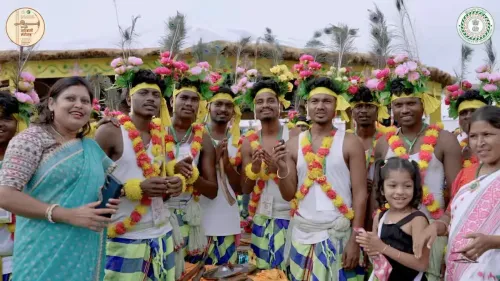
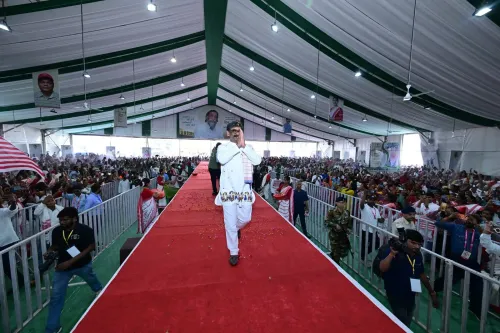
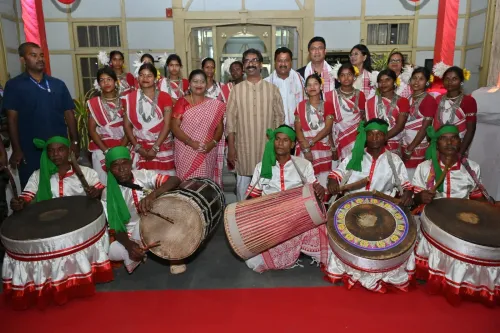
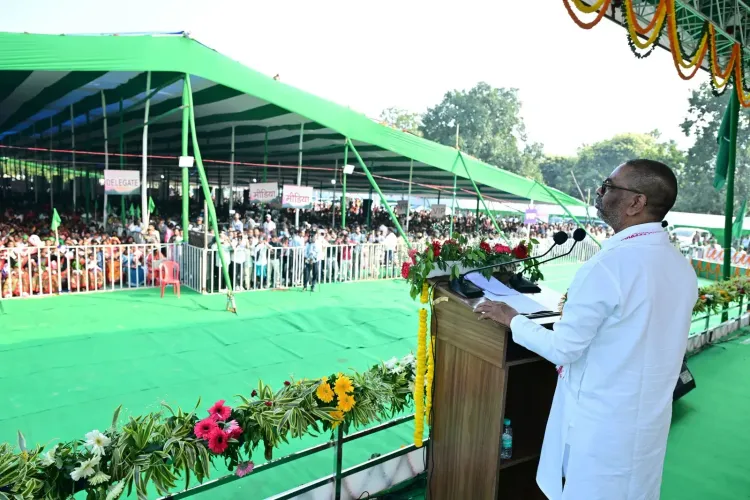
Every conversation about tribal India eventually arrives at the same question: how does a community rooted in the rhythms of the forest step forward in a modern state without losing the culture that defines it? On Thursday, 5 November 2026, the Chief Minister's Office of Jharkhand put that question at the centre of public discourse, sharing a direct statement from Chief Minister Hemant Soren extending the state government's support to an Adivasi community conference.
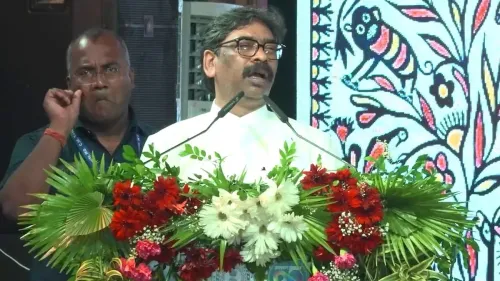
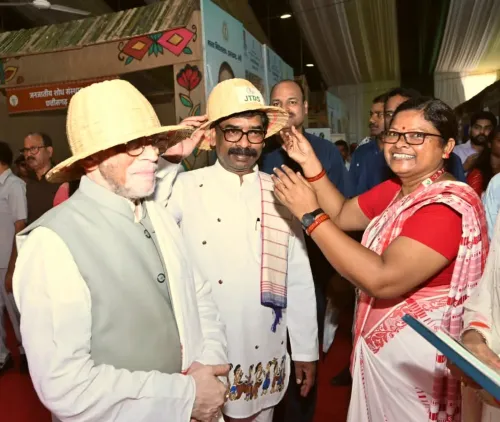
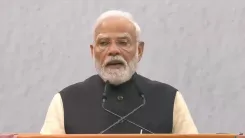
Speaking at the gathering, CM Soren said — 'प्रकृति के साथ रच-बस कर रहने वाला आदिवासी समाज कैसे आगे बढ़े, इस पर सभी का ध्यान है' — 'Everyone's attention is on how the Adivasi society, which lives in deep harmony with nature, can progress.' He added that tribal communities, while respecting all other sections of society, are actively striving for their own uplift, and that the state government offers its full faith in providing every possible cooperation to the sammelan.
Jharkhand's Tribal Stakes — 26 Percent of a State's Soul
Jharkhand was carved out in 2000 precisely because Adivasi communities demanded a homeland where their interests would not be drowned out. Today, roughly 26 percent of the state's population belongs to Scheduled Tribes — one of the highest such shares of any Indian state. That demographic fact has shaped every political equation since the state's founding, and it explains why a chief minister's statement at a tribal conference carries weight far beyond ceremony.
The legal architecture supporting tribal rights in Jharkhand rests on two landmark laws: the Panchayats (Extension to Scheduled Areas) Act, 1996, which extends local self-governance to Schedule V areas, and the Forest Rights Act, 2006, which recognises the rights of forest-dwelling communities over land and resources. Successive state governments — and the Jharkhand Mukti Morcha-led administrations in particular — have cited both laws as the constitutional bedrock for tribal land and resource claims.
JMM's Balancing Act Between Mineral Wealth and Cultural Preservation
Jharkhand sits atop some of India's richest mineral deposits. That economic reality has long created friction: mining and industrial expansion versus the rights of Adivasi communities to their ancestral lands and traditional governance structures. The JMM under Soren has sought to frame these not as a binary choice but as a governance challenge — one where inclusive growth is possible without eroding the customary institutions that hold tribal society together.
Community conferences of this kind have historically served as platforms for tribal organisations to consolidate demands, surface local grievances, and open dialogue with the state. The government's public endorsement signals that whatever resolutions emerge from this sammelan will have an attentive audience in Ranchi.
The road from a solidarity statement to concrete policy is rarely short in Indian state politics — but when a chief minister says 'every possible cooperation,' the tribal organisations in the room are already counting what that promise is worth.
Point of View
The JMM reinforces its foundational identity as the custodian of tribal interests — a posture it cannot afford to cede to rival parties. The statement also keeps pressure alive on the central government to honour the Forest Rights Act and PESA in letter and spirit, an issue that routinely surfaces in Jharkhand's inter-governmental disputes. Watch for whether this conference produces concrete demands that the state government then funnels into the next budget or a new scheme announcement.
NationPress
5 Nov 2026
Frequently Asked Questions
What did Hemant Soren say about the Adivasi sammelan?
CM Hemant Soren said the government supports the Adivasi community conference and pledges every possible cooperation for tribal uplift, while recognising that all attention is on how tribal communities living in harmony with nature can progress.
What percentage of Jharkhand's population is tribal?
Roughly 26 percent of Jharkhand's population belongs to Scheduled Tribes, one of the highest shares among all Indian states.
What laws protect tribal rights in Jharkhand?
The two key laws are the Panchayats (Extension to Scheduled Areas) Act, 1996 and the Forest Rights Act, 2006 , both of which the state government has cited as the legal basis for tribal land, resource, and self-governance rights.
What is the JMM's position on tribal welfare?
The Jharkhand Mukti Morcha under Hemant Soren has consistently positioned tribal cultural preservation and inclusive development as inseparable governance goals, resisting the framing that mineral-led economic growth must come at the cost of Adivasi rights.
What could follow from the Adivasi conference Soren supported?
Possible follow-ups include new state welfare schemes, funding commitments for tribal education or land rights, or legislative moves in the Jharkhand Assembly on issues raised at the conference — though no specific announcements have been made yet.