Joshi Hits Karnataka Congress Over Price Rise, Guarantee Funding
Synopsis
Union Minister Pralhad Joshi publicly challenged Karnataka's Congress government on November 5, 2026, questioning how much it had earned from price rises since launching its guarantee schemes, citing a Rs 60,000 crore figure and tagging the attack #CongressFailsKarnataka.
Key Takeaways
Union Consumer Affairs Minister Pralhad Joshi posted in Kannada on November 5, 2026 attacking Karnataka's Congress government over its guarantee schemes.
Joshi asked Congress how much revenue it had earned 'just from price rises' since coming to power in May 2023 .
The post cites a figure of Rs 60,000 crore in connection with the guarantee schemes — a number that remains unverified from official records.
Karnataka Congress won the 2023 assembly elections on five guarantee schemes estimated to cost around Rs 50,000 crore annually.
The attack is tagged #CongressFailsKarnataka , signalling a coordinated BJP messaging effort.
Joshi's Consumer Affairs portfolio gives his inflation-focused critique an institutional dimension beyond routine political sparring.
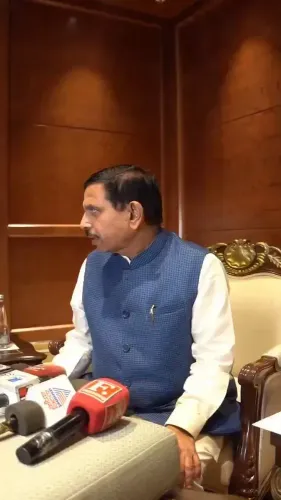
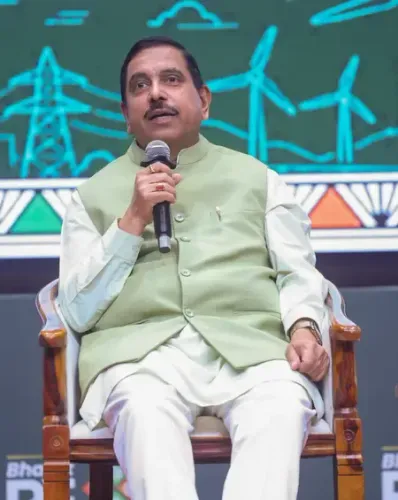
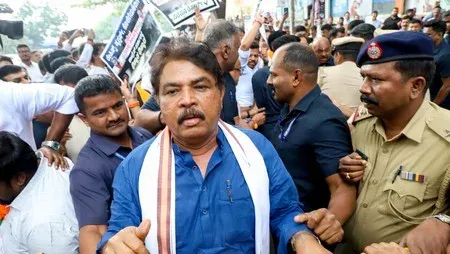
A sharp political broadside landed on Karnataka's ruling Congress on Thursday evening, when Union Consumer Affairs Minister Pralhad Joshi turned the party's own flagship welfare promise into a fiscal accountability question — asking how much the state government had effectively earned from price rises alone since coming to power in May 2023.
Posting in Kannada on November 5, 2026, Joshi wrote: 'Guarantee.. 60 saavira koti.. ee bundal bido Congress, taavu adhikarakke banda nantara eshtu hana kevala bele erikeyinda galisidhe gottaa?' — 'Drop this bundle of lies, Congress. Do you know how much money you have earned just from price rises since you came to power?' He accompanied the post with a video and tagged it #CongressFailsKarnataka.
The Rs 60,000 crore guarantee question
The Congress party swept the Karnataka assembly elections in 2023 on the back of five guarantee schemes — free electricity up to 200 units, free bus travel for women, and financial assistance to women heads of household and unemployed youth, among others. The party had pegged the combined annual cost of these guarantees at around Rs 50,000 crore at the time of the election. Joshi's post cites Rs 60,000 crore — a figure the research flags as unverified — framing it as a 'bundle' that inflated consumer prices rather than relieved them.
The charge follows an established BJP line of attack: that welfare guarantee schemes, however popular at the ballot box, generate fiscal pressure that gets quietly passed on to ordinary consumers through higher prices on everyday goods. Joshi, as the Union minister responsible for consumer affairs and price monitoring, is positioned to make exactly this argument — and he is making it loudly.
BJP's inflation lens on state welfare politics
The hashtag #CongressFailsKarnataka signals this is part of a coordinated BJP messaging push rather than a standalone comment. Senior BJP leaders at the Centre have consistently used consumer price data to question the fiscal sustainability of Congress-run state schemes — in Karnataka, Himachal Pradesh, and Telangana alike. The argument is simple and pointed: if a government promises Rs 50,000-60,000 crore worth of freebies annually, the money has to come from somewhere, and consumers end up paying through inflation even as they celebrate the guarantee in their bank accounts.
What makes Joshi's intervention notable is the ministry from which it is fired. His portfolio — Consumer Affairs, Food and Public Distribution — means he chairs the institutional machinery that tracks retail price data across Indian states. The attack therefore carries an implied threat of scrutiny that a purely political statement would not.
What Karnataka's Congress government faces next
The Karnataka state budget cycle and any forthcoming revision to guarantee scheme outlays will be the real test of the numbers being contested here. If the government's own figures show significant upward revision in the cost of guarantees, Joshi's framing gains traction. If the state can show that inflation in Karnataka has tracked the national average or below, the charge loses its edge.
For now, the BJP has drawn a clear political equation in the minds of Karnataka voters: every rupee guaranteed is a rupee that has to be found — and they are arguing it is being found in your grocery bill.
Point of View
000 crore framing — whether precisely accurate or not — plants a durable narrative that connects guarantee-scheme costs directly to household inflation, a linkage that resonates with middle-class voters who both benefit from schemes and pay grocery bills. This fits a broader BJP strategy of contesting Congress 'freebies' on sustainability grounds rather than opposing individual entitlements, forcing Congress to defend its fiscal arithmetic at every election cycle. The Karnataka government's response to these charges — especially in the upcoming budget cycle — will determine whether the attack sticks or fades.
NationPress
6 Nov 2026
Frequently Asked Questions
What did Pralhad Joshi say about Karnataka Congress guarantee schemes?
On November 5, 2026, Union Minister Pralhad Joshi posted in Kannada challenging Karnataka's Congress government, asking how much it had earned from price rises alone since coming to power and calling the Rs 60,000 crore guarantee promise a 'bundle of lies'.
What are the Karnataka Congress guarantee schemes?
Karnataka Congress won the 2023 assembly elections on five guarantee schemes including free electricity up to 200 units, free bus travel for women, and cash assistance to women heads of household and unemployed youth, with a combined annual cost estimated at around Rs 50,000 crore.
Is the Rs 60,000 crore figure in Joshi's post officially verified?
No. The specific figure of Rs 60,000 crore cited in Joshi's post and the claim that it was earned solely from price rises after 2023 have not been confirmed by any official public record as of November 2026.
Why is Pralhad Joshi specifically raising inflation against the Karnataka government?
Joshi is the Union Minister of Consumer Affairs, Food and Public Distribution, the ministry that monitors retail price data across states. This gives his inflation-linked criticism an institutional weight beyond ordinary political commentary.
What is #CongressFailsKarnataka?
#CongressFailsKarnataka is a BJP hashtag campaign used to amplify criticism of the Karnataka Congress government's governance record, including charges around price rise and the fiscal impact of its welfare guarantee schemes.