Joshi Accuses Karnataka Govt of Blocking PM Schemes Over Branding
Synopsis
Union Minister Pralhad Joshi accused Karnataka's Congress government of leaving its treasury empty by refusing to implement central PM-branded welfare schemes, citing the Congress high command's objection to the 'PM' prefix — reigniting a long-running centre-state branding dispute.
Key Takeaways
Pralhad Joshi posted in Kannada on November 5, 2026 alleging Karnataka's treasury is empty partly due to the state refusing central scheme funds.
Joshi claimed the Congress government is hesitating to implement centrally sponsored schemes because they carry the 'PM' prefix , which he says angers the Congress high command.
The NDA government has mandated uniform 'PM' branding on centrally sponsored schemes since 2014 .
Karnataka has been governed by the Congress since the 2023 assembly elections , and centre-state scheme attribution tensions have been recurring since then.
BJP leaders argue the standoff hurts ordinary beneficiaries — farmers, housing applicants — who depend on schemes like PM-KISAN and PM Awas Yojana .
Analysts are watching Karnataka assembly debates on central scheme uptake and upcoming supplementary budget sessions for signs of resolution.
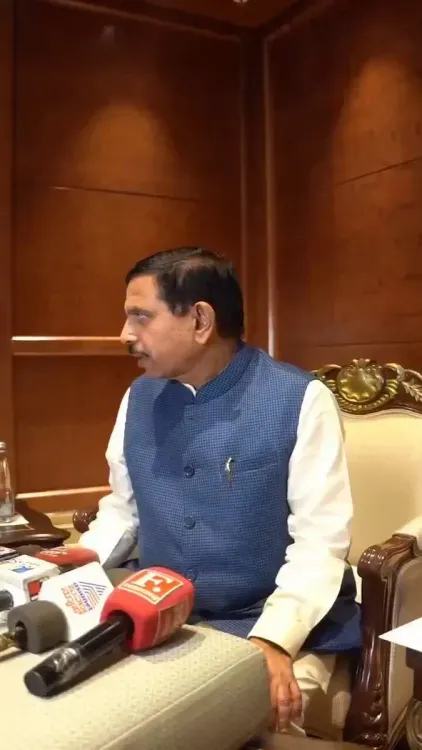
An empty treasury and political pride — that is how Union Consumer Affairs Minister Pralhad Joshi frames the fiscal crisis gripping Karnataka. In a sharp post on X on November 5, 2026, Joshi charged that the Congress-led state government is turning away central funding simply because it refuses to implement schemes bearing the 'PM' prefix.
Posting in Kannada, Joshi wrote: 'ಕರ್ನಾಟಕ ಸರ್ಕಾರದ ಖಜಾನೆ ಖಾಲಿ ಆಗಿದೆ' — 'The Karnataka government's treasury is empty. Money can be saved through central assistance. Central government schemes carry the 'PM' prefix, and because the Congress high command gets angry at that name, the government is hesitating to implement them.' The hashtag #CongressFailsKarnataka closed the message.
The 'PM' Prefix Fight at the Heart of Centre-State Friction
This is not a new battlefield. Since 2014, the NDA government has pushed uniform national branding for centrally sponsored schemes — PM-KISAN, PM Awas Yojana, and dozens more — requiring states to display the Prime Minister's name in all outreach material. Opposition-ruled states have bristled at this, arguing the branding hands political credit to the Centre while state governments do the ground-level work and often contribute matching funds.
Karnataka, governed by Congress since the 2023 assembly elections, is among those states where the tension has been most visible. BJP leaders at the national level have repeatedly pointed to what they describe as deliberate foot-dragging on central scheme implementation in Congress states, framing it as ideology triumphing over governance. Congress leaders counter that states deserve flexibility — and credit — for welfare delivery on their soil.
Who Bears the Cost of a Branding Standoff
Joshi's argument cuts to a practical pressure point: if Karnataka is stretched for funds, refusing centrally sponsored money on reputational grounds is a choice that the state's residents — farmers waiting on PM-KISAN instalments, families on housing waitlists — ultimately pay for. That framing is deliberate. It shifts the accountability question from Delhi's treasury to Bengaluru's political calculations.
Similar disputes have played out in other Congress-governed states, making this part of a wider pattern in Indian federalism. The fight over who gets to put their name on a welfare scheme may look petty; the downstream effect on beneficiaries is anything but. Watch for Karnataka assembly debates on central scheme uptake and any supplementary budget demands as the fiscal year heads into its second half.
When political ego is priced in public money, it is the voter who pays the premium.
Point of View
While opposition states see it as an appropriation of their administrative effort. By connecting a reported treasury shortfall directly to scheme non-implementation, Joshi escalates the argument from optics to outcomes, forcing Congress to defend a position that could look anti-beneficiary to voters. This pattern will intensify as other Congress-ruled states face similar fiscal pressure ahead of assembly cycles.
NationPress
6 Nov 2026
Frequently Asked Questions
Why is Pralhad Joshi criticising Karnataka's government over PM schemes?
Joshi alleges that Karnataka's Congress government is refusing to implement centrally sponsored schemes carrying the 'PM' prefix because the Congress high command objects to the branding, leaving central funds unused even as the state treasury runs low.
What are PM-branded central schemes?
PM-branded schemes are centrally sponsored welfare programmes — such as PM-KISAN and PM Awas Yojana — that carry the Prime Minister's prefix as part of a uniform national branding policy introduced by the NDA government after 2014.
Is Karnataka's state treasury actually empty?
Joshi's post claims the Karnataka treasury is empty, but independent verification of the specific fiscal status as of November 2026 is not available; the assertion is part of a political charge by the BJP minister.
Have other states refused to implement PM-branded schemes?
Yes, several opposition-ruled states have periodically objected to central scheme nomenclature, sought state-level rebranding, or delayed implementation — making this a recurring centre-state dispute in Indian federal politics.
What could happen next in Karnataka regarding central scheme uptake?
Political observers are watching Karnataka assembly debates and supplementary budget sessions for any moves to either accept central scheme funds — with the PM branding — or find alternative state-funded arrangements to plug welfare gaps.