Joshi flags 1.1 lakh ineligible Grihalakshmi beneficiaries in Karnataka
Synopsis
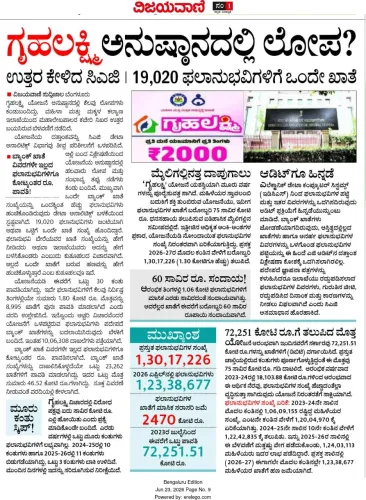
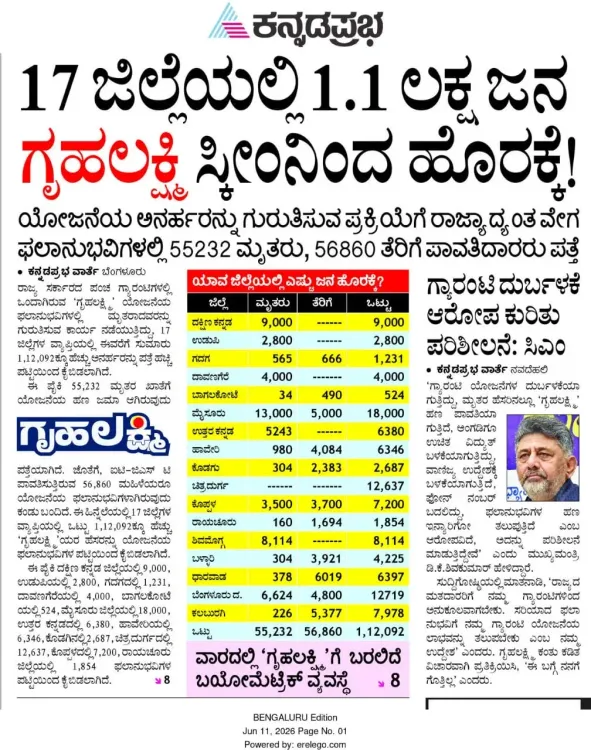
Union Minister Pralhad Joshi has attacked the Karnataka Congress government over alleged irregularities in the Grihalakshmi Yojane, claiming over 1.1 lakh ineligible beneficiaries — including 55,232 deceased persons and 56,860 taxpayers — were found across 17 districts, while eligible women await pending payments.
Key Takeaways
Union Minister Pralhad Joshi posted in Kannada on June 11, 2026 , alleging major irregularities in Karnataka's Grihalakshmi Yojane .
Over 1.1 lakh ineligible beneficiaries have reportedly been identified across 17 districts of Karnataka.
Funds are allegedly being credited to 55,232 deceased persons and 56,860 income-tax payers under the scheme.
Eligible women beneficiaries are said to be awaiting two months of pending payments from the previous year.
Joshi attributed the failures to the scheme being launched 'in haste, without rigorous identification,' calling it a 'mega scam.' The Karnataka Congress government has not yet publicly responded to the specific figures cited.
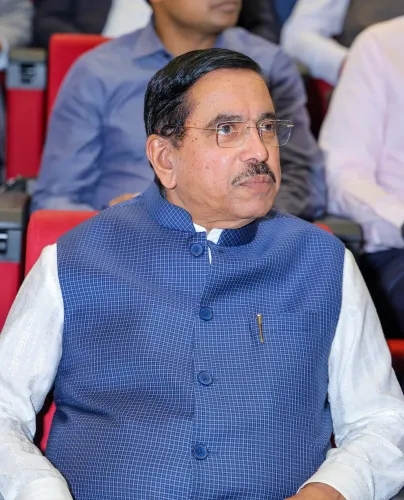
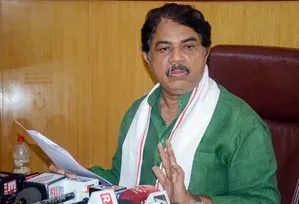
Union Consumer Affairs Minister Pralhad Joshi on Thursday, June 11, 2026, sharply criticised the Karnataka Congress government over alleged large-scale irregularities in the state's Grihalakshmi Yojane, pointing to the detection of over 1.1 lakh ineligible beneficiaries across 17 districts as evidence of systemic mismanagement.
Context
Posting in Kannada on X, Joshi stated that the discovery of ineligible beneficiaries had 'once again exposed the failure of the state government's scheme management.' He alleged that funds were being credited to the accounts of 55,232 deceased persons and 56,860 income-tax payers — categories explicitly ineligible under the scheme's stated objectives. At the same time, he charged that eligible women had not received two months of pending payments from the previous year.
In his words, 'ಕೇವಲ ರಾಜಕೀಯ ಲಾಭಕ್ಕಾಗಿ' ('merely for political gain'), the scheme was announced 'in haste, without any rigorous identification process,' resulting in what he called a 'mega scam.' He used the hashtag #CongressFailsKarnataka.
Policy Backdrop
Grihalakshmi Yojane is one of the five guarantee schemes the Karnataka Congress promised ahead of the May 2023 assembly elections, providing monthly financial assistance to women heads of households. The scheme was a centrepiece of Chief Minister Siddaramaiah's government after it assumed office in May 2023.
Direct-benefit-transfer schemes of this kind depend critically on beneficiary verification — typically cross-referencing Aadhaar, death registers, and income-tax data. Joshi's allegations suggest that such verification was either bypassed or inadequately implemented at rollout, a charge the BJP has levelled at Congress-run welfare programmes in multiple states.
Stakeholders and Impact
The primary stakeholders are Karnataka's women beneficiaries, particularly those from low-income households who are the scheme's intended recipients. If Joshi's figures are accurate, a significant share of the scheme's outgo has been flowing to ineligible parties — deceased persons, taxpayers — while genuinely eligible women reportedly await overdue instalments.
Karnataka taxpayers bear the fiscal cost of the scheme, making beneficiary leakage a direct public-finance concern. The BJP has consistently used such audits to argue that Congress-governed states prioritise political optics over administrative rigour in welfare delivery.
What's Next
The Karnataka government has not yet issued a public response to the specific figures cited by Joshi. Analysts will watch whether the state's Social Welfare Department or the Chief Minister's office contests or acknowledges the audit findings. A Comptroller and Auditor General examination of the scheme's beneficiary rolls, or questions in the state assembly, could force a more detailed official accounting.
The controversy also sets the stage for a broader political contest over welfare governance ahead of future electoral cycles in Karnataka, with the BJP likely to keep Grihalakshmi irregularities as a recurring accountability pressure point against the Siddaramaiah administration.
Point of View
Taxpayer accounts — he shifts the debate from scheme intent to implementation failure, a frame that resonates with middle-class voters concerned about fiscal waste. The timing, well before any state election cycle, suggests the party intends to build a sustained accountability record against the Siddaramaiah government rather than mount a one-off attack. If the Karnataka government cannot credibly rebut these numbers, the Grihalakshmi controversy could become a template for BJP attacks on Congress welfare programmes nationally.
NationPress
26 Oct 2026
Frequently Asked Questions
What is the Grihalakshmi Yojane in Karnataka?
Grihalakshmi Yojane is a Karnataka state government scheme that provides monthly financial assistance to women heads of households. It was one of five guarantee schemes promised by the Congress party ahead of the May 2023 Karnataka assembly elections and was implemented after the party came to power under Chief Minister Siddaramaiah.
What irregularities has Pralhad Joshi alleged in the Grihalakshmi scheme?
Joshi alleged that over 1.1 lakh ineligible beneficiaries were found across 17 Karnataka districts, including 55,232 deceased persons and 56,860 income-tax payers receiving funds. He also claimed eligible women have not received two months of pending payments from the previous year.
How many deceased persons are allegedly receiving Grihalakshmi benefits?
According to Joshi's post, 55,232 deceased persons are allegedly still listed as beneficiaries receiving funds under the Grihalakshmi Yojane. These figures have not been independently verified.
What has the Karnataka government said about the Grihalakshmi irregularities?
As of Joshi's post on June 11, 2026, the Karnataka government had not issued a public response to the specific figures he cited. A formal government rebuttal or audit report is being awaited.
What could happen next in the Grihalakshmi controversy?
Possible next steps include a Karnataka government response contesting or acknowledging the figures, a Comptroller and Auditor General review of the scheme's beneficiary rolls, or assembly questions demanding a detailed account of payments and pending dues.