Pralhad Joshi Files ECI Complaint Over Karnataka Voter Roll Scam
Synopsis
Union Minister Pralhad Joshi led an NDA delegation to meet Chief Election Commissioner Gyanesh Kumar on July 7, 2026, filing a formal complaint alleging that Karnataka's Congress government directed BLOs to process voter enumeration forms inside mosques and madrasas and suppressed deletions to create ghost voters.
Key Takeaways
Pralhad Joshi and senior NDA leaders from Karnataka met Chief Election Commissioner Gyanesh Kumar on July 7, 2026 .
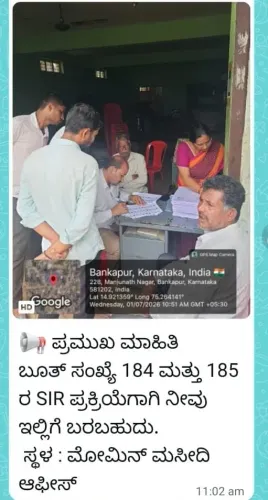
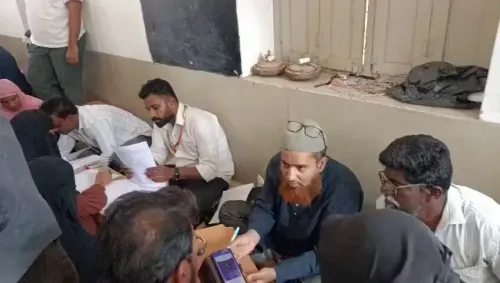
The delegation submitted a formal complaint alleging Booth Level Officers (BLOs) processed voter enumeration forms inside mosques and madrasas instead of conducting mandatory door-to-door verification.
NDA leaders alleged that field staff received oral orders forbidding deletion of any voter name — including those of deceased, migrated, or non-existent persons — to inflate rolls with ghost voters .
The delegation demanded immediate suspension of all BLOs who operated from unauthorised religious premises and an independent re-verification of all compromised forms.
The complaint was backed by what the NDA described as video and photographic evidence; the ECI has not yet issued a formal response.
The alleged irregularities are linked to the ongoing Special Intensive Revision (SIR) of electoral rolls in Karnataka , mandated under the Representation of the People Act, 1950.
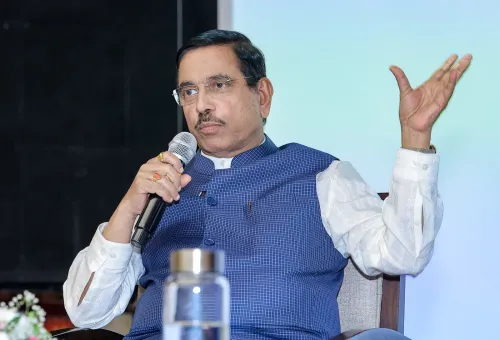
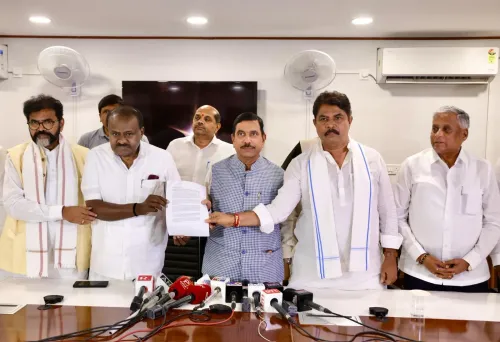
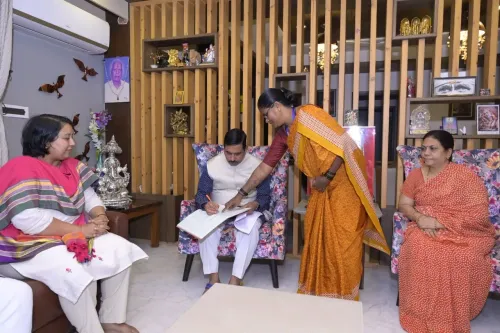
Union Consumer Affairs Minister Pralhad Joshi, along with senior NDA leaders from Karnataka, met Chief Election Commissioner Gyanesh Kumar on Tuesday, July 7, 2026, and submitted a formal complaint alleging large-scale irregularities in the ongoing Special Intensive Revision (SIR) of electoral rolls in the state, backed by what the delegation described as video and photographic evidence.
Context
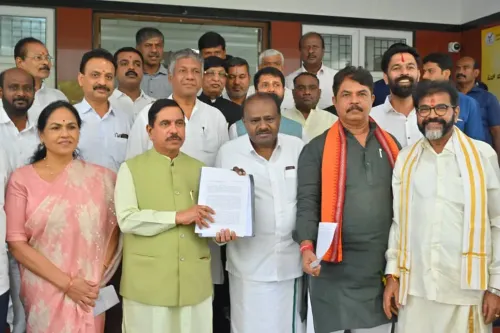
The delegation that met the Chief Election Commissioner included H.D. Kumaraswamy, former Chief Minister of Karnataka and JD(S) leader allied with the NDA, along with R. Ashoka, Arvind Bellad, Shobha Karandlaje, and V. Somanna, all senior BJP leaders from the state. In his post on X, Joshi alleged that Booth Level Officers (BLOs) were caught processing voter enumeration forms inside mosques and madrasas instead of conducting mandatory door-to-door verification — a direct violation of prescribed SIR procedure.
Joshi further alleged that when members of the public confronted these officials, the officers responded by invoking the state government's authority, reportedly saying: 'Do whatever you want, this is a Congress government, you can't do anything here!' The NDA delegation characterised this as evidence of state-sponsored subversion of the electoral process.
Policy Backdrop
The Special Intensive Revision of electoral rolls is a formal exercise mandated under the Representation of the People Act, 1950 and the Registration of Electors Rules, 1960, under which the Election Commission of India (ECI) directs BLOs to conduct house-to-house enumeration to add, correct, or delete entries. The ECI maintains a formal grievance redressal mechanism that includes powers to direct re-verification, issue corrective orders to BLOs, and take disciplinary action against errant officials.
Joshi alleged in his complaint that field staff had received oral instructions explicitly forbidding the deletion of any name from the rolls — whether the person is deceased, has migrated, or does not exist — amounting to what he called a deliberate attempt to introduce 'ghost voters' into the electoral rolls ahead of future elections in the state.
Stakeholders and Impact
The complaint directly concerns Karnataka's registered voters, the BLOs responsible for on-ground enumeration, and the state's ruling Congress government, which the NDA leaders have accused of orchestrating the alleged irregularities. The Congress party has not issued a response to the specific allegations as of the time of this report.
The NDA delegation has demanded the ECI immediately suspend all BLOs found to have operated from unauthorised religious premises and order a comprehensive, independent re-verification of all forms processed through those locations. The outcome of this complaint could have significant implications for the integrity of Karnataka's voter rolls ahead of any future state or local body elections.
What's Next
The Election Commission of India is expected to examine the submitted evidence and issue a formal response. The ECI has in the past directed state-level chief electoral officers to initiate inquiries and take corrective action following documented complaints of BLO misconduct during revision exercises. A formal order on the suspension of the named BLOs and the scope of re-verification, if issued, would mark a significant intervention in the ongoing SIR process in Karnataka.
With the NDA having submitted what it describes as irrefutable audio-visual evidence, the political pressure on the ECI to act swiftly is considerable. The commission's response — or silence — will be closely watched as a signal of its willingness to act against alleged state-level interference in electoral roll management.
Point of View
Typically intensifying when a rival party controls state machinery; the ECI's response will be a litmus test of its institutional credibility in a Congress-governed state. The specific allegation of enumeration inside religious premises adds a communal dimension that is likely to amplify the controversy well beyond routine procedural grievances. How the commission handles the submitted evidence will shape the narrative around electoral integrity in Karnataka going into the next election cycle.
NationPress
6 Oct 2026
Frequently Asked Questions
What complaint did Pralhad Joshi file with the Election Commission of India?
Pralhad Joshi, along with NDA leaders from Karnataka, filed a formal complaint with Chief Election Commissioner Gyanesh Kumar on July 7, 2026, alleging that Booth Level Officers processed voter enumeration forms inside mosques and madrasas and were instructed not to delete any names from the rolls, thereby creating ghost voter entries.
What is the Special Intensive Revision (SIR) of electoral rolls?
The Special Intensive Revision (SIR) is an Election Commission of India-mandated exercise under the Representation of the People Act, 1950, in which Booth Level Officers conduct house-to-house verification to add, correct, or delete entries in the voter rolls.
Who is Gyanesh Kumar?
Gyanesh Kumar is the Chief Election Commissioner of India, the head of the constitutional body responsible for superintendence, direction, and control of elections and electoral rolls across the country.
What action has the NDA demanded from the ECI over the Karnataka voter roll issue?
The NDA delegation has demanded that the ECI immediately suspend all BLOs found to have operated from unauthorised religious premises and order a comprehensive, independent re-verification of all voter enumeration forms processed through those locations.
Has the Karnataka Congress government responded to the NDA's allegations?
As of the time of reporting, the Karnataka Congress government had not issued a formal response to the specific allegations made by the NDA delegation before the Election Commission of India.