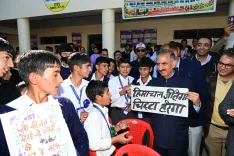
CM Sukhu Addresses Bharmour Rally, Announces CBSE Schools
Synopsis
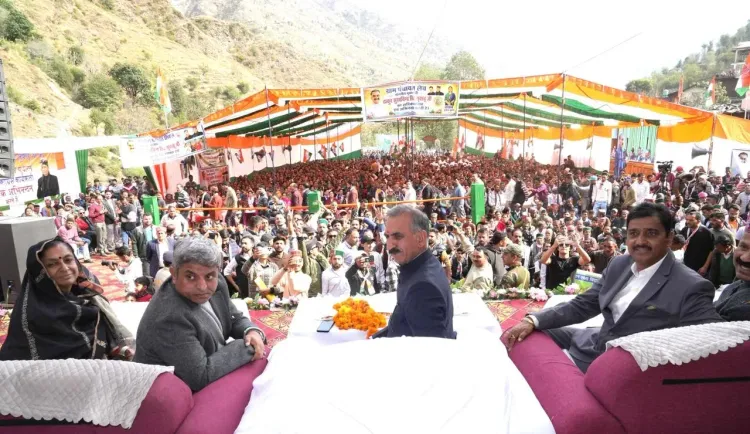
Chief Minister Sukhvinder Singh Sukhu addressed a public rally in Lilh Kothi, Bharmour, announcing CBSE affiliation for four local schools, robotic surgery in state hospitals, the 'Children of the State' orphan scheme, a committee for tribal status for 27 panchayats, and Rs 18 crore for the Holi-Uttarala road.
Key Takeaways
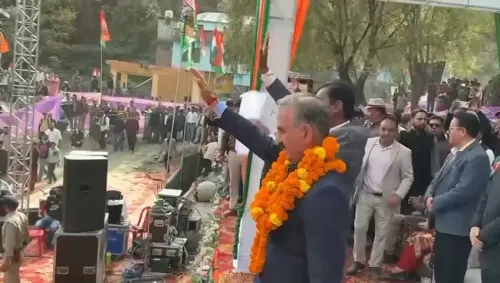
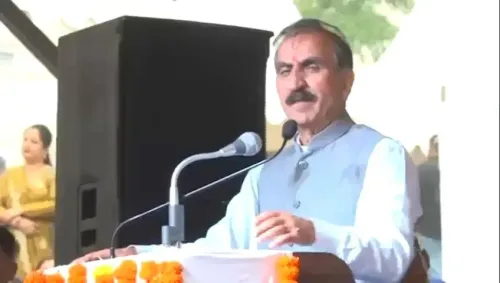
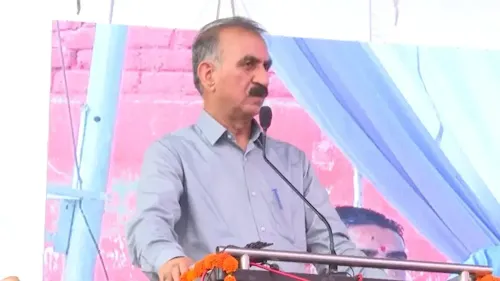
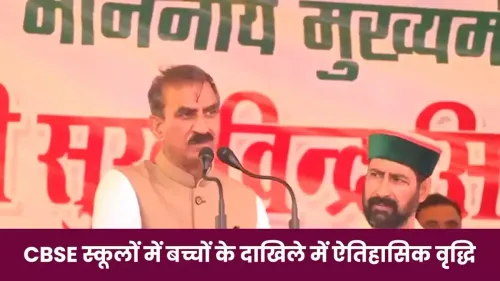
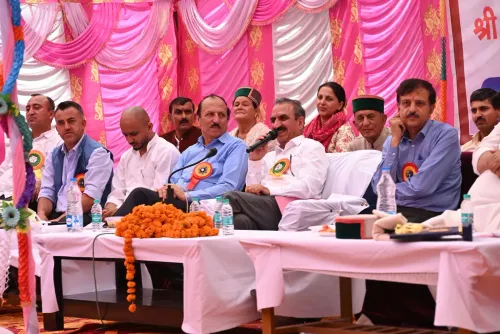
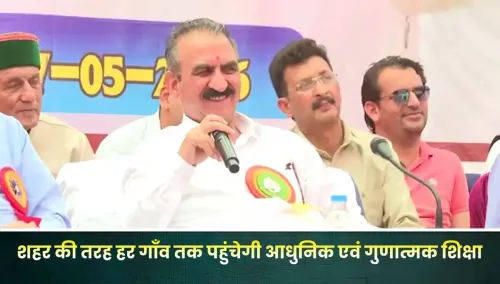
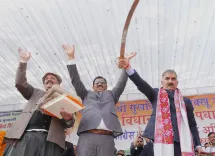
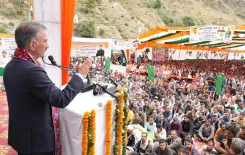
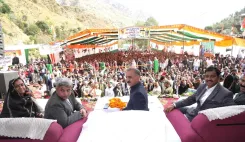
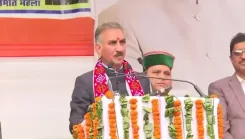
CM Sukhvinder Singh Sukhu addressed a large public rally in Lilh Kothi, Bharmour, Chamba district on 5 November 2026 .
Schools in Holi, Lilh, Mehla and Sunara will be affiliated with CBSE from the next academic session.
The ' Children of the State ' scheme grants orphan children legal protections equivalent to parental guardianship.
Government medical colleges now offer robotic surgery and MRI facilities to reduce urban-rural healthcare disparities.
A committee will be formed to recommend tribal area status for 27 panchayats in Bharmour.
Rs 18 crore announced for construction of the Holi-Uttarala road in Bharmour.
From the remote highlands of Chamba district, Himachal Pradesh Chief Minister Sukhvinder Singh Sukhu delivered a string of welfare and development pledges at a large public gathering in Lilh Kothi on Thursday, November 5, 2026 — signalling that the state government's outreach into tribal constituencies is intensifying ahead of a fresh legislative cycle.
Bharmour's schools set for a CBSE leap
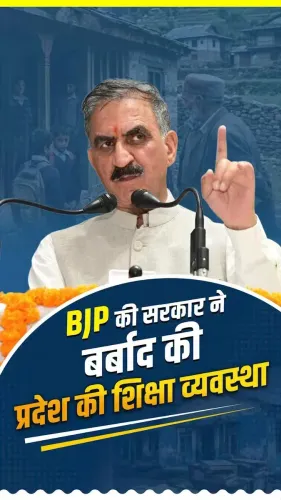
The headline education announcement: schools in Holi, Lilh, Mehla and Sunara in Bharmour will be affiliated with the Central Board of Secondary Education (CBSE) from the next academic session. For families in this high-altitude Gaddi community belt — long served by state-board schools with limited curriculum reach — the shift means children will graduate on the same national footing as students in Shimla or Delhi. It is a small administrative change with an outsized social consequence.
Orphans recognised as 'Children of the State'
Sukhu highlighted the state's 'Children of the State' initiative, which confers on orphan children a legal status and protections equivalent to those provided by parents. Under the scheme, the government steps in as a formal guardian, covering education, welfare and financial security. The Chief Minister positioned it as one of the most human-centred interventions of his administration — the state literally standing in as a family. The programme continues a broader national conversation about institutionalising child welfare rather than leaving it to ad hoc support.
Robotic surgery and MRI arrive in government hospitals
Sukhu told the gathering that government medical colleges across Himachal Pradesh have been equipped with robotic surgery facilities and MRI machines — advanced diagnostics and procedures that residents of hill districts previously had to seek in Chandigarh or Delhi. The state's phased push to close the urban-rural gap in tertiary healthcare is now reaching communities that have historically been among the last to receive upgraded infrastructure.
A committee to pursue tribal status for 27 panchayats
Perhaps the most politically resonant pledge was the commitment to form a committee to recommend tribal area status for 27 panchayats in Bharmour. Tribal classification unlocks a distinct set of Central and state welfare entitlements — from scholarship schemes to priority in government employment — and successive administrations in Shimla have faced sustained pressure from Chamba's Gaddi and Gujjar communities to extend the notification. The committee route is a deliberate, structured step, not a unilateral declaration; its recommendations will determine whether these panchayats ultimately make the cut.
Rs 18 crore for the Holi-Uttarala road
Sukhu also announced Rs 18 crore for the construction of the Holi-Uttarala road in Bharmour — a connectivity project that links interior settlements to the broader highway network. In Himalayan geography, a road is rarely just a road: it determines whether a child reaches school in winter, whether a patient reaches a hospital in time, whether a farmer reaches a market. The allocation puts a concrete number on the state's infrastructure intent in one of Himachal's most inaccessible sub-divisions.
The Lilh Kothi rally reinforces a pattern that has defined the Sukhu government's outreach strategy: take the welfare ledger directly to tribal and remote constituencies, announce specific deliverables, and frame the state as an active partner in daily life. Bharmour has heard promises before. The formation of the tribal-status committee, the named schools, and the road budget are the details that will be watched.
Point of View
Health, child protection, connectivity — to build a cumulative narrative of a responsive government. The tribal-status committee is the most politically loaded pledge; it promises process without committing to an outcome, buying goodwill while managing legal and financial complexity. Watch whether the committee actually reports before the next election cycle, and whether the CBSE affiliations translate into teacher recruitment and infrastructure upgrades — the gap between ribbon-cutting and delivery is where these promises have historically stalled in remote Himachal.
NationPress
5 Nov 2026
Frequently Asked Questions
What is the 'Children of the State' scheme in Himachal Pradesh?
The 'Children of the State' scheme grants orphan children in Himachal Pradesh a legal status and welfare protections equivalent to those provided by parents, with the state government acting as their formal guardian for education, financial security and overall well-being.
Which schools in Bharmour will get CBSE affiliation?
CM Sukhu announced that schools in Holi, Lilh, Mehla and Sunara in Bharmour will be affiliated with the Central Board of Secondary Education (CBSE) from the next academic session.
What is the demand for tribal area status in Bharmour's 27 panchayats?
Communities in Bharmour have long sought tribal area classification for additional panchayats, which would unlock Central and state welfare entitlements including scholarships and employment reservations. CM Sukhu announced a committee will be formed to work towards this.
How much money has been announced for the Holi-Uttarala road?
Chief Minister Sukhu announced Rs 18 crore for the construction of the Holi-Uttarala road in the Bharmour region of Chamba district.
What advanced medical facilities has Himachal Pradesh introduced in government hospitals?
The Sukhu government has introduced robotic surgery facilities and MRI machines in state government medical colleges, aiming to provide advanced diagnostics and treatment to residents without requiring travel to cities like Chandigarh or Delhi.