CM Sukhu Vows to Bridge School Quality Gap, Roll Out CBSE Pattern
Synopsis
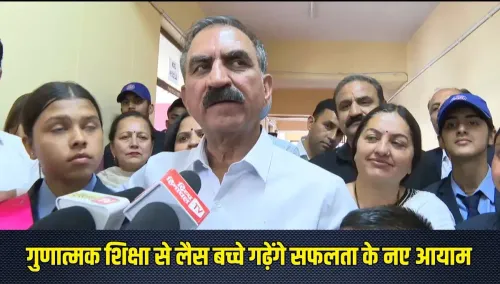
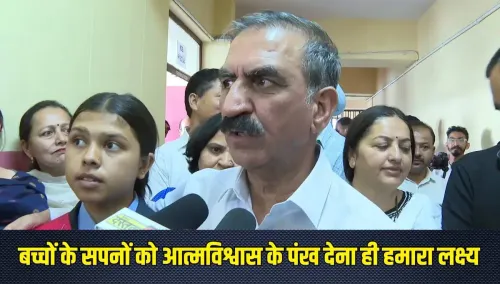
Himachal Pradesh Chief Minister Sukhvinder Singh Sukhu has reaffirmed his government's drive to bridge the quality divide between private and government schools by rolling out the CBSE pattern statewide, while also pledging stronger health infrastructure — framing both as core commitments of his administration.
Key Takeaways
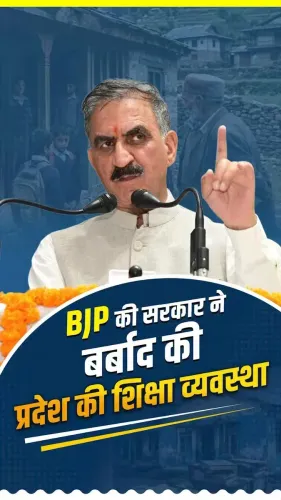
CM Sukhvinder Singh Sukhu publicly committed to equalising education quality between private and government schools in Himachal Pradesh .
The government is actively implementing the CBSE pattern in state-run schools as part of continuous education system reforms.
The move aligns with the National Education Policy 2020 , which encouraged states to adopt national board curricula for quality standardisation.
Students from low-income and rural households stand to benefit most from improved curriculum standards in government schools.
The Chief Minister also signalled ongoing efforts to build a 'robust' health system across the state, indicating a twin-sector reform focus.
State budget allocations for school infrastructure, teacher training, and health facility upgrades will be key indicators of implementation progress.
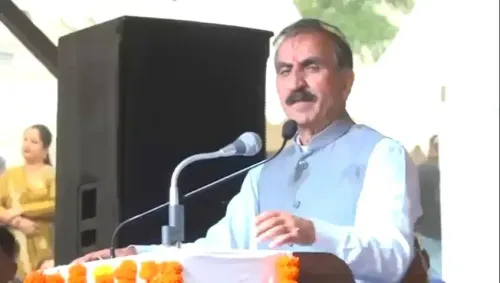
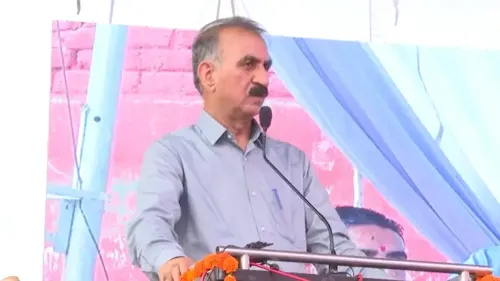
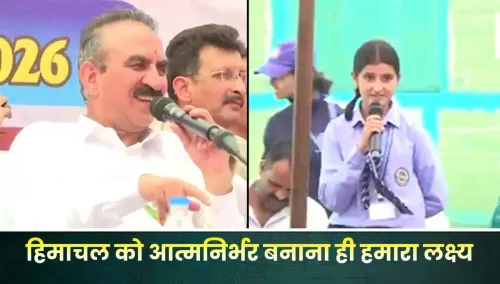
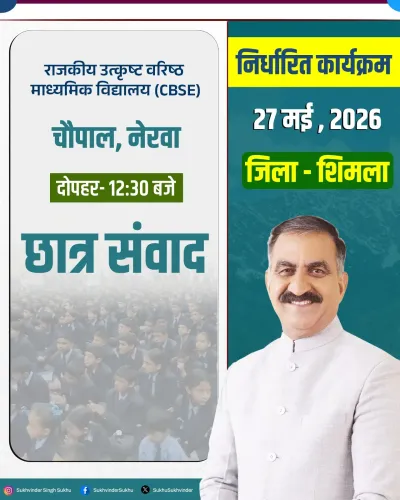
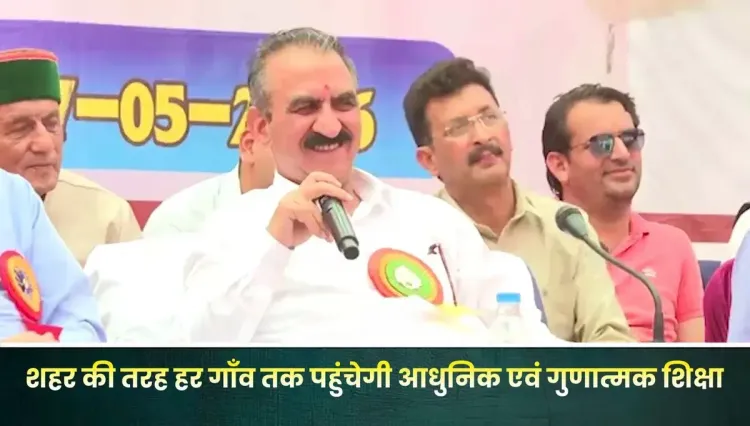
Himachal Pradesh Chief Minister Sukhvinder Singh Sukhu on Wednesday, 27 May 2026, reaffirmed his government's commitment to equalising education quality between private and government schools, announcing the active implementation of the CBSE pattern across the state's public school system. He also pledged continued efforts to strengthen the state's health infrastructure.
Context
In his post, CM Sukhu stated — 'हम निजी और सरकारी स्कूलों के बीच की खाई को पाटकर शिक्षा में समान अवसर और गुणवत्ता सुनिश्चित करने के लिए प्रतिबद्ध हैं' ['We are committed to ensuring equal opportunity and quality in education by bridging the gap between private and government schools']. He added that continuous reforms are being made to the education system and the CBSE pattern is being effectively implemented. The statement signals a policy direction that places standardisation of curriculum at the centre of the state's school reform agenda.
On health, the Chief Minister noted that the government is 'सतत प्रयासरत' [continuously striving] to develop a robust system across the state. He closed with a broader assurance that his administration remains 'alert and committed at every level' to protecting the interests of Himachal Pradesh.
Policy Backdrop
The push to adopt the CBSE curriculum in government schools is part of a nationwide trend that gained momentum after the National Education Policy 2020, which set explicit targets for equitable, high-quality school education and encouraged states to align with national boards. Several Indian states have introduced CBSE or equivalent patterns in public institutions to reduce the perceived quality chasm with private schools and improve board examination outcomes.
Himachal Pradesh, a northern hill state, has a school network that spans remote rural and tribal areas where access to quality private schooling remains limited. For families in these regions, government schools are often the only option, making curriculum quality and assessment standards a direct equity issue. The Sukhu government, in office since December 2022, has framed education and health reform as twin pillars of its governance agenda.
Stakeholders and Impact
The primary beneficiaries of the CBSE rollout in government schools are students from low- and middle-income households who cannot afford private institutions, as well as parents in rural and semi-urban areas who have long demanded parity in learning outcomes. Standardising the curriculum is expected to improve competitive examination preparedness for students entering national-level entrance tests.
Teachers in government schools stand at the centre of implementation: effective adoption of the CBSE pattern requires sustained investment in teacher training, updated learning materials, and upgraded classroom infrastructure. The health reform signal, while brief in the post, points toward ongoing efforts to reduce out-of-pocket expenditure for residents and align state facilities with central health schemes.
What's Next
Observers will look to the state's upcoming budget sessions and legislative assembly proceedings for concrete allocations toward school infrastructure upgrades, teacher training programmes, and the pace of health facility development. The Sukhu administration's ability to translate the stated commitment into measurable outcomes — particularly in remote districts — will determine whether the gap between government and private school quality meaningfully narrows. Parallel health infrastructure investments will be a key indicator of whether the government's twin-sector reform agenda moves beyond policy intent to on-ground delivery.
Point of View
Nationally recognised benchmark — rather than vague reform rhetoric, the administration is attempting to make its education agenda legible and measurable to voters. The pairing of education and health commitments in a single post reflects a broader effort to project comprehensive governance ahead of future electoral cycles. Whether the rhetoric translates into budgetary muscle and on-ground delivery in Himachal's remote districts remains the central test.
NationPress
11 Oct 2026
Frequently Asked Questions
What is CM Sukhu doing to improve government schools in Himachal Pradesh?
CM Sukhvinder Singh Sukhu has announced that the Himachal Pradesh government is implementing the CBSE pattern in government schools to standardise curriculum quality and bridge the gap with private institutions.
Why is CBSE pattern being introduced in Himachal Pradesh government schools?
The CBSE pattern is being introduced to ensure equal educational opportunity and quality for students who rely on government schools, particularly in rural and remote areas where private schooling is inaccessible.
What did CM Sukhu say about health reforms in Himachal Pradesh?
CM Sukhu stated that his government is continuously working to develop a strong and robust health system across Himachal Pradesh, though specific project details were not mentioned in the post.
How does Himachal Pradesh's education reform connect to the National Education Policy 2020?
The National Education Policy 2020 encouraged states to align government school curricula with national boards like CBSE to improve quality and equity, and Himachal Pradesh's current rollout is broadly consistent with those national targets.
When did Sukhvinder Singh Sukhu become Chief Minister of Himachal Pradesh?
Sukhvinder Singh Sukhu became Chief Minister of Himachal Pradesh in December 2022 after the Indian National Congress won the state assembly elections.