Sitharaman: India GCCs Must Lead Global Innovation, Not Just Cut Costs
Synopsis
At the CII National GCC Business Summit 2026, Finance Minister Nirmala Sitharaman declared that India's GCCs must graduate from cost-efficiency hubs to global innovation leaders, urging that the world's ideas, patents and platforms be conceived and led from India over the next decade.
Key Takeaways
Nirmala Sitharaman addressed the CII National GCC Business Summit 2026 on 9 July 2026 .
She stated India's GCC value proposition has shifted 'from cost efficiency to capability leadership.' The Finance Minister called for an increasing share of the world's ideas, patents, products, algorithms and platforms to be conceived and led from India.
India's GCC sector evolved from back-office support in the late 1990s to owning product roadmaps and IP generation for global enterprises.
Potential follow-up fiscal incentives for R&D centres in the next Union Budget will be a key policy signal to watch.
The stated ambition is framed as a decade-long transformation goal, not a near-term target.
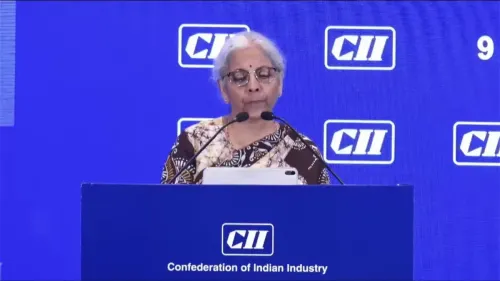
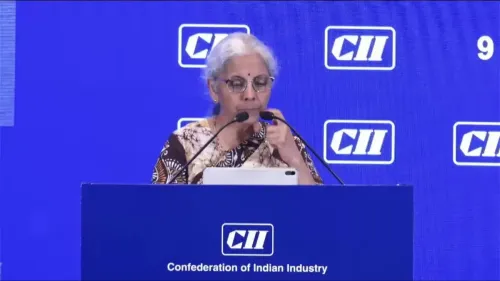
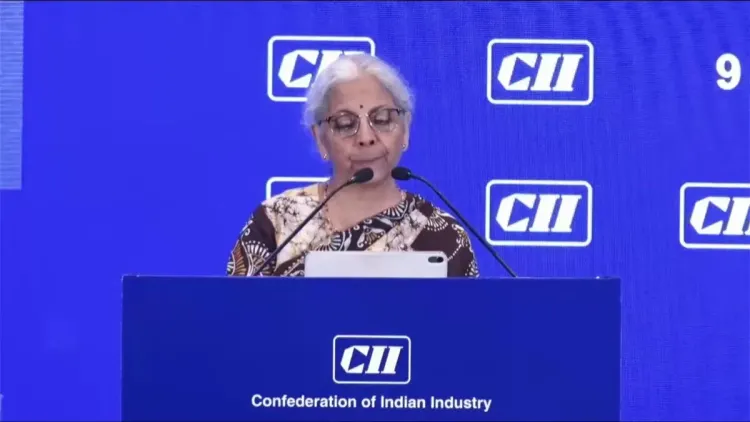
Union Finance Minister Nirmala Sitharaman on Thursday, 9 July 2026, called on India's Global Capability Centres (GCCs) to move decisively beyond cost arbitrage and assume ownership of the world's ideas, patents, products and enterprise platforms, speaking at the CII National GCC Business Summit 2026 in New Delhi.
Context
Addressing industry leaders at the summit convened by the Confederation of Indian Industry (CII), Sitharaman articulated a shift in how the government views India's GCC proposition. 'India's value proposition has evolved from cost efficiency to capability leadership,' she said, framing the change as structural rather than incremental.
She argued that enterprises are 'now moving beyond minimising cost to maximising innovation, accelerating discovery and strengthening long-term competitiveness' — a formulation that signals a deliberate pivot in official ambition for the sector.
Policy Backdrop
India's GCC ecosystem traces its origins to FDI policy relaxations in the services and IT sectors from the late 1990s, which allowed multinational firms to set up captive centres initially focused on back-office and IT support. Over the subsequent two decades, many of those centres progressively acquired product roadmap ownership, intellectual property generation and regional profit-and-loss responsibility for their parent enterprises.
The Finance Minister's remarks align with a broader government push to raise India's position in global value chains — through talent development, digital public infrastructure and regulatory facilitation of innovation — moving the economy from volume-based services exports to high-value knowledge exports. The CII National GCC Business Summit 2026 provided a platform to publicly anchor that ambition at the ministerial level.
Stakeholders and Impact
The immediate audience is the community of multinational corporations that operate GCCs in India, whose headquarters make decisions on how much strategic latitude to grant their Indian units. Sitharaman signalled that the government's goal is not simply to attract more GCC headcount but to ensure 'an increasing share of the world's ideas, patents, products, algorithms, platforms and enterprise capabilities are conceived, engineered and led from India.'
Indian technology professionals and R&D institutions stand to benefit most directly if the ambition translates into policy incentives — such as enhanced R&D tax credits or IP-registration facilitation — that could feature in a forthcoming Union Budget. MNC headquarters will watch for concrete regulatory or fiscal signals that make India a more attractive destination for high-value mandates rather than purely cost-sensitive work.
What's Next
Industry trackers will look to the next major CII or sector-body GCC report for data on the share of strategic mandates and patent filings attributable to India-based centres, which would provide a measurable baseline against which the Finance Minister's ambition can be tracked. Any follow-up fiscal incentives for R&D centres in the forthcoming Union Budget will be read as a concrete policy commitment behind the summit rhetoric.
If India's GCC community successfully shifts from executing global strategies to originating them, the country's role in the global innovation economy could expand substantially — a transition that Sitharaman described as the defining ambition 'for the next decade.'
Point of View
Since she controls the Budget levers — R&D tax incentives, IP-registration frameworks — that would need to move for the rhetoric to become policy. The speech also positions India ahead of competing GCC destinations such as Poland, Mexico and the Philippines, which remain primarily cost-arbitrage plays. Whether the ambition translates into measurable outcomes — patent filings, strategic mandates, product launches from Indian centres — will be the real test of this decade-long agenda.
NationPress
8 Oct 2026
Frequently Asked Questions
What did Nirmala Sitharaman say at the CII GCC Summit 2026?
Finance Minister Nirmala Sitharaman said India's GCCs have moved from cost-efficiency hubs to capability leaders, and called for the world's ideas, patents, products, algorithms and platforms to be conceived and led from India over the next decade.
What is a Global Capability Centre (GCC) in India?
A Global Capability Centre is a captive unit set up by a multinational corporation in India to handle functions ranging from IT support to, increasingly, product development, R&D and strategic decision-making for the parent enterprise.
How many GCCs are there in India?
India hosts one of the largest concentrations of GCCs in the world, a figure that has grown significantly since the late 1990s when FDI policy relaxations first enabled multinationals to establish captive centres; exact current counts are tracked in periodic industry reports.
What is the CII National GCC Business Summit?
The CII National GCC Business Summit is an annual industry event organised by the Confederation of Indian Industry (CII) that brings together multinational corporations, Indian technology firms and policymakers to discuss the trajectory of Global Capability Centres in India.
Will the Union Budget offer incentives for GCC R&D in India?
No specific Budget measures have been announced yet, but Finance Minister Sitharaman's emphasis on innovation leadership at the CII GCC Summit 2026 has led industry observers to watch the forthcoming Union Budget for potential R&D tax credits or IP-facilitation measures targeting GCCs.