GCC expansion to reach Tier-II, Tier-III cities: FM Sitharaman at CII Summit
Synopsis
India's first 2,000 GCCs clustered around Bengaluru, Hyderabad, and Gurugram — but Finance Minister Nirmala Sitharaman says that era is over. At the CII GCC Summit 2026, she made a pointed case for Varanasi, Visakhapatnam, and Tiruchirappalli as the next innovation frontiers, framing geographic diversification not as a fallback but as a deliberate national strategy.
Key Takeaways
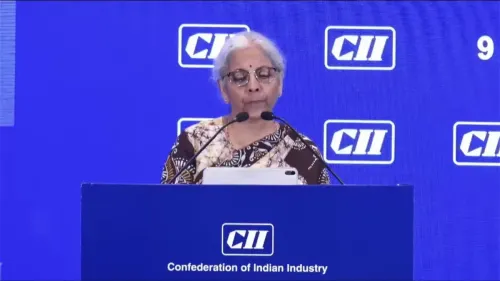
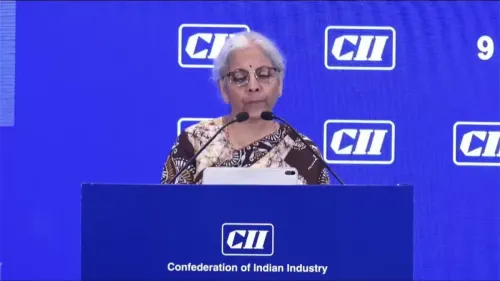
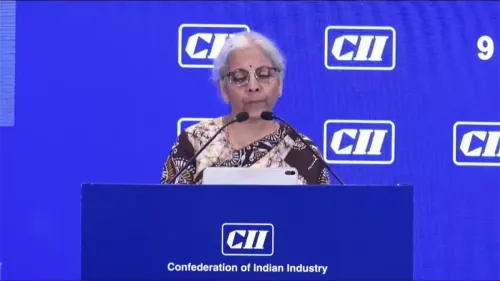
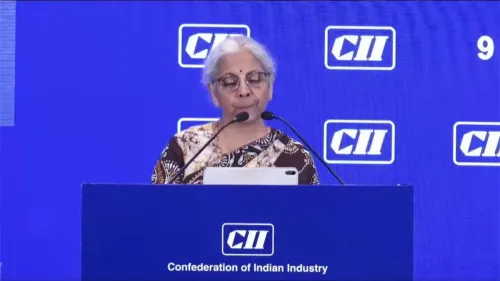
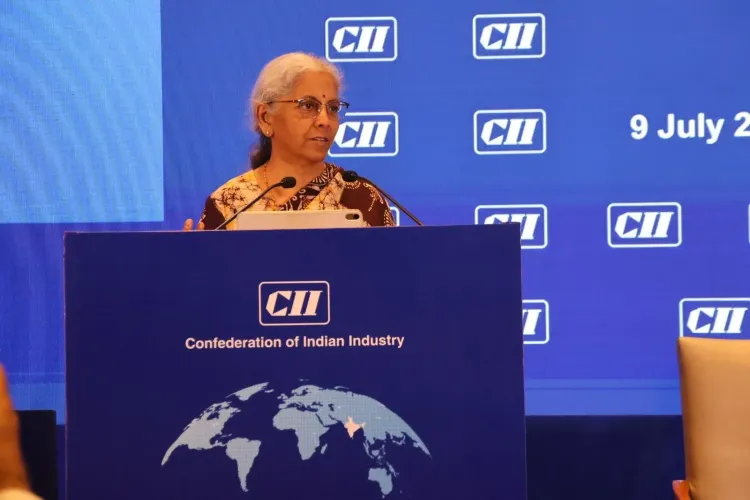
Finance Minister Nirmala Sitharaman addressed the CII National GCC Business Summit 2026 in New Delhi on 9 July 2026 .
The first 2,000 GCCs in India were concentrated in metros; the next wave is expected to spread to Tier-II and Tier-III cities .
Cities such as Varanasi , Chandigarh , Visakhapatnam , Tiruchirappalli , and Mysuru were cited as emerging GCC destinations.
Sitharaman said each new GCC in a smaller city creates a multiplier effect — boosting skills, start-ups, housing, infrastructure, and university partnerships.
State governments have responded encouragingly, each offering distinct competitive advantages to attract GCC investment.
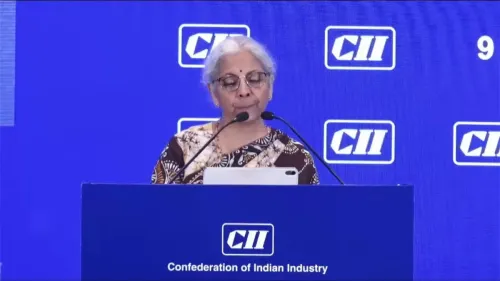
Finance Minister Nirmala Sitharaman on Thursday, 9 July 2026 said India's next phase of global capability centre (GCC) expansion will be far more geographically diverse, with Tier-II and Tier-III cities emerging as key hubs of innovation and balanced regional development. She made the remarks while addressing the CII National GCC Business Summit 2026 in New Delhi.
Beyond the Metro Cluster
Sitharaman noted that the first 2,000 GCCs established in India were largely concentrated in metropolitan centres. The next wave, she said, is expected to break that pattern as the geography of global value creation undergoes a structural transformation. Cities such as Varanasi, Chandigarh, Visakhapatnam, Tiruchirappalli, and Mysuru are now being positioned as credible alternatives to established technology hubs like Bengaluru, Hyderabad, and Gurugram.
'This locational choice is deliberate because the next phase of our GCC story cannot remain confined to a handful of metropolitan centres,' Sitharaman said at the summit.
The Multiplier Effect on Local Economies
The Finance Minister outlined how a single GCC entering a smaller city can trigger a broad economic cascade. Beyond direct employment, such a presence drives demand for advanced skills and specialised training, boosts start-ups and professional services, stimulates housing and urban infrastructure development, and deepens research collaborations between universities, industry, and local institutions.
'When a GCC establishes itself in one of these cities, there is a multiplier impact. It creates demand for advanced skills and specialised training,' Sitharaman said, underscoring the compounding benefits of decentralised GCC growth.
GCCs as Catalysts for Regional Development
Sitharaman argued that this geographic spread positions GCCs not merely as corporate back-offices but as active drivers of innovation-led regional economies. Future breakthroughs in artificial intelligence, engineering design, and product development, she said, could emerge from smaller cities just as readily as from established tech corridors. 'In doing so, GCCs become catalysts for balanced regional development. This presents an important partnership opportunity for GCCs in shaping the next generation of innovation-led economic regions across India,' she explained.
States Step Up
Highlighting the role of state governments, Sitharaman said the response from states has been encouraging, with each possessing distinct competitive advantages that can be leveraged to attract GCC investment. This comes amid a broader policy push to distribute high-value economic activity more evenly across India's geography, reducing the concentration risk that comes with over-reliance on a few large cities.
What Comes Next
The CII summit signals growing industry alignment with the Centre's decentralisation agenda. As global multinationals scout for cost-competitive, talent-rich locations beyond saturated metros, India's smaller cities — backed by improving digital infrastructure and state-level incentives — are increasingly entering the conversation. The next phase of GCC growth, if the momentum holds, could meaningfully reshape India's innovation map.
Point of View
But the hard work lies beneath the rhetoric. Tier-II cities still face real constraints — inconsistent power supply, thinner talent pipelines, and weaker social infrastructure for expatriate professionals. The multiplier effect she describes is real when GCCs actually embed locally, but many operate as satellite offices with limited community linkage. The policy question mainstream coverage skips is this: what specific incentive architecture will make Varanasi or Tiruchirappalli genuinely competitive against Bengaluru on day-one talent availability? Without that answer, the vision risks remaining aspirational rather than operational.
NationPress
8 Oct 2026
Frequently Asked Questions
What did Finance Minister Nirmala Sitharaman say about GCC expansion in India?
Sitharaman said India's next phase of global capability centre expansion will be geographically diverse, with Tier-II and Tier-III cities replacing metros as the primary growth hubs. She made the remarks at the CII National GCC Business Summit 2026 in New Delhi on 9 July 2026.
Which cities were named as potential GCC hubs beyond the metros?
Sitharaman specifically named Varanasi, Chandigarh, Visakhapatnam, Tiruchirappalli, and Mysuru as cities with the potential to host the next wave of GCC growth, alongside established hubs like Bengaluru, Hyderabad, and Gurugram.
How many GCCs does India currently have?
According to Sitharaman's remarks at the summit, India's first 2,000 GCCs were largely concentrated in metropolitan centres. The next phase is expected to extend well beyond that geographic cluster.
What is the multiplier effect of a GCC in a smaller city?
According to Sitharaman, when a GCC sets up in a Tier-II or Tier-III city, it generates demand for advanced skills and specialised training, stimulates start-ups and professional services, boosts housing and urban infrastructure, and strengthens university-industry partnerships — creating a broad local economic cascade.
What role are state governments playing in GCC decentralisation?
Sitharaman said the response from state governments has been encouraging, with each state offering distinct competitive advantages. States are increasingly positioning themselves to attract GCC investment as part of a broader national push to distribute high-value economic activity more evenly across India.