CM Bhajanlal Sharma Chairs Revenue Dept Meet, Orders Crackdown
Synopsis
Chief Minister Bhajanlal Sharma chaired a meeting of Rajasthan's revenue departments on 9 July 2026, directing officials to use decoy operations, technology, and inter-state best practices to crack down on tax evasion and strengthen the state's fiscal machinery.
Key Takeaways
CM Bhajanlal Sharma chaired a meeting of revenue-earning departments on 9 July 2026 .
Officials were directed to take the 'strictest' action against revenue theft, with results expected to be visible on the ground.
Decoy operations combined with technology and innovation were mandated to curb tax evasion.
Departments were instructed to study tax systems of other states and implement best practices in Rajasthan.
The drive aligns with Rajasthan's ongoing digitisation of e-way bills and online returns initiated in 2024–25.
Quarterly revenue collection figures will be the key indicator of whether these directives produce measurable results.
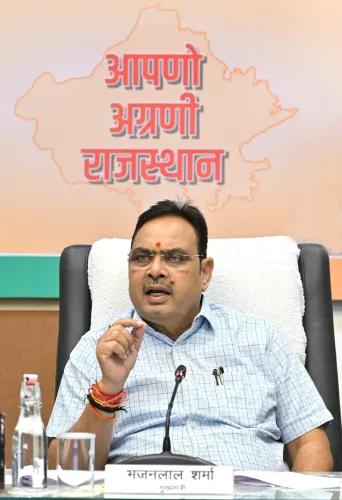
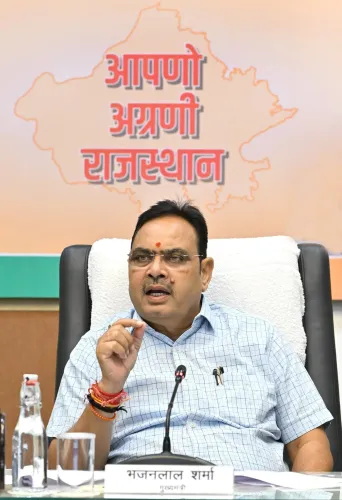
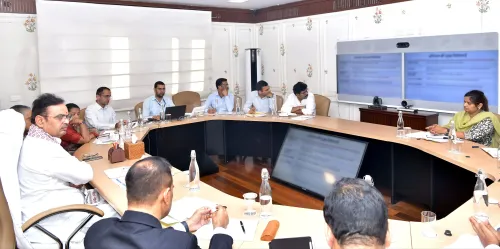
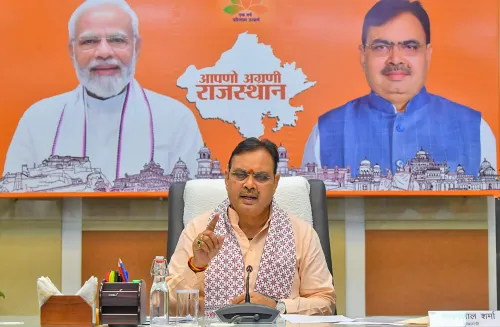
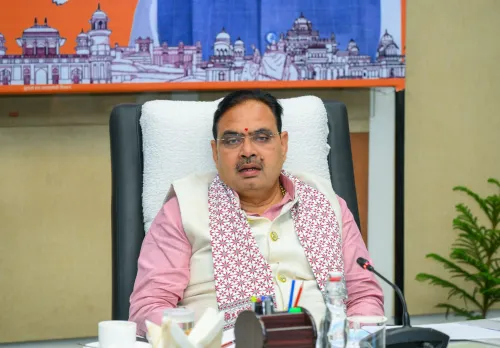
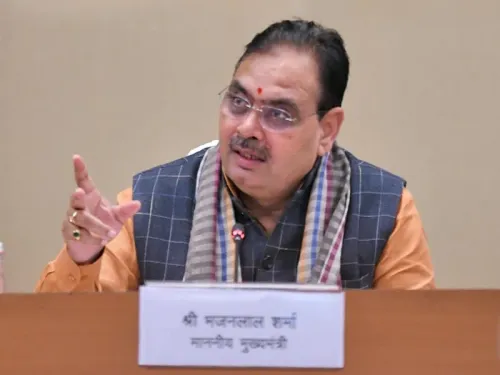
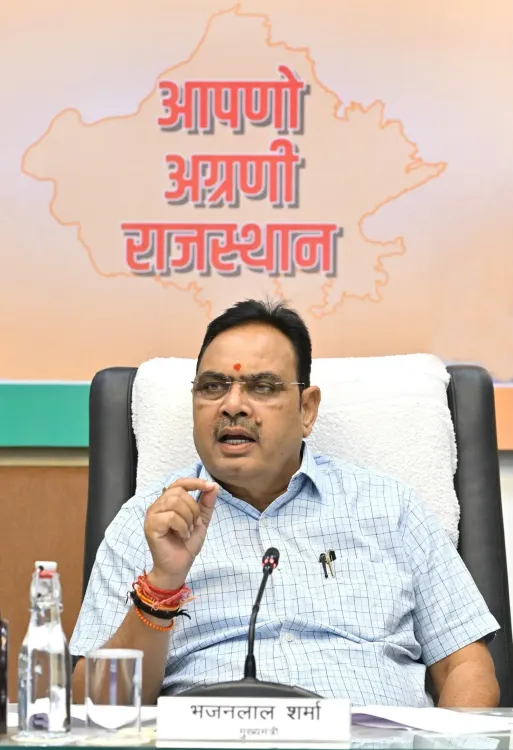
Chief Minister Bhajanlal Sharma on Thursday, 9 July 2026, chaired a high-level meeting of revenue-earning departments of the Government of Rajasthan, issuing firm directives to officials to intensify action against tax evasion and modernise the state's collection machinery.
What the CM Said
Sharma told assembled officials that action against revenue theft must be 'strictest of the strict' — and crucially, its results must be 'dharat al par dikhai dene chahiye' (visible on the ground). He directed departments to deploy decoy operations alongside technology and innovation to curb tax evasion, and to study best practices from other state tax systems for adoption in Rajasthan.
The meeting was held under the government's broader campaign #AapnoAgrani Rajasthan (Our Leading Rajasthan), which frames administrative and economic reforms as a path to making Rajasthan a front-ranking state.
Context
Rajasthan's revenue departments — including the Commercial Taxes Department and the Excise Department — are the primary engines of the state's own-tax revenue. The Commercial Taxes Department administers GST, VAT, and allied levies, while the Excise Department oversees liquor licensing and taxation, both of which are perennially targeted by evasion networks.
Since Sharma assumed office in December 2023, his BJP government has signalled an emphasis on administrative efficiency. The 2024–25 fiscal year saw a statewide digitisation push for e-way bills and online returns, aimed at plugging leakages in commercial tax collections.
Policy Backdrop
India's transition to the GST regime in July 2017 integrated Rajasthan's tax administration into the national framework, but also created new compliance gaps that state authorities have worked to close ever since. Data analytics, surprise inspections, and inter-state benchmarking have become standard tools across Indian states.
States such as Maharashtra and Karnataka have run high-profile decoy and data-driven anti-evasion drives since 2023, and Rajasthan's directive to study and adopt such 'best practices' places it squarely within this national trend. The instruction to look beyond state borders signals an intent to institutionalise benchmarking rather than treat it as a one-off exercise.
Stakeholders and Impact
Revenue officials across the Commercial Taxes and Excise departments are the immediate recipients of these directives, with the expectation that enforcement outcomes will be measurable. The business community — particularly traders and manufacturers operating across state lines — will face heightened scrutiny through decoy checks and digital surveillance of transactions.
For ordinary citizens, improved revenue collection translates into a stronger fiscal base for welfare and infrastructure spending. Tax evaders, however, face the prospect of coordinated, technology-backed enforcement that is harder to anticipate or circumvent.
What's Next
The key metric to watch will be Rajasthan's quarterly revenue collection data in the coming months, which will indicate whether the crackdown translates into measurable gains. Any new technology tenders for tax monitoring systems in the next state budget cycle will signal how seriously the government pursues the innovation mandate issued at this meeting.
If decoy operations and inter-state benchmarking are formalised into standing procedures, Rajasthan could emerge as a model for revenue enforcement among mid-size Indian states — a goal that aligns directly with the Aapno Agrani Rajasthan vision.
Point of View
Not just welfare spending. The emphasis on ground-level visibility of results suggests an awareness that anti-evasion drives in Rajasthan have historically produced announcements without sustained outcomes. By institutionalising inter-state learning, the government is also hedging against the risk of enforcement fatigue within its own bureaucracy. If quarterly revenue data improves, this meeting will be cited as a turning point; if not, the directive itself becomes political liability.
NationPress
10 Jul 2026
Frequently Asked Questions
What did CM Bhajanlal Sharma say at the revenue departments meeting?
Sharma directed officials to take the strictest possible action against tax evasion, deploy decoy operations alongside technology, and adopt best practices from other states' tax systems.
What are decoy operations in tax enforcement?
Decoy operations involve revenue officials posing as ordinary buyers or transporters to catch tax evaders in the act — for instance, checking whether a seller issues a proper bill or whether goods in transit carry valid documentation.
Which departments were part of this Rajasthan revenue meeting?
The meeting covered revenue-earning departments broadly, with the Commercial Taxes Department and the Excise Department being the primary bodies responsible for GST, VAT, and excise collections in Rajasthan.
How does Rajasthan plan to use technology to stop tax evasion?
The state has already pushed digitisation of e-way bills and online returns since 2024–25. The CM's latest directive expands this by coupling digital tools with physical decoy checks and data analytics for more comprehensive enforcement.
What is the Aapno Agrani Rajasthan campaign?
'Aapno Agrani Rajasthan' — meaning 'Our Leading Rajasthan' — is the BJP state government's overarching campaign framing administrative, economic, and governance reforms as steps toward making Rajasthan a front-ranking Indian state.