Sitharaman in Shillong: Northeast needs stronger institutions, not just investment
Synopsis
Finance Minister Nirmala Sitharaman, speaking in Shillong on 19 June 2026, declared that the Northeast's next growth phase demands stronger institutions and implementation capacity — not merely more investment — signalling a governance-first pivot in the region's development strategy.
Key Takeaways
Union Finance Minister Nirmala Sitharaman spoke in Shillong on 19 June 2026 , addressing Northeast development strategy.
She said the past decade of 'significant investments' improved infrastructure, connectivity, social services, and economic opportunities across the North-Eastern region .
She called for 'stronger institutions, greater implementation capacity, deeper partnerships' as the next phase of growth — beyond capital spending alone.
The remarks align with the Viksit Bharat framework's emphasis on governance quality alongside physical asset creation.
Key policy instruments in focus include the PM-DevINE scheme , the North East Special Infrastructure Development Scheme , and the North Eastern Council .
Next Union Budget allocations for DoNER and NEC capacity-building will be the clearest indicator of whether this institutional emphasis is backed by new funding.
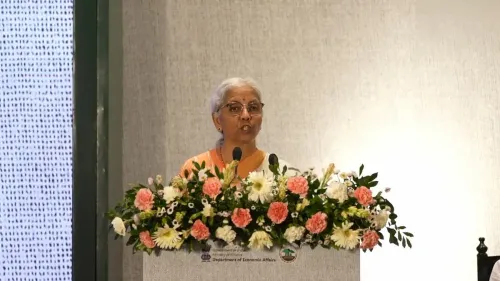
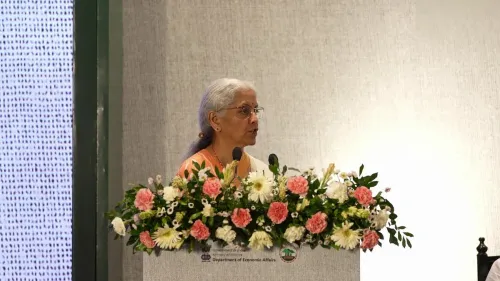
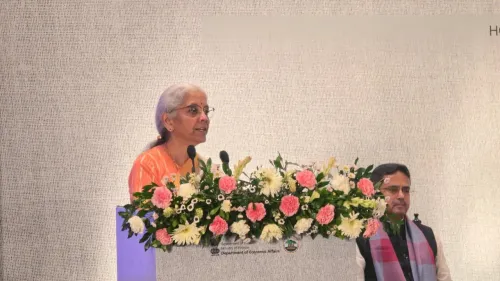
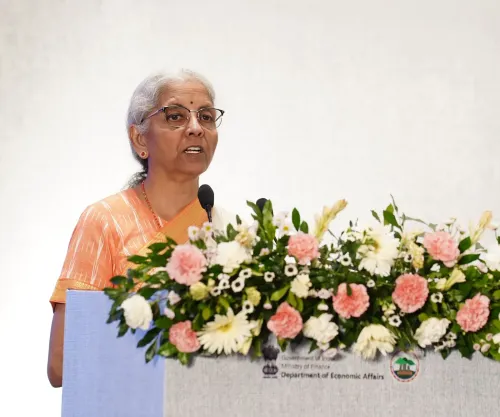
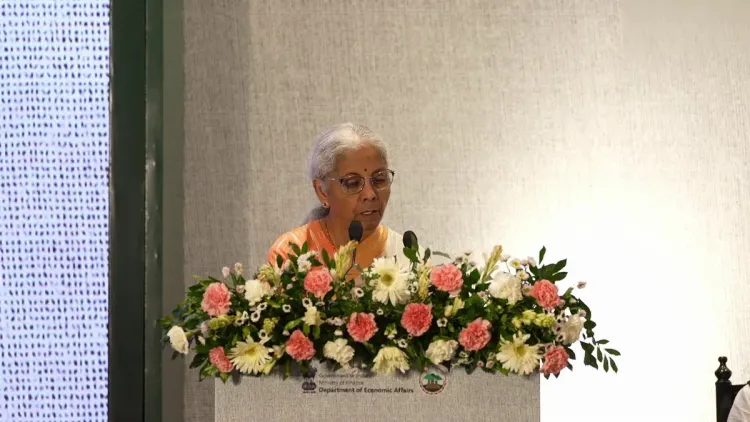
Union Finance Minister Nirmala Sitharaman on Friday, 19 June 2026, speaking in Shillong, called for a decisive shift in the Northeast's development strategy — from capital expenditure alone toward building stronger institutions, deeper implementation capacity, and partnerships that can convert infrastructure gains into lasting economic outcomes.
Context
Sitharaman acknowledged that the past decade had seen 'significant investments' in the North-Eastern region that improved infrastructure, expanded connectivity, strengthened social services, and enhanced economic opportunities. But she was pointed in her assessment: investment alone is no longer sufficient. 'The next phase of growth will require stronger institutions, greater implementation capacity, deeper partnerships and the ability to convert opportunities into lasting development outcomes,' she said.
Her remarks were addressed to an audience gathered in Shillong, the capital of Meghalaya and a regular venue for high-level Northeast policy deliberations. The occasion, she stressed, was 'not merely to discuss projects or financing' but to accelerate the transformation of the Northeast and enable every state to 'fully realize its immense potential.'
Policy Backdrop
The Union government's engagement with the North-Eastern region intensified after the Act East Policy was announced in 2014, which repositioned the eight states as India's strategic gateway to Southeast Asia. That pivot triggered a wave of road, rail, and digital connectivity projects backed by dedicated funding streams.
Two major schemes followed: the North East Special Infrastructure Development Scheme launched in 2017 and the PM-DevINE scheme in 2022, both targeting roads, power, and social infrastructure. The North Eastern Council (NEC) was reconstituted in 2018 with an expanded mandate to improve coordination between state governments and the Centre. The Ministry of Development of North Eastern Region (DoNER) has since served as the nodal body for channelling these outlays.
Sitharaman's remarks signal a deliberate policy pivot — from measuring success in rupees disbursed to measuring it in outcomes delivered. This aligns with the broader Viksit Bharat governance framework, which stresses institutional quality and fund-absorption capacity alongside physical asset creation.
Stakeholders and Impact
The eight Northeastern states — historically underserved on connectivity and public services — stand to gain most directly from this institutional push. State governments, which have often struggled with project implementation and fund utilisation, are the primary addressees of Sitharaman's call for 'greater implementation capacity.'
Local communities and youth across the region are the ultimate beneficiaries. A shift toward governance quality means faster project completion, better service delivery, and more durable economic gains — outcomes that physical spending alone has not always guaranteed in the region.
What's Next
Attention will now turn to the forthcoming North Eastern Council plenary session and the next Union Budget allocations for DoNER and NEC capacity-building programmes. Whether Sitharaman's institutional emphasis translates into new budgetary instruments — such as performance-linked grants or technical-assistance funding for state governments — will be the clearest test of this stated policy direction. The Northeast's trajectory as a development model within the broader Viksit Bharat vision now depends as much on governance reform as on further capital infusion.
Point of View
The Finance Ministry is now foregrounding institutional quality and fund-absorption as the metrics of progress. This pivot is consistent with the Centre's 'Viksit Bharat' governance narrative, which increasingly frames development not as spending but as outcomes. For the eight Northeastern states, the message carries both promise and pressure — greater institutional support from the Centre, but also greater accountability for delivery. Whether this framing produces new fiscal instruments in the next Budget, or remains aspirational, will define its political and policy legacy.
NationPress
18 Sept 2026
Frequently Asked Questions
Why did Nirmala Sitharaman visit Shillong in June 2026?
Sitharaman was in Shillong on 19 June 2026 to address a high-level meeting focused on Northeast development, where she called for stronger institutions and implementation capacity to drive the region's next phase of growth.
What is the PM-DevINE scheme for the Northeast?
The PM-DevINE (Prime Minister's Development Initiative for North East Region) scheme was launched in 2022 to fund roads, power infrastructure, and social projects across the eight Northeastern states, complementing earlier schemes like the North East Special Infrastructure Development Scheme.
What is the North Eastern Council and what does it do?
The North Eastern Council (NEC) is a statutory advisory body reconstituted in 2018 with an expanded mandate to coordinate socio-economic development across India's eight Northeastern states in partnership with the Union government.
What is the Act East Policy and how does it relate to the Northeast?
The Act East Policy, announced in 2014, repositioned India's Northeastern states as the country's strategic and economic gateway to Southeast Asia, triggering major investments in road, rail, and digital connectivity in the region.
What does 'implementation capacity' mean in the context of Northeast India development?
'Implementation capacity' refers to the ability of state governments and local bodies to efficiently absorb allocated funds, execute projects on schedule, and translate infrastructure spending into measurable improvements in services and living standards — an area where the Northeast has historically faced challenges.