Uttarakhand CM Office: Women Launching Ventures via State Schemes

Synopsis
The Chief Minister's Office of Uttarakhand highlighted on 2 November 2026 that women in Rudraprayag and Udham Singh Nagar are setting up enterprises inspired by state government schemes, framing self-employment as a statewide movement across hill and plain districts.
Key Takeaways
The CMO of Uttarakhand posted on 2 November 2026 that women are establishing enterprises inspired by state government schemes.
Two geographically distinct districts — Rudraprayag in the Garhwal Himalayas and Udham Singh Nagar in the Terai belt — were named, indicating a statewide push.
Uttarakhand has run self-employment and women-empowerment programmes since its formation in 2000 , aimed at curbing out-migration from rural areas.
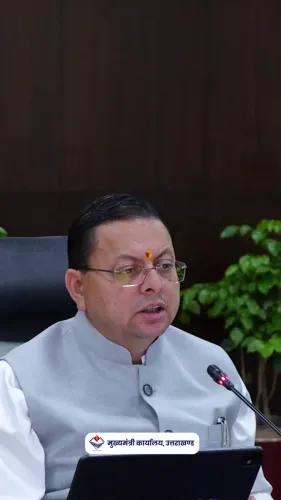
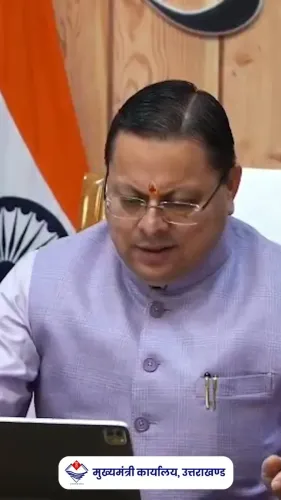
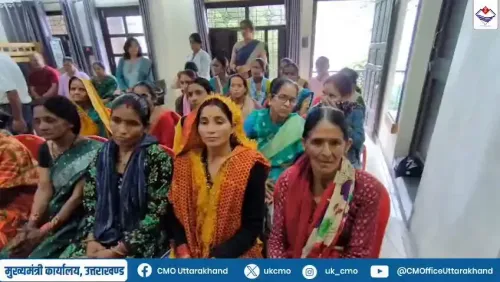
The announcement was accompanied by a video, suggesting the government is using testimonial storytelling to communicate the reach of its schemes.
Similar women-led enterprise models are active across other Himalayan states, placing Uttarakhand within a broader regional pattern.
In the hills of Rudraprayag and the plains of Udham Singh Nagar, women are trading dependence for enterprise — and the Chief Minister's Office of Uttarakhand is pointing to government schemes as the engine behind this shift.
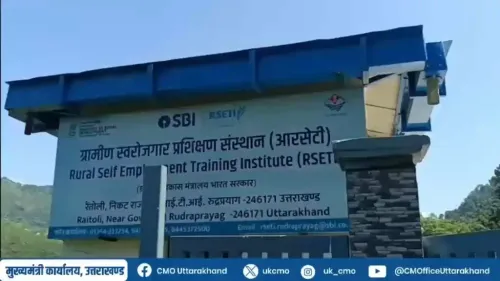
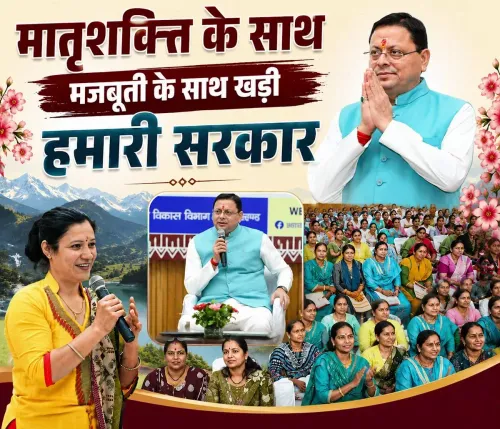
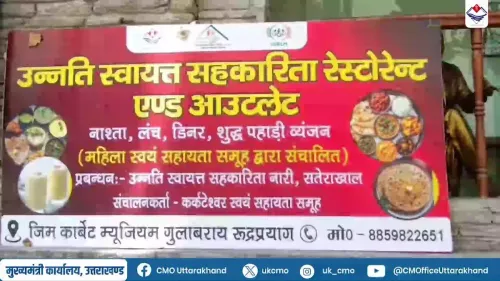
The CMO's post on Monday, 2 November 2026 declared: 'उत्तराखण्ड में सरकारी योजनाओं से प्रेरित होकर महिलाएं कर रही हैं उद्यम स्थापित' — 'Inspired by government schemes, women in Uttarakhand are establishing enterprises.' The message, accompanied by a video, named two geographically distinct districts, signalling that the push is neither urban nor confined to a single region.
Rudraprayag to Udham Singh Nagar: two districts, one direction
Rudraprayag sits deep in the Garhwal Himalayas, its economy long shaped by pilgrimage and subsistence farming. Udham Singh Nagar, by contrast, anchors Uttarakhand's Terai belt — flatter, more industrial, home to some of the state's busiest agricultural markets. That the CMO highlights both in a single post is deliberate: it frames women's self-employment not as a hill-district niche but as a statewide momentum.
A two-decade policy arc reaching rural women
Since Uttarakhand was carved out as a separate state in 2000, successive governments have run self-employment and women-empowerment programmes aimed squarely at stemming out-migration from its remote villages. The logic is straightforward: when livelihoods dry up in the mountains, men leave first, hollowing out communities. Women-led enterprise schemes attempt to reverse that gravity by anchoring economic activity locally.
The broader Indian Himalayan region has followed a similar script — neighbouring states have used government-backed micro-enterprise support, skill-training credits, and group-lending models to create what planners call 'stay-put' economies. Uttarakhand's current effort, spanning districts as different as Rudraprayag and Udham Singh Nagar, maps onto that national pattern while asserting a state-specific identity.
What the video signals
The CMO's decision to anchor this update in a video — rather than a text announcement — suggests the government is leading with faces and stories, not just numbers. Visual storytelling of women at work in their own ventures carries a different weight than a scheme notification. It is governance communicated as testimony. Whether district-level enterprise registration data will follow in formal budget documents is the question worth watching as Uttarakhand approaches its next budget cycle.
The arithmetic of empowerment in a mountainous state is slow and stubborn. But when two districts this far apart are in the same frame, the signal is clear: the government wants the narrative of women-led enterprise to travel as far as the geography allows.
Point of View
The government signals that self-employment gains are no longer confined to accessible plains districts — a politically useful framing ahead of future budget negotiations. The reliance on video rather than data, however, suggests the state is still in the testimonial phase of this campaign rather than the accountability phase. Until district-level registration numbers and scheme disbursement figures enter the public domain, the post reads more as intent communication than programme audit.
NationPress
2 Nov 2026
Frequently Asked Questions
Which districts in Uttarakhand are women starting enterprises under government schemes?
Rudraprayag and Udham Singh Nagar are the two districts highlighted by the Uttarakhand CMO in connection with women establishing enterprises inspired by state government self-employment schemes.
What government schemes support women entrepreneurship in Uttarakhand?
Uttarakhand has run state-level self-employment and women-empowerment programmes since the state's formation in 2000, though the exact schemes referenced in the latest CMO post have not been publicly itemised in the announcement.
Why is women's self-employment important for Uttarakhand?
Uttarakhand's hilly terrain drives significant male out-migration, leaving rural communities economically fragile. Women-led enterprise schemes are designed to create local livelihoods and anchor economic activity in the hills and plains alike.
Is Rudraprayag a rural or urban area in Uttarakhand?
Rudraprayag is a predominantly rural district in the Garhwal Himalayas, known for its religious significance and a subsistence-farming economy — making it a key target for self-employment initiatives.
How does Uttarakhand's women entrepreneurship push compare to other Himalayan states?
Other Himalayan states have used similar government-backed micro-enterprise support and skill-training models to encourage women's self-employment and reduce out-migration, placing Uttarakhand's efforts within a recognised regional policy pattern.