Kishan Reddy Chairs SECL Review Meet in Raipur
Synopsis
Union Coal and Mines Minister G. Kishan Reddy and MoS Satish Dubey held a ministerial review of South Eastern Coalfields Limited in Raipur on 2 November 2026, focusing on production, dispatches, and strategies to strengthen energy security under the Atmanirbhar Bharat framework.
Key Takeaways
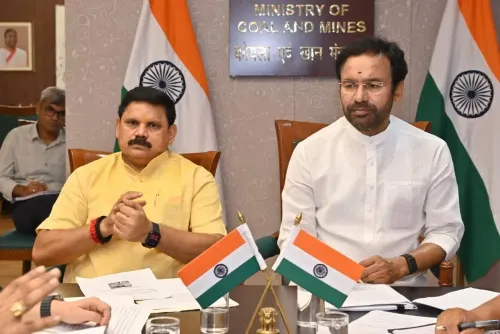
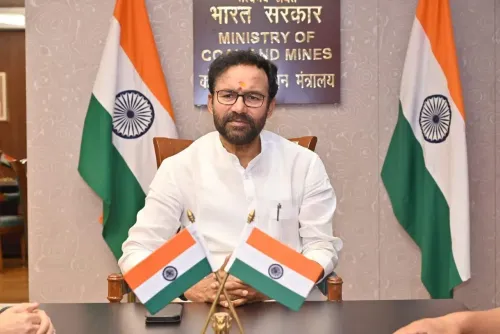
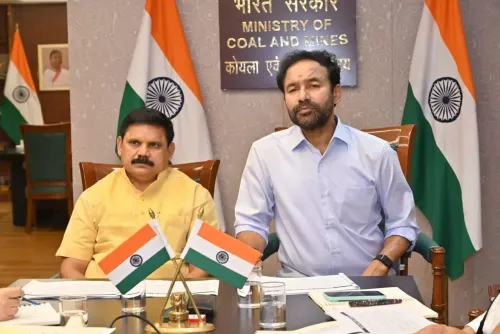
Kishan Reddy chaired a review meeting of South Eastern Coalfields Limited (SECL) in Raipur, Chhattisgarh on 2 November 2026 .
Union Minister of State Satish Dubey was present alongside Kishan Reddy at the review.
The meeting assessed SECL's operational performance, coal production, and dispatch data , with a focus on resolving bottlenecks.
SECL is a subsidiary of Coal India Limited and one of its highest-producing arms, operating mainly in Chhattisgarh and Madhya Pradesh .
The review reinforced the government's push for higher domestic coal output under the Atmanirbhar Bharat self-reliance programme.
Commercial coal mining was opened to private players in 2020 as part of Atmanirbhar Bharat reforms to reduce import dependence.
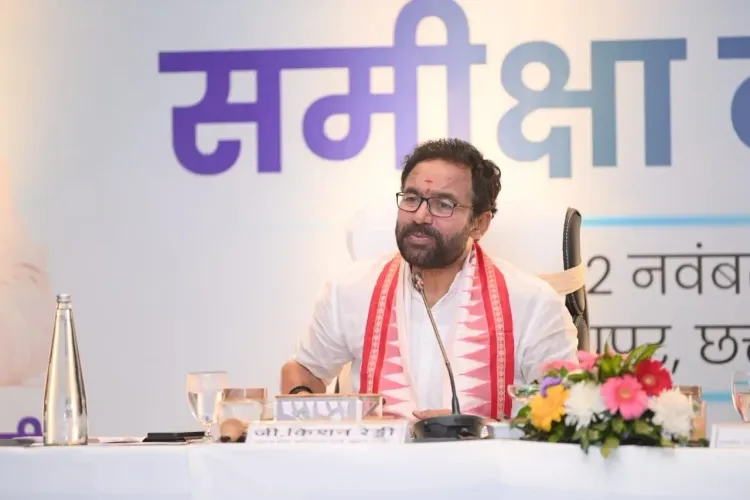
Coal India's single most coal-rich subsidiary got a top-level audit on Monday evening, 2 November 2026, when Union Coal and Mines Minister G. Kishan Reddy chaired a comprehensive review of South Eastern Coalfields Limited (SECL) in Raipur, Chhattisgarh — putting production timelines, dispatch efficiency, and long-term operational strategy under direct ministerial scrutiny.
What the ministers reviewed in Raipur
Minister of State for Coal and Mines Satish Dubey joined Kishan Reddy at the table as the two-member ministerial team went through SECL's operational performance, coal production figures, and dispatch data. The review covered both current ground-level bottlenecks and the forward strategy the subsidiary needs to sustain output targets. Reddy underlined the need to 'strengthen operational efficiency, accelerate production, ensure timely dispatches and address key challenges to maintain continued coal supply.'
Raipur, SECL's home state capital, was a pointed choice of venue — placing the review inside the coalfields' own administrative belt rather than summoning officials to New Delhi. It signals the Ministry's intent to engage directly with the operational reality on the ground.
SECL's place in India's coal architecture
South Eastern Coalfields Limited is a subsidiary of Coal India Limited (CIL), India's largest coal producer and a public sector undertaking under the Ministry of Coal. SECL operates predominantly across Chhattisgarh and Madhya Pradesh — two states that sit on some of India's densest coal seams — making it one of CIL's highest-output arms in the central coalfields belt.
CIL has pursued annual production ramp-up targets since 2014-15 to keep pace with rising demand from thermal power plants that form the backbone of India's base-load electricity grid. Any dispatch bottleneck at SECL ripples quickly into power-sector supply chains, which is precisely why a ministerial-level review carries weight beyond routine administration.
Atmanirbhar Bharat's coal dimension
The Atmanirbhar Bharat self-reliance framework, launched in 2020, brought one of the most significant structural shifts in the sector — opening commercial coal mining to private players for the first time and setting ambitious targets to shrink India's dependence on imported coal. That reform directly raised the bar for domestic producers like CIL and its subsidiaries.
Reddy's reaffirmation of the government's commitment to 'strengthening India's coal sector and ensuring energy security' in Raipur lands squarely within that policy arc. Higher domestic output means lower import bills, greater grid stability, and a tangible proof-point for the self-reliance agenda — all at a moment when India's electricity demand continues to climb.
Periodic ministerial reviews of CIL subsidiaries are a standard accountability mechanism, but with production and dispatch data releases due in coming quarters, Monday's session sets a clear benchmark against which SECL's performance will be measured. The ministry's next move — whether linkage auction announcements or mine-expansion clearances — will tell the fuller story.
Point of View
But their frequency and location matter as political signals — Raipur, not Delhi, tells the industry that the ministry intends to stay close to operational realities in the coalfields. For Kishan Reddy, who balances the Union Coal portfolio with his role as BJP Telangana president, these interventions also reinforce his technocratic credentials ahead of expected production data scrutiny. The Atmanirbhar Bharat framing keeps the review tethered to a larger national narrative, making coal self-sufficiency a patriotic metric as much as an economic one. Watch for follow-on announcements on mine expansion clearances or linkage auctions as the real policy test of Monday's directives.
NationPress
2 Nov 2026
Frequently Asked Questions
What is SECL and why is it important for India's coal supply?
South Eastern Coalfields Limited (SECL) is a subsidiary of Coal India Limited operating primarily in Chhattisgarh and Madhya Pradesh. It is one of CIL's highest-producing subsidiaries and plays a critical role in supplying coal to thermal power plants across central and eastern India.
Why did Kishan Reddy hold the SECL review in Raipur?
Raipur is the capital of Chhattisgarh, where SECL has major mining operations. Holding the review there — rather than in New Delhi — allowed the ministry to engage directly with operational teams on the ground and signals hands-on oversight of the coalfields.
What is the connection between SECL and Atmanirbhar Bharat?
Atmanirbhar Bharat includes a push to boost domestic coal production and cut costly imports. SECL, as one of Coal India's top-producing subsidiaries, is central to meeting those self-sufficiency targets, which is why the ministry reviewed its production and dispatch performance under that policy framework.
Who is Satish Dubey in the Coal Ministry?
Satish Dubey serves as Union Minister of State for Coal and Mines and participated alongside Kishan Reddy in the SECL review meeting in Raipur on 2 November 2026.
How does Coal India's production strategy affect electricity supply in India?
Coal India Limited supplies the bulk of coal to India's thermal power plants, which generate most of the country's base-load electricity. Bottlenecks in production or dispatch at CIL subsidiaries like SECL can directly affect power availability across the grid.