IIT Madras sets up DRSTI and CAREN labs with ₹3.8 crore grant for sustainable construction
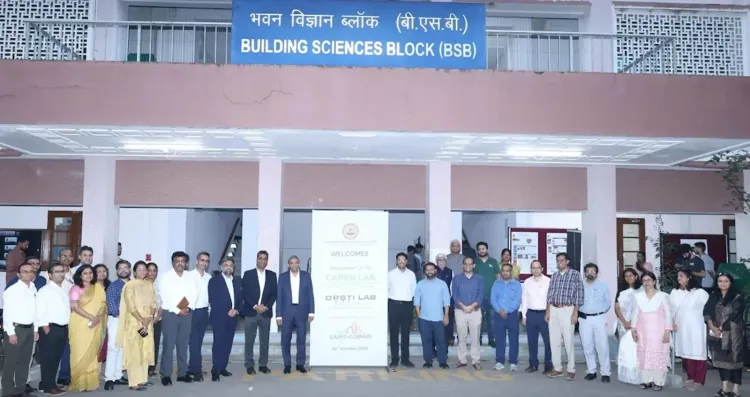
Synopsis
IIT Madras is launching two specialised labs — DRSTI and CAREN — with a ₹3.8 crore industry grant to develop real-time sensing tech and next-gen concrete admixtures. The move puts India's premier technical institute at the centre of the construction sector's race to decarbonise, at a time when every layer of a building — from plaster to glass — is being redesigned to shrink its carbon footprint.
Key Takeaways
IIT Madras is establishing two new research laboratories — DRSTI and CAREN — focused on sustainable construction.
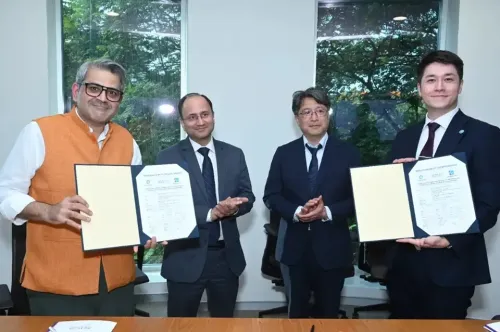
The initiative is backed by a ₹3.8 crore grant spanning three years , under a longstanding industry partnership.
Both labs will operate within the institute's Centre of Excellence on Technologies for Low-carbon and Lean Construction (TLC2) .
DRSTI targets digital real-time sensing for infrastructure; CAREN focuses on advanced concrete admixtures for next-gen construction.
The move aligns with a sector-wide push to reduce embodied carbon, increase recycled content, and shift manufacturing away from fossil fuels.
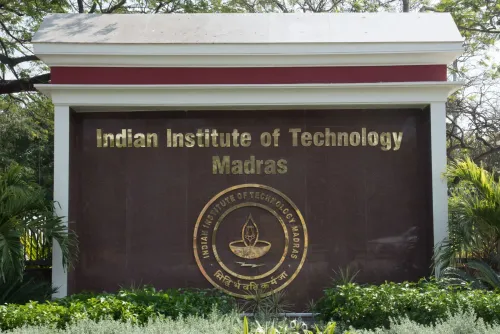
Indian Institute of Technology (IIT) Madras is establishing two advanced research laboratories dedicated to sustainable construction, backed by a ₹3.8 crore grant spread over three years. The facilities — named DRSTI (Digital Real-Time Sensing Technologies for Infrastructure) and CAREN (Concrete Admixture Research for Engineering Next-gen Construction) — will be housed within the institute's Centre of Excellence on Technologies for Low-carbon and Lean Construction (TLC2), as part of a longstanding industry partnership.
What the Two Laboratories Will Do
The DRSTI laboratory will focus on digital and real-time sensing technologies for infrastructure monitoring, while CAREN will investigate advanced concrete admixtures aimed at next-generation construction practices. Together, the two units are designed to address core challenges in construction productivity, material efficiency, structural durability, and long-term sustainability.
According to the institute, 'The laboratories will focus on developing innovative solutions to improve construction productivity, material efficiency, structural durability and sustainability through next-generation materials and digital technologies.' The institute further stated that 'This collaboration aims to translate cutting-edge research into practical solutions, advancing smarter infrastructure and low-carbon, lightweight construction in India.'
Why This Initiative Matters Now
The announcement arrives as the Indian construction sector faces mounting pressure to decarbonise. Building material companies across the country are actively reformulating products — from glass and plasterboard to plaster and concrete — to lower their carbon footprints. Notably, the industry is seeing a systematic push to reduce cement clinker content for greater material circularity and to cut embodied carbon in raw materials such as mortars and plasterboard.
Manufacturing plants are also transitioning to electric power and reducing fossil fuel dependency. Leading producers are maximising recycled content, minimising waste, and publishing comprehensive Environmental Product Declarations (EPDs) to improve supply-chain transparency.
The Broader Shift Towards Light, Low-Carbon Construction
The construction industry has been gradually pivoting from heavy to light construction methods, a trend that IIT Madras' new laboratories are positioned to accelerate. Resource-efficient building designs, high thermal and acoustic insulation, and smart glass solutions are increasingly standard features in contemporary structures, lowering a building's energy footprint over its operational lifecycle.
Modern commercial and residential buildings are also incorporating smart lighting, energy-efficient air-conditioning systems, and solar panels to further reduce power consumption. Interior plasters are being formulated with lower Global Warming Potential (GWP), adding another layer of emissions reduction to the construction value chain.
What Comes Next
With the ₹3.8 crore grant covering a three-year research horizon, both laboratories are expected to generate applied research outputs that can be directly adopted by the construction industry. The TLC2 Centre at IIT Madras will serve as the coordinating hub, bridging academic research with industry deployment. The initiative could set a precedent for deeper academia-industry partnerships in India's infrastructure and green building segments as the country pursues its net-zero commitments.
Point of View
Yet applied research translating low-carbon materials science into on-site practice has lagged. IIT Madras' ₹3.8 crore bet on DRSTI and CAREN is modest in scale but notable in design — the TLC2 framework explicitly links academic output to industry adoption, which is the step most past research initiatives skipped. The real measure of success will not be the papers published but whether admixture formulations and sensing protocols from these labs reach actual project sites within the grant period. If they do, this model of ring-fenced, industry-funded applied research could become a template for green infrastructure R&D across India's IITs.
NationPress
3 Nov 2026
Frequently Asked Questions
What are the DRSTI and CAREN laboratories at IIT Madras?
DRSTI (Digital Real-Time Sensing Technologies for Infrastructure) and CAREN (Concrete Admixture Research for Engineering Next-gen Construction) are two new research laboratories being set up at IIT Madras to advance sustainable construction. They are housed within the institute's Centre of Excellence on Technologies for Low-carbon and Lean Construction (TLC2) and are supported by a ₹3.8 crore industry grant over three years.
How much funding have the IIT Madras sustainable construction labs received?
The two laboratories have received a ₹3.8 crore grant spanning three years as part of a longstanding industry partnership. The funding will support research into next-generation construction materials and digital sensing technologies.
Why is IIT Madras focusing on low-carbon construction research?
The construction sector is under increasing pressure to reduce its carbon footprint, with companies reformulating products like concrete, plaster, and glass to lower their Global Warming Potential. IIT Madras' new labs aim to translate cutting-edge research into practical, industry-deployable solutions that support India's broader net-zero goals.
What specific research areas will the new IIT Madras labs cover?
DRSTI will focus on digital and real-time sensing technologies for infrastructure monitoring, while CAREN will investigate advanced concrete admixtures for next-generation construction. Together, they address construction productivity, material efficiency, structural durability, and sustainability.
What is the TLC2 Centre at IIT Madras?
The Centre of Excellence on Technologies for Low-carbon and Lean Construction (TLC2) at IIT Madras is the hub coordinating research into sustainable building practices. It will host both the DRSTI and CAREN laboratories, serving as a bridge between academic research and industry application in India's construction sector.