Kishan Reddy: SECL closes 15 mines in green mining push
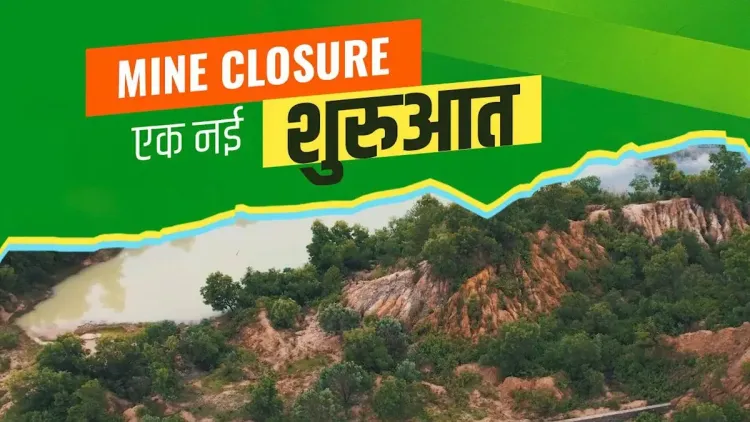
Synopsis
Union Coal Minister G. Kishan Reddy spotlighted SECL's closure of 15 mines under systematic scientific plans, positioning India's largest coalfield subsidiary as a model for balancing energy extraction with ecological land restoration under PM Modi's sustainable development vision.
Key Takeaways
SECL has successfully closed 15 mines under scientific mine closure plans, with reclamation work ongoing at additional sites.
Union Coal Minister G.
Kishan Reddy framed the initiative as an expression of PM Narendra Modi 's sustainable development vision for the coal sector.
Mine closure guidelines requiring progressive reclamation have been embedded in Ministry of Coal environmental clearance conditions since the early 2000s.
SECL operates in Chhattisgarh and Madhya Pradesh and is a key subsidiary of Coal India Limited .
The initiative aims to restore, stabilise, and revitalise mined land for agricultural or ecological use, with communities in coal-bearing districts as the primary beneficiaries.
The ministry has signalled periodic updates on mine closure and land-reclamation progress across all Coal India subsidiaries.
India's coal sector is quietly rewriting its environmental contract — and Union Coal and Mines Minister G. Kishan Reddy wants the country to take notice. On Saturday, 25 October 2026, the minister took to X to highlight how South Eastern Coalfields Limited (SECL) is turning mine closure from a regulatory checkbox into a genuine land-restoration programme, with 15 mines already successfully closed under systematic, scientific plans.
SECL's 15 closed mines — what scientific closure actually means
SECL, a subsidiary of Coal India Limited (CIL) operating primarily across Chhattisgarh and Madhya Pradesh, has long been one of India's highest-output coalfields. The minister's post describes a process that goes beyond simply halting extraction — land is 'safely restored, stabilised, and revitalised', language that maps onto the progressive reclamation framework the Ministry of Coal has embedded in environmental clearance conditions for coal projects since the early 2000s. Under those guidelines, operators must submit mine closure plans at the project-approval stage and execute phased reclamation as mining progresses, not just at the end of a mine's life.
Kishan Reddy framed the effort as flowing directly from Prime Minister Narendra Modi's vision of sustainable development, describing SECL as 'turning science into stewardship' — a pointed attempt to recast a carbon-intensive sector as an active participant in India's ecological goals.
Coal's green paradox: extraction and ecology in the same sentence
The tension is real and deliberate. India remains one of the world's largest coal producers and consumers, with energy security demands that make an abrupt exit from coal politically and economically implausible. The government's response to that contradiction has been to push CIL subsidiaries to demonstrate that the two imperatives — digging coal and healing land — can coexist. Mandatory mine closure plans, third-party monitoring, and reclamation bonds are the policy instruments binding that promise.
Communities in coal-bearing districts of Chhattisgarh and Madhya Pradesh sit at the centre of this story. Restored land can potentially return to agricultural or forestry use, easing the social friction that large-scale mining routinely generates. Whether closure translates into livelihood recovery for those communities is the metric that will ultimately judge the programme's success — more than the headline number of mines closed.
What the ministry is signalling, and what comes next
The post is as much a communication exercise as a policy update — Kishan Reddy is signalling to environmentalists, investors, and international partners that India's public-sector coal machinery is not indifferent to its ecological footprint. With India under sustained global pressure to align its coal trajectory with climate commitments, showcasing SECL's closure record provides a domestic counter-narrative: responsible extraction, not just extraction.
The Ministry of Coal is expected to periodically update progress on mine closures and land-reclamation outcomes across all CIL subsidiaries. SECL's track record, if independently verified and expanded, could become a template for Coal India's broader network — a network that spans hundreds of operational and legacy mines across multiple states.
Fifteen mines down. Hundreds of legacy sites still waiting. The real test of India's mining stewardship is only just beginning.
Point of View
The Ministry of Coal is building a 'responsible extraction' brand for public-sector mining — useful both domestically and in climate diplomacy. The move also reflects a broader pattern of the BJP government deploying its own infrastructure and energy machinery as proof of developmental environmentalism, linking legacy sectors to PM Modi's green credentials. The credibility of the claim will ultimately rest on independent audit of reclaimed sites and community-level outcomes, not ministerial posts.
NationPress
24 Oct 2026
Frequently Asked Questions
What is SECL and where does it operate?
South Eastern Coalfields Limited (SECL) is a subsidiary of Coal India Limited that operates coal mines primarily in Chhattisgarh and Madhya Pradesh, making it one of India's largest coalfield operations.
What does scientific mine closure mean in India?
Scientific mine closure involves systematic plans to safely halt extraction, stabilise mine workings, restore topsoil, and revegetate or reclaim the land for agricultural or ecological use — a process regulated under Ministry of Coal environmental clearance conditions.
How many mines has SECL closed so far?
According to Union Coal Minister G. Kishan Reddy's post, SECL has successfully closed 15 mines under its scientific mine closure programme, with work underway across additional sites.
What is India's policy on mine closure and land reclamation?
The Ministry of Coal has required mine closure plans as a condition of environmental clearances for coal projects since the early 2000s. Operators must submit and execute phased reclamation plans rather than addressing land restoration only at the end of a mine's operational life.
Why is the government emphasising green mining if India still depends on coal?
India continues to rely on coal for energy security while facing global climate pressure. The government's approach is to demonstrate that extraction and ecological responsibility can coexist — using mine closure and land restoration as evidence of responsible stewardship without committing to an immediate exit from coal.