Chirag Paswan meets JP Nadda to ease food sector rules
Synopsis
Union Food Processing Minister Chirag Paswan met Health Minister JP Nadda and FSSAI CEO Rajit Punahani on 24 October 2026 to discuss cutting unnecessary regulatory burdens on the food processing sector while protecting consumer safety, in line with PM Modi's Ease of Doing Business agenda.
Key Takeaways
Chirag Paswan held a high-level meeting with JP Nadda and FSSAI CEO Rajit Punahani on 24 October 2026 .
The agenda centred on contemporary regulatory issues in the food processing sector.
The ministers agreed on a dual priority: removing unnecessary compliance barriers for industry while firmly protecting consumer health and safety.
The shared goal is a science-based, transparent and practical regulatory framework to attract investment and drive innovation.
The meeting aligns with PM Modi's Ease of Doing Business reforms, a national priority since 2014 .
Follow-up steps may include FSSAI draft notifications on compliance simplification and structured industry consultations.
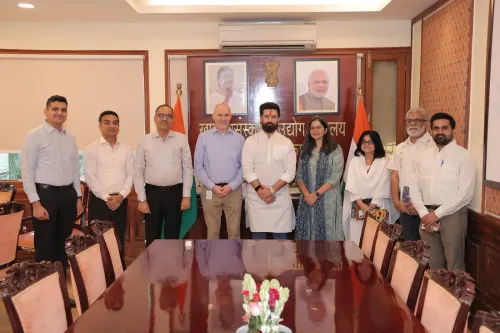
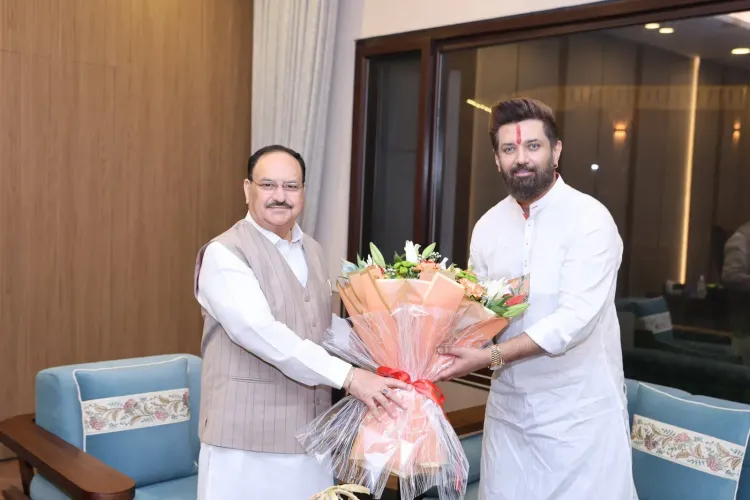
India's food processing and health ministries sat down together on Saturday, 24 October 2026 — and the agenda was nothing less than rewiring the regulatory relationship between the government and one of the country's fastest-growing industries. Union Food Processing Minister Chirag Paswan met Union Health and Family Welfare Minister JP Nadda, with FSSAI Chief Executive Officer Rajit Punahani also present, for what Paswan described as a 'meaningful discussion' on contemporary regulatory issues facing the food processing sector.
Posting on X, Paswan framed the meeting around a clear dual mandate: strip away unnecessary compliance barriers for industry, while holding the line firmly on consumer health and safety. In his words, the priority is 'anāvashyak niyāmakīya bādhāon se mukta rakhte hue upabhokṭāon ke swāsthya, surakṣā aur hiton kā sanrakṣaṇ' — freeing industries from needless regulatory hurdles while safeguarding the health, safety and interests of consumers.
Where food safety law and Ease of Doing Business collide
The meeting sits squarely at the intersection of two policy pillars that have defined the Modi government since 2014. FSSAI — the Food Safety and Standards Authority of India — was established under the Food Safety and Standards Act, 2006 to consolidate a patchwork of older food laws into a single, science-based framework. For two decades it has been the primary arbiter of what Indians eat and how it is labelled, tested and approved.
But the food processing sector has long argued that FSSAI's approval timelines and compliance layers add cost without proportionately improving safety outcomes. The Ease of Doing Business drive, which Prime Minister Narendra Modi anchored as a national priority from 2014 onwards, created the political space for exactly this kind of inter-ministerial reset — pushing regulators toward science-led, transparent and practically workable rules rather than procedural thickets.
A joint push for investment, innovation and policy clarity
Paswan made clear the meeting was not merely procedural. The shared goal, he said, is to give industries 'policy clarity' through a regulatory system that is 'vaijñānik, pāradarsī evam vyāvahārik' — scientific, transparent and practical — and in doing so, inject fresh momentum into investment, innovation and growth across the food processing value chain.
That framing matters. India's food processing sector links directly to farm incomes: higher value addition means better prices for agricultural produce and more organised supply chains. Inter-ministerial coordination between the Ministry of Food Processing Industries and the Ministry of Health and Family Welfare — the two ministries that together shape what FSSAI can and cannot do — has historically been uneven. A meeting at the ministerial level, with the regulator's CEO in the room, signals that both sides are willing to negotiate the balance between growth and safety at the highest table.
What the food industry and consumers should watch next
The practical test will come in FSSAI's follow-up actions — whether this conversation translates into draft notifications on compliance simplification, faster product-approval timelines, or revised standards developed with explicit industry consultation. The food processing sector, which ranges from small agri-entrepreneurs to large FMCG conglomerates, will be watching for concrete regulatory relief without any dilution of food safety benchmarks that protect 1.4 billion consumers.
Two senior ministers and a regulator in one room, aligned on a reform direction — that combination rarely stays theoretical for long.
Point of View
The administration is effectively acknowledging that regulatory reform in food safety cannot be driven by one ministry alone. The emphasis on 'scientific and transparent' rules tracks a broader Modi-era pattern of reframing regulatory tightening as pro-business rather than anti-industry. The real measure of this alignment will be how quickly, and how substantively, FSSAI translates ministerial intent into enforceable but business-friendly notifications.
NationPress
24 Oct 2026
Frequently Asked Questions
Why did Chirag Paswan meet JP Nadda regarding FSSAI?
Paswan met Nadda and FSSAI CEO Rajit Punahani on 24 October 2026 to discuss regulatory reforms in the food processing sector — specifically, reducing unnecessary compliance burdens on industry while maintaining strong consumer safety protections, in line with PM Modi's Ease of Doing Business agenda.
What is FSSAI and why does it matter for food processing?
FSSAI, the Food Safety and Standards Authority of India, is the statutory body set up under the Food Safety and Standards Act, 2006 to regulate food safety across the country. It controls product approvals, labelling standards and safety norms, making it central to the operating environment of every food processing company.
What is India's Ease of Doing Business initiative?
Launched as a national priority by the Modi government from 2014 onwards, the Ease of Doing Business initiative aims to reduce procedural and regulatory burdens on industries, shorten approval timelines and improve policy clarity so that businesses — including food processors — can operate and invest more efficiently.
What could change for the food processing sector after this meeting?
Possible outcomes include FSSAI issuing draft notifications to simplify compliance procedures, faster product-approval processes, and structured industry consultations aimed at producing clearer, science-based regulations. Concrete changes will depend on follow-up action from FSSAI and the two ministries.
Who is FSSAI CEO Rajit Punahani?
Rajit Punahani is the Chief Executive Officer of FSSAI, the Food Safety and Standards Authority of India. He was present at the 24 October 2026 inter-ministerial meeting between Chirag Paswan and JP Nadda on food processing regulatory reform.