Kishan Reddy flags SECL's Rajgamar mine closure as green benchmark

Synopsis
Union Coal Minister G. Kishan Reddy spotlighted SECL's Rajgamar 8 & 9 Incline Project in Korba, Chhattisgarh, as a model for scientific mine closure and community-driven ecological restoration, citing sealed entries, natural plantation, and zero post-closure subsidence.
Key Takeaways
Union Coal and Mines Minister G.
Kishan Reddy highlighted the Rajgamar 8 & 9 Incline Project by SECL on July 28, 2026 .
The forest-area mine in Korba, Chhattisgarh underwent scientific closure in 2026 with entry sealing and natural plantation.
No subsidence has been observed at the site following closure — a key environmental safety indicator.
South Eastern Coalfields Limited (SECL) is a subsidiary of Coal India Limited , India's largest coal producer.
India's Ministry of Coal has mandated mine closure plans since 2009 , but implementation has historically lagged.
The Rajgamar model is being positioned as a replicable template for ageing mines across CIL's portfolio.
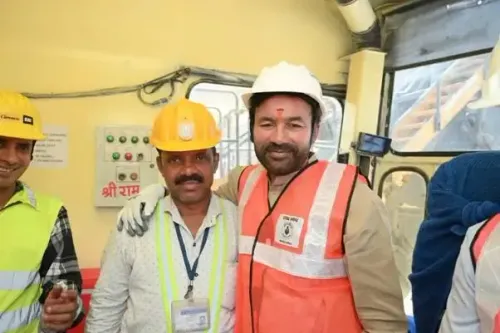
Korba, Chhattisgarh — A shuttered coal mine in one of India's most coal-dense districts is growing back into forest. Union Coal and Mines Minister G. Kishan Reddy on Tuesday, July 28, 2026, highlighted the scientific closure and ecological rehabilitation of the Rajgamar 8 & 9 Incline Project by South Eastern Coalfields Limited (SECL) in Korba, Chhattisgarh, calling it a new benchmark in sustainable mining.
What happened at Rajgamar 8 & 9
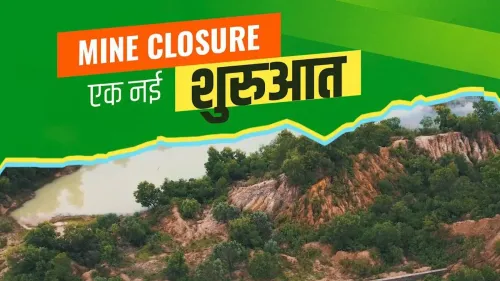
The Rajgamar inclines, located in a forest-area mining block, underwent scientific closure in 2026 — a structured process that goes well beyond simply stopping extraction. Entry points were sealed, and natural plantation was carried out across the disturbed land. Crucially, no subsequent subsidence has been observed at the site, a metric that matters enormously in legacy coal belts where ground collapse after mine abandonment has historically damaged homes, roads, and farmland.
The minister framed the project as aligned with Prime Minister Narendra Modi's vision of 'scientific closure and community-driven ecological restoration' — language that signals the closure was designed with local communities, not just regulatory checklists, in mind.
Why mine closure plans exist — and why enforcement took decades
India's Ministry of Coal notified guidelines requiring mandatory mine closure plans as far back as 2009, compelling Coal India Limited (CIL) and its subsidiaries to plan for rehabilitation from the moment a mine is sanctioned. The intent was to prevent the kind of scarred, subsidence-prone wastelands that older abandoned mines left behind across Jharkhand, West Bengal, and Chhattisgarh.
In practice, implementation lagged for years. SECL, which operates across Chhattisgarh and is among CIL's largest producing subsidiaries, now appears to be demonstrating what a compliant, well-executed closure can look like. The Rajgamar project — sealed entries, planted cover, zero subsidence — is being positioned as the template.
Korba's coal geography and what this signals
Korba is not an incidental location. It is the beating heart of Chhattisgarh's coal economy, home to multiple SECL mines and a cluster of thermal power plants. Demonstrating ecological restoration here — in a district where mining's environmental footprint is most visible — carries symbolic and practical weight. If the Rajgamar model holds, it gives environmental regulators, local communities, and the Ministry a replicable proof-of-concept for the dozens of ageing mines across CIL's portfolio that will require closure in the coming decade.
The broader pattern is unmistakable: India is not stepping away from coal anytime soon, but the political and regulatory pressure to manage its legacy responsibly is intensifying. A mine that closes cleanly and regrows is no longer a contradiction — it is becoming a policy imperative.
The next test is scale. Whether SECL and other CIL subsidiaries can replicate the Rajgamar outcome across a pipeline of closures — and whether independent environmental audits confirm the on-ground results — will determine if this benchmark becomes a movement or remains a showcase.
Point of View
Kishan Reddy is signalling that mine rehabilitation is now a political priority, not just a regulatory obligation. The zero-subsidence claim, if independently verified, would give India a credible counter-narrative to criticism that its coal expansion ignores legacy damage. The real test of this policy arc will be whether the 2009 closure guidelines are finally enforced at scale across all CIL subsidiaries, not just in flagship showcase projects.
NationPress
27 Oct 2026
Frequently Asked Questions
What is scientific closure of a coal mine in India?
Scientific closure refers to a structured, regulation-compliant process of shutting a coal mine that includes sealing entry points, stabilising underground voids to prevent subsidence, restoring topsoil, and carrying out plantation or other ecological reclamation — as required under India's Ministry of Coal guidelines notified in 2009.
What is the Rajgamar 8 and 9 Incline Project?
The Rajgamar 8 & 9 Incline Project is a coal mine operated by South Eastern Coalfields Limited (SECL) in Korba, Chhattisgarh. It underwent scientific closure in 2026 and has since been rehabilitated through entry sealing and natural plantation, with no subsidence reported.
What is SECL and who owns it?
South Eastern Coalfields Limited (SECL) is a subsidiary of Coal India Limited (CIL), India's state-owned coal producer. SECL operates primarily in Chhattisgarh and is one of CIL's largest coal-producing arms.
Why is Korba significant for coal mining in India?
Korba is a major coal-mining district in Chhattisgarh hosting multiple SECL mines and several large thermal power plants, making it one of the most coal-intensive regions in the country and a key location for demonstrating mine rehabilitation outcomes.
When did India make mine closure plans mandatory for coal mines?
The Ministry of Coal notified guidelines in 2009 requiring Coal India Limited and its subsidiaries to prepare and implement mine closure plans covering scientific closure, land rehabilitation, and environmental restoration.