Kishan Reddy hails Chhendipada mine closure as ecological model

Synopsis
Union Coal and Mines Minister G. Kishan Reddy announced the scientific closure of the Chhendipada Open Cast Project in Angul, Odisha, operated by Mahanadi Coalfields Limited. He said 13.6 hectares were reclaimed, over 64,350 saplings planted and a 5-hectare water recharge zone created, positioning the site as a model for ecological restoration across India's coal belt.
Key Takeaways
Chhendipada Open Cast Project in Angul, Odisha declared scientifically closed.
Minister cites 13.6 hectares of mined land reclaimed.
Over 64,350 saplings planted on the site.
A 5-hectare water recharge zone developed as part of closure.
Operator is Mahanadi Coalfields Limited, a Coal India subsidiary.
Closure framed under National Mineral Policy 2019 and 2021 Ministry of Coal guidelines.
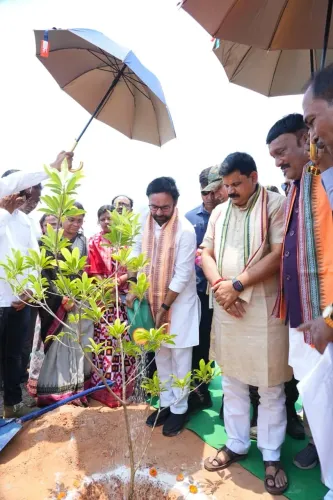
Union Coal and Mines Minister G. Kishan Reddy on Thursday, 4 June 2026 announced the scientific mine closure of the Chhendipada Open Cast Project (OCP) in Odisha's Angul district, framing it as a milestone in ecological restoration aligned with the Prime Minister's sustainable development vision. In a post on X, the minister said the reclaimed site now hosts thousands of saplings and a dedicated water recharge zone, signalling a shift from extraction to regeneration in India's coal heartland.
'Aligned with Hon'ble Prime Minister Shri Narendra Modi Ji's vision for sustainable development, the scientific mine closure of the Chhendipada Open Cast Project (OCP) marks a significant milestone in ecological restoration,' the minister wrote. He added that the project had 'reclaimed 13.6 hectares of mined land, planted over 64,350 saplings, and developed a 5-hectare water recharge zone, transforming a former mining site into a thriving green ecosystem.' The post tagged the Ministry of Mines, the Ministry of Coal and Mahanadi Coalfields Limited, the Coal India subsidiary that operates the block.
Context
The Chhendipada OCP sits in the coal-rich Talcher belt of Angul, one of the largest coal-producing clusters in the country. Mahanadi Coalfields Limited, a wholly owned subsidiary of Coal India, runs multiple open-cast operations in the region and is mandated to execute mine closure plans for blocks that have completed their productive life.
Scientific mine closure is a regulated process that requires backfilling of voids, technical and biological reclamation of overburden dumps, creation of water bodies and long-term monitoring. The Chhendipada announcement positions the project as a template for closures planned across the company's ageing pits.
Policy backdrop
India's National Mineral Policy 2019 made scientific mine closure, progressive reclamation and third-party environmental audits binding for all mineral concessions, including coal. The Ministry of Coal followed up in 2021 with revised guidelines for Mine Closure Plans, requiring measurable ecological restoration targets and the development of water bodies before final closure certificates can be issued.
Closure plans are funded through an escrow mechanism into which lessees deposit a per-hectare sum during the life of the mine, drawing down only on certified progress. The framework was designed to prevent the legacy problem of abandoned, unrehabilitated pits that scar coalfield districts.
Stakeholders and impact
For residents of Angul, the closure carries direct consequences. Reclaimed plantations and a recharge zone can stabilise local groundwater, reduce dust loads and create the basis for community use of the land once liabilities are transferred.
For Mahanadi Coalfields Limited and parent Coal India Limited, certified closures help meet environmental compliance obligations and ease the path for fresh project approvals elsewhere. State pollution control boards and district administrations are the key verifying authorities, alongside independent auditors empanelled under the closure guidelines.
The broader pattern is unmistakable: India's coal sector, long defined by output targets, is being reshaped by parallel mandates on afforestation, water-body creation and livelihood generation for project-affected families. Similar reclamation efforts have been reported across Coal India subsidiaries in Jharkhand, Chhattisgarh and West Bengal.
What's next
Attention will turn to the next annual Mine Closure Status Report from the Ministry of Coal, which tracks how many blocks have moved through technical and final closure stages, and any fresh guidance on using the mine closure fund for community development in Odisha. Independent verification of the saplings, reclaimed hectarage and recharge zone at Chhendipada will be central to whether the site stands up as a replicable model.
With India committed to a net-zero pathway by 2070 and coal still anchoring base-load power, the political signal from the minister is that extraction and ecological restoration must now be planned together rather than in sequence.
Point of View
Partly to insulate the sector from litigation and partly to defend its place in a net-zero economy. By personally amplifying a single block-level closure, the minister is signalling that scientific reclamation is now a political talking point, not just a regulatory chore. The real test, however, lies in independent audits and in whether the recharge zones and plantations survive beyond the press cycle. Watch for whether closure outcomes start being reported at scale across Mahanadi, Northern and South Eastern Coalfields.
NationPress
18 Oct 2026
Frequently Asked Questions
What is the Chhendipada Open Cast Project?
It is an open-cast coal mine in Angul district, Odisha, operated by Mahanadi Coalfields Limited, a subsidiary of Coal India Limited. The Union Coal and Mines Minister has announced its scientific closure.
What is scientific mine closure in India?
Scientific mine closure is a regulated process under which a mined-out site is backfilled, reclaimed and ecologically restored, with afforestation, water-body creation and long-term monitoring, before a final closure certificate is issued.
How much land has been reclaimed at Chhendipada?
According to the minister's post, 13.6 hectares of mined land have been reclaimed, over 64,350 saplings planted and a 5-hectare water recharge zone developed at the site.
Which policy governs mine closure in India?
The National Mineral Policy 2019 mandates scientific mine closure and progressive reclamation, supported by updated Ministry of Coal guidelines issued in 2021 that prescribe detailed restoration targets.
Who is the Union Coal and Mines Minister?
G. Kishan Reddy is the Union Minister of Coal and Mines and also serves as the BJP Telangana state president.