Sitharaman Outlines 8 Enablers for Viksit North-East
Synopsis
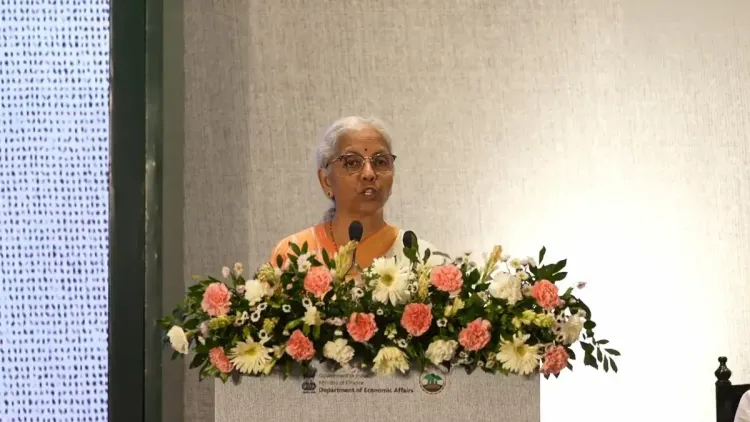
Finance Minister Nirmala Sitharaman, addressing an audience in Shillong on 19 June 2026, outlined eight enablers — spanning leadership, connectivity, women-led development and private investment — as the foundation for a 'Viksit North-East', urging a whole-of-government and whole-of-society approach across the region's eight states.
Key Takeaways
Nirmala Sitharaman addressed an audience in Shillong on 19 June 2026 , presenting a framework for North-East development.
She identified eight enablers : Leadership, Institutional Capacity, Human Capital and Women-led Development, Development Finance, Private Investment, Connectivity, Nature/Culture/Sustainability, and Partnerships and Cooperation.
The framework is anchored in the national vision of Viksit Bharat 2047 , adapted specifically for the eight North-Eastern states .
Women-led development and private investment are treated as structural growth drivers, not supplementary targets.
A whole-of-government and whole-of-society approach was explicitly called for to power the region's development journey.
Budget allocations for DoNER schemes and any follow-up investor or Chief Ministers' conclave will be key indicators of implementation intent.
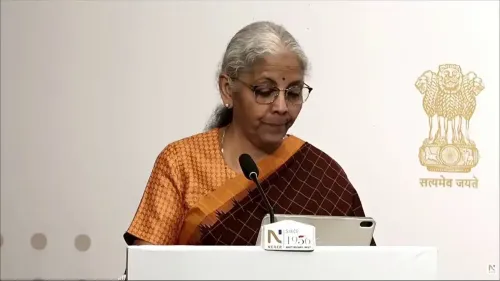
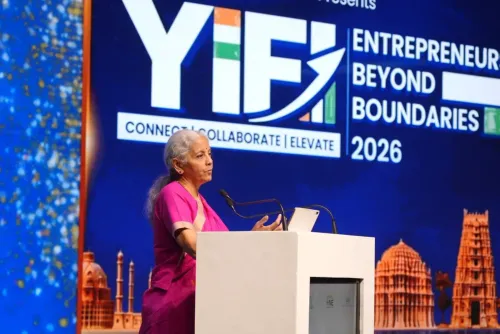
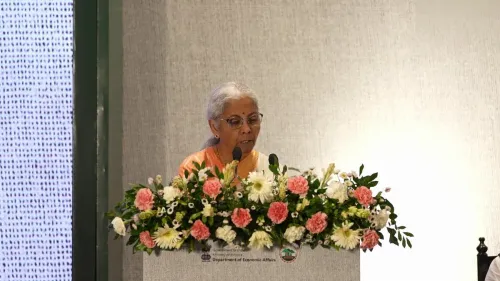
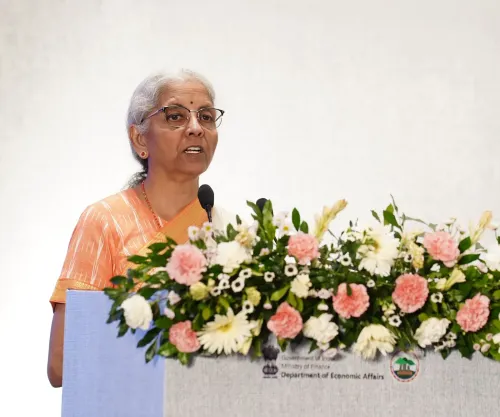
Union Finance Minister Nirmala Sitharaman on Friday, 19 June 2026, addressed an audience in Shillong, laying out eight foundational enablers she said are essential to achieving sustainable, inclusive and resilient development across the eight states of India's North-East region.
Context
Speaking from Shillong, the capital of Meghalaya and a frequent venue for regional policy conclaves, Sitharaman framed the eight enablers as a collective architecture for what she called a 'Viksit North-East' — a developed North-East aligned with the broader national vision of Viksit Bharat 2047. She posted a detailed summary of her address on X, emphasising that the journey 'must be powered by a whole-of-government and whole-of-society approach.'
The eight enablers she identified are: Leadership; Institutional Capacity; Human Capital and Women-led Development; Development Finance; Private Investment; Connectivity; Nature, Culture and Sustainability; and Partnerships and Cooperation.
Policy Backdrop
The North-East region comprises Arunachal Pradesh, Assam, Manipur, Meghalaya, Mizoram, Nagaland, Sikkim and Tripura — eight states characterised by distinct geography, exceptional biodiversity and strategic borders with neighbouring countries. Successive central governments have worked to close a long-standing development gap between this region and the rest of India.
The Act East Policy, launched in 2014, positioned the North-East as India's gateway to the ASEAN bloc through improved infrastructure and cross-border trade. The Ministry of Development of North Eastern Region (DoNER), established in 2001, continues to coordinate central scheme funding across the eight states. Sitharaman's eight-enabler framework builds on these institutional foundations, adding an explicit emphasis on private capital, women's economic agency and ecological sustainability.
The inclusion of Nature, Culture and Sustainability as a standalone enabler reflects a broader national push to link social inclusion with ecological safeguards — a pattern visible in programmes that tie forest and biodiversity conservation to community livelihoods across the region.
Stakeholders and Impact
Residents of all eight North-Eastern states stand as the primary beneficiaries of the framework. Women entrepreneurs receive explicit mention through the 'Women-led Development' component, signalling that gender inclusion is being treated as a structural driver of growth rather than a supplementary target.
Private investors are directly addressed as a distinct enabler, indicating the government's intent to move beyond public expenditure alone and crowd in commercial capital. The 'Partnerships and Cooperation' pillar could encompass both inter-state coordination and cross-border economic ties with Southeast Asian and South Asian neighbours, given the region's geographic position.
What's Next
Policy watchers will track how the eight enablers translate into specific allocations in the next Union Budget, particularly for DoNER-linked schemes and connectivity corridors. Any follow-up investor conclave or Chief Ministers' meeting convened around this framework would signal the government's seriousness about operationalising the vision beyond the declaratory stage.
The Viksit North-East articulation also sets a benchmark against which the region's development outcomes — infrastructure completion rates, private investment inflows and women's workforce participation — can be measured in the run-up to 2047.
Point of View
Sitharaman is doing more than delivering a policy speech — she is constructing a measurable accountability matrix that can be tracked across budget cycles. The explicit elevation of private investment and women-led development as co-equal pillars alongside traditional public-finance levers signals an attempt to move the region's growth story beyond dependency on central transfers. Positioned within the Viksit Bharat 2047 arc, the framework also serves a political function: it ties the BJP's North-East electoral footprint to a long-horizon development narrative. The real test will be whether the eight enablers generate binding commitments in the next Union Budget or remain an aspirational checklist.
NationPress
19 Sept 2026
Frequently Asked Questions
What are the eight enablers Nirmala Sitharaman outlined for North-East development?
Sitharaman listed Leadership, Institutional Capacity, Human Capital and Women-led Development, Development Finance, Private Investment, Connectivity, Nature/Culture/Sustainability, and Partnerships and Cooperation as the eight enablers for sustainable North-East development.
Where did Nirmala Sitharaman give the North-East development speech?
She spoke in Shillong, the capital of Meghalaya, on 19 June 2026. Shillong is a frequent venue for regional policy conferences on North-East development.
What is 'Viksit North-East' and how does it relate to Viksit Bharat?
'Viksit North-East' is the regional expression of Prime Minister Narendra Modi's 'Viksit Bharat 2047' vision, which aims to transform India into a developed economy by 2047. Sitharaman's eight enablers are intended to power this goal specifically for the eight North-Eastern states.
Which states make up India's North-East region?
The North-East region comprises eight states: Arunachal Pradesh, Assam, Manipur, Meghalaya, Mizoram, Nagaland, Sikkim and Tripura.
What is the Ministry of DoNER and what role does it play in North-East development?
The Ministry of Development of North Eastern Region (DoNER), established in 2001, coordinates central government schemes and funding across the eight North-Eastern states. It is the primary institutional vehicle through which policies like Sitharaman's eight-enabler framework would be operationalised.