FM Sitharaman: North-East is India's front-runner, not frontier
Synopsis
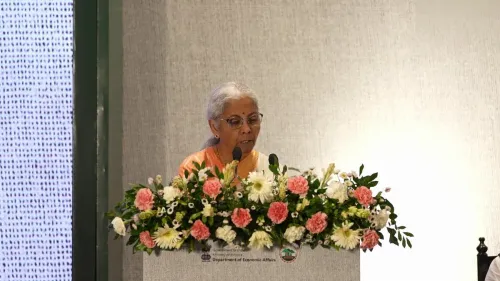
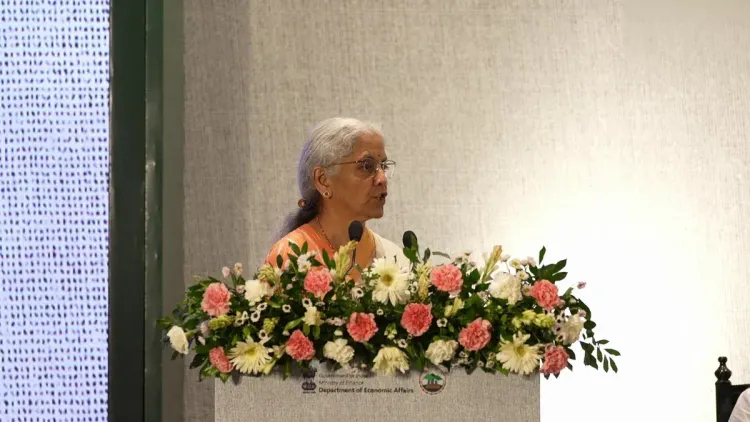
Finance Minister Nirmala Sitharaman, addressing an audience in Shillong on 19 June 2026, declared the North-East India's 'front-runner' and said a prosperous, connected region is non-negotiable for the Viksit Bharat 2047 goal, citing PM Modi's 'Ashta Lakshmi' framing for the eight-state region.
Key Takeaways
Finance Minister Nirmala Sitharaman spoke in Shillong, Meghalaya on 19 June 2026 , reaffirming the government's North-East development agenda.
She quoted PM Narendra Modi 's formulation: 'The North East is not India's frontier; it is India's front-runner.' PM Modi's 'Ashta Lakshmi' metaphor refers to the eight North-Eastern states as eight embodiments of national prosperity.
Sitharaman called North-East development 'a national imperative,' directly linking it to the Viksit Bharat 2047 vision.
Policy instruments backing this agenda include the Act East Policy (2014) and the North East Special Infrastructure Development Scheme (NESIDS, 2017) .
Upcoming Union Budget allocations and progress on the India-Myanmar-Thailand Trilateral Highway will be key indicators of follow-through.
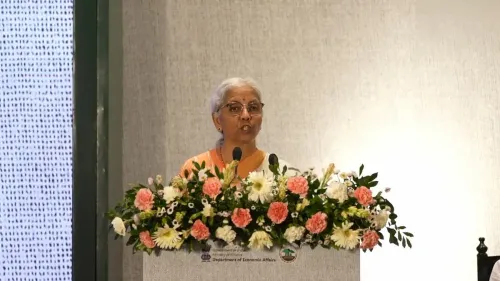
Union Finance Minister Nirmala Sitharaman, speaking in Shillong on Friday, 19 June 2026, declared that the North-East has moved from the margins of Indian policymaking to the mainstream of the country's developmental agenda, framing the region's progress as indispensable to the Viksit Bharat 2047 vision.
Context
Addressing her audience in the Meghalaya capital, Sitharaman attributed the shift in approach to the leadership of Prime Minister Narendra Modi, quoting him directly: 'The North East is not India's frontier; it is India's front-runner.' The remark encapsulates a deliberate rebranding of the region — from a security-sensitive periphery to a growth engine at the heart of national ambition.
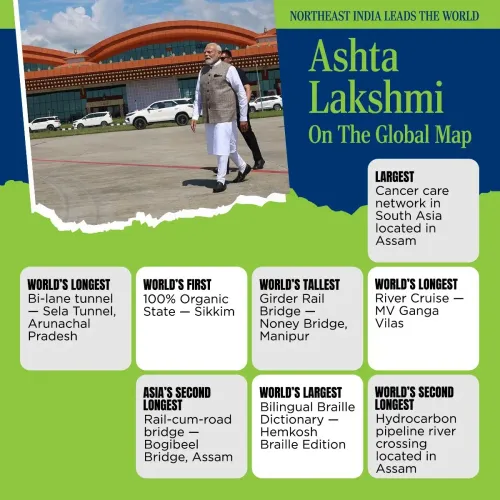
She also invoked the Prime Minister's characterisation of the region as India's 'Ashta Lakshmi' — eight embodiments of prosperity — a reference to the eight North-Eastern states of Arunachal Pradesh, Assam, Manipur, Meghalaya, Mizoram, Nagaland, Sikkim and Tripura. The formulation highlights the region's culture, biodiversity, entrepreneurship, strategic location and human potential as national assets rather than liabilities.
Policy Backdrop
The rhetorical shift is backed by a decade-long policy reorientation. The Act East Policy, unveiled in 2014, was designed to economically and strategically integrate the North-East with ASEAN nations, treating the region's borders as gateways rather than edges. The North East Special Infrastructure Development Scheme (NESIDS), launched in 2017, channelled dedicated funds into roads, power and water projects across the eight states.
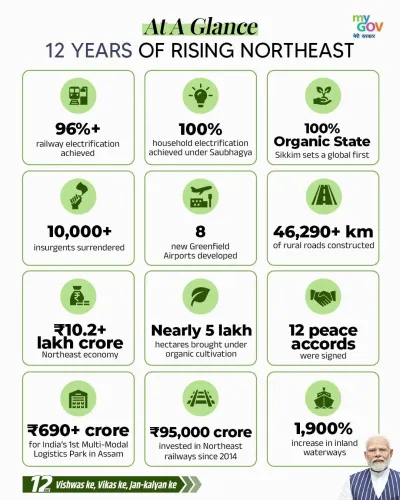
Since 2014, the central government has expanded rail and highway networks, opened new air-connectivity routes and advanced border infrastructure. In 2021, the government extended special-category status benefits and raised the central funding share for North-Eastern states under several centrally sponsored schemes, easing the fiscal burden on state governments with limited own-revenue capacity.
Sitharaman underlined that for the current government, North-East development 'is not merely a regional priority — it is a national imperative,' adding that 'a Viksit Bharat by 2047 cannot be realized without a prosperous, connected and empowered North-East.'
Stakeholders and Impact
The region's tribal communities, local entrepreneurs and state governments stand as the primary beneficiaries of this policy posture. Improved connectivity — through road, rail and air — directly reduces the cost of doing business and lowers the price of essential goods in landlocked hill districts. Enhanced central funding ratios have allowed states such as Meghalaya, Manipur and Mizoram to undertake capital expenditure that their own revenues could not support.
The strategic dimension is equally significant. The North-East shares international borders with China, Myanmar, Bangladesh and Bhutan, making infrastructure investment there inseparable from national security calculus. The framing of the region as a 'front-runner' also carries a diplomatic signal, reinforcing India's connectivity ambitions under projects such as the India-Myanmar-Thailand Trilateral Highway.
What's Next
Attention will now turn to the next Union Budget to assess whether allocations for North-East schemes reflect the ambition articulated in Shillong. Milestones on multimodal connectivity projects — including new rail links and the Trilateral Highway — will serve as measurable tests of the government's stated commitment. Sitharaman's remarks in Meghalaya's capital signal that the North-East will remain a prominent theme in the BJP-led government's economic messaging ahead of state assembly cycles in the region.
Point of View
Particularly as several states in the region approach assembly election cycles. The 'Ashta Lakshmi' and 'front-runner' framings are not merely rhetorical — they form part of a sustained effort to recast the region's identity from a security burden to a growth dividend, which carries electoral as well as diplomatic weight. By tying the North-East explicitly to Viksit Bharat 2047, the Finance Minister elevates what has often been treated as regional welfare spending into a pillar of the government's flagship long-term vision. The real test will come in the next Union Budget, where allocation numbers will either validate or undercut the ambition on display in Shillong.
NationPress
18 Sept 2026
Frequently Asked Questions
What did Nirmala Sitharaman say about North-East India in Shillong?
Speaking in Shillong on 19 June 2026, Finance Minister Nirmala Sitharaman said the North-East has moved from the margins to the mainstream of India's developmental agenda and that its progress is a national imperative for achieving Viksit Bharat by 2047.
What does 'Ashta Lakshmi' mean in the context of North-East India?
'Ashta Lakshmi' is Prime Minister Narendra Modi's metaphor for the eight North-Eastern states — Arunachal Pradesh, Assam, Manipur, Meghalaya, Mizoram, Nagaland, Sikkim and Tripura — describing them as eight embodiments of prosperity whose culture, biodiversity, entrepreneurship and strategic location enrich the entire nation.
What is the Act East Policy and how does it relate to North-East India?
The Act East Policy, unveiled in 2014, aims to economically and strategically integrate North-East India with ASEAN nations by treating the region's international borders as gateways for trade and connectivity rather than peripheral edges.
What is Viksit Bharat 2047 and why is the North-East important to it?
Viksit Bharat 2047 is the national vision to transform India into a developed economy by the centenary of independence in 2047. Sitharaman argued that this goal cannot be achieved without a prosperous, connected and empowered North-East, given the region's strategic location and untapped economic potential.
What infrastructure schemes has the government launched for North-East India?
Key schemes include the North East Special Infrastructure Development Scheme (NESIDS), launched in 2017 to fund roads, power and water projects, alongside expanded rail and air connectivity and the ongoing India-Myanmar-Thailand Trilateral Highway project.