Sitharaman Addresses NE States Conference on Externally Aided Projects
Synopsis
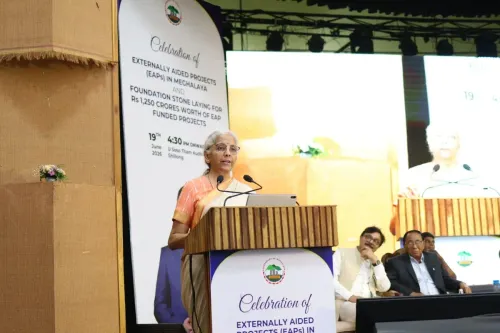
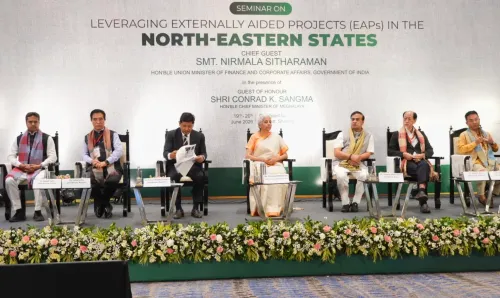
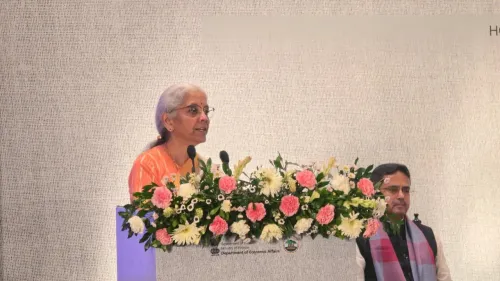
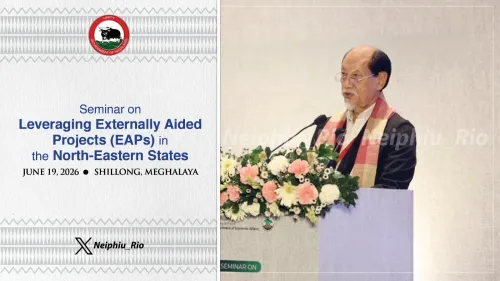
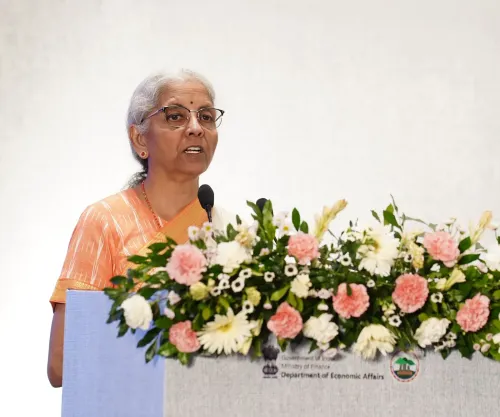
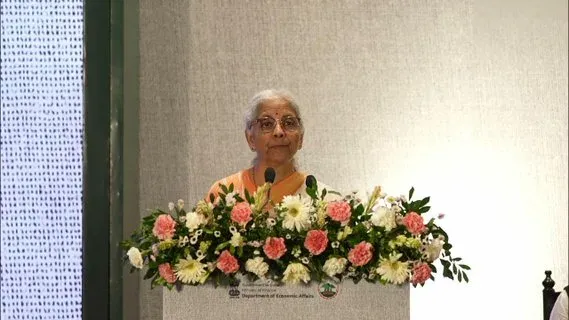
Union Finance Minister Nirmala Sitharaman addressed the inaugural session of the 'Leveraging Externally Aided Projects in the North-Eastern States' conference in Shillong, Meghalaya, on June 19, 2026, spotlighting the Finance Ministry's push to accelerate multilateral-funded development across the eight-state region.
Key Takeaways
Union Finance Minister Nirmala Sitharaman addressed the inaugural session of the conference on June 19, 2026 in Shillong, Meghalaya .
The conference focused on 'Leveraging Externally Aided Projects in the North-Eastern States' , covering all eight states of the NER.
Externally aided projects in the region are coordinated by the Department of Economic Affairs under the Finance Ministry, with multilateral partners including the World Bank and ADB .
The policy backdrop includes the Act East Policy (2014) and the North Eastern Council (1971) , both of which underpin external financing frameworks for the NER.
Revised external aid guidelines and state-wise project pipelines are expected to emerge from the conference deliberations.
Holding the conference in Shillong — rather than New Delhi — reflects a deliberate effort to engage NER states on implementation challenges at the ground level.
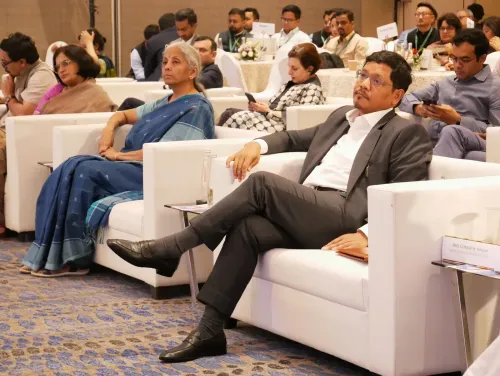
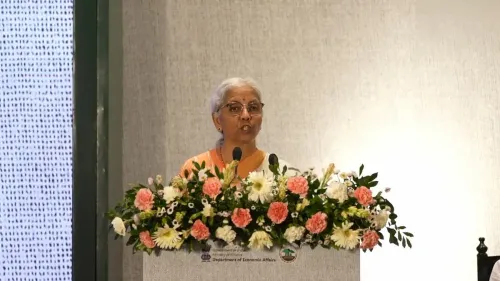
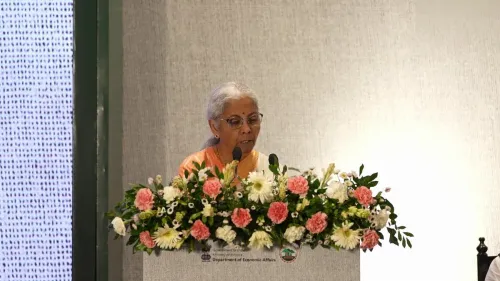
Union Finance Minister Nirmala Sitharaman addressed the inaugural session of the 'Leveraging Externally Aided Projects in the North-Eastern States' conference in Shillong, Meghalaya, on Friday, June 19, 2026. The event brought together stakeholders focused on accelerating the absorption and implementation of externally funded development projects across the eight North-Eastern states.
Context
The conference was held in Shillong, the capital of Meghalaya, and centred on how the North-Eastern Region (NER) can more effectively leverage development financing from multilateral agencies such as the World Bank and the Asian Development Bank (ADB). These externally aided projects (EAPs) are coordinated at the central level by the Department of Economic Affairs under the Finance Ministry.
Sitharaman's address at the inaugural session signals the Finance Ministry's direct engagement in ensuring that pipeline projects in the region move from sanction to on-ground delivery. The NER comprises Arunachal Pradesh, Assam, Manipur, Meghalaya, Mizoram, Nagaland, Sikkim, and Tripura.
Policy Backdrop
Externally aided projects in the North East have historically covered roads, power infrastructure, water supply, and social sector programmes. The Finance Ministry's role in appraising and monitoring such projects has expanded significantly since the 1990s, complementing rising central budgetary outlays for the region.
The broader policy architecture includes the Act East Policy launched in 2014, which prioritises infrastructure and connectivity in the NER through external partnerships, and the North Eastern Council, established in 1971, which coordinates regional planning. Finance Ministry guidelines on external aid utilisation extend special provisions for these special-category states, recognising their distinct developmental needs and strategic geographic importance.
Successive governments have treated the NER as a priority corridor given its borders with Bangladesh, Bhutan, China, Myanmar, and Nepal, making infrastructure investment both an economic and a strategic imperative.
Stakeholders and Impact
The primary stakeholders at the conference are the eight North-Eastern state governments, which are the implementing agencies for most externally aided schemes. Multilateral lenders who have active project portfolios in the region also have a direct interest in improved utilisation rates and faster disbursement cycles.
For citizens across the NER, better absorption of external aid translates into faster completion of roads, bridges, water systems, and health infrastructure — sectors where the region has historically lagged behind the national average. Improved project execution also strengthens the creditworthiness of state governments when seeking future multilateral financing.
The Finance Ministry's convening of such a dedicated conference in Shillong — rather than in New Delhi — is itself a signal of intent to engage the region on its home ground and address state-specific bottlenecks in project implementation.
What's Next
Observers will watch for revised external aid guidelines and state-wise project pipelines expected to emerge from the Shillong conference. There is also anticipation around whether the next Union Budget will revise multilateral borrowing ceilings for the NER, given the Finance Ministry's renewed focus on the region.
The conference outcome could shape how India negotiates future tranches of World Bank and ADB lending earmarked for the North East, with the Finance Ministry likely to use the deliberations to streamline approval and monitoring frameworks for externally aided projects across all eight states.
Point of View
Reinforcing the BJP-led government's Act East optics ahead of what could be a politically significant budget cycle for the North East. The Finance Ministry's direct stewardship of externally aided project reviews signals an effort to cut through the chronic implementation lag that has long undermined multilateral lending to the region. By convening state governments and lenders on common ground, the Centre is also quietly asserting coordination authority over project pipelines that have historically been fragmented across line ministries. The conference's outcomes — particularly any revised borrowing ceilings or streamlined approval norms — will be a concrete test of whether this renewed focus translates into faster disbursement on the ground.
NationPress
19 Sept 2026
Frequently Asked Questions
What is the 'Leveraging Externally Aided Projects in the North-Eastern States' conference?
It is a conference convened by the Finance Ministry in Shillong, Meghalaya, on June 19, 2026, to improve the planning, absorption, and implementation of development projects in the North-Eastern Region that are funded by multilateral agencies such as the World Bank and the Asian Development Bank.
Why was the conference held in Shillong?
Shillong, the capital of Meghalaya, was chosen as the venue to engage North-Eastern state governments directly in their home region, signalling the Finance Ministry's intent to address state-specific bottlenecks in project implementation rather than convening discussions solely in New Delhi.
Which states are covered under externally aided projects in the North East?
The eight North-Eastern states — Arunachal Pradesh, Assam, Manipur, Meghalaya, Mizoram, Nagaland, Sikkim, and Tripura — are the primary beneficiaries of externally aided projects coordinated by the Department of Economic Affairs.
What is Nirmala Sitharaman's role in externally aided projects?
As Union Finance Minister, Sitharaman heads the ministry that oversees the Department of Economic Affairs, which appraises, coordinates, and monitors all externally aided projects in India, including those in the North-Eastern Region.
What could come out of the Shillong conference on externally aided projects?
Observers expect revised external aid utilisation guidelines, state-wise project pipelines, and potentially revised multilateral borrowing ceilings for the North-Eastern Region, with possible implications for the next Union Budget.