CM Dhami Holds Public Grievance Meet in Khatima
Synopsis
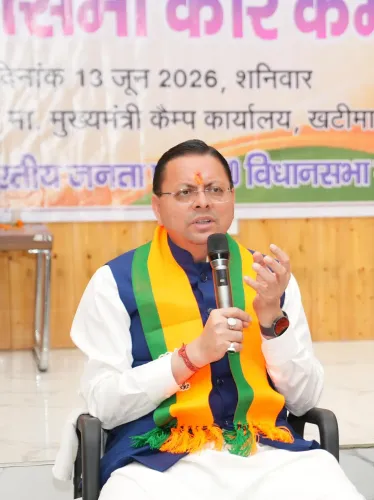
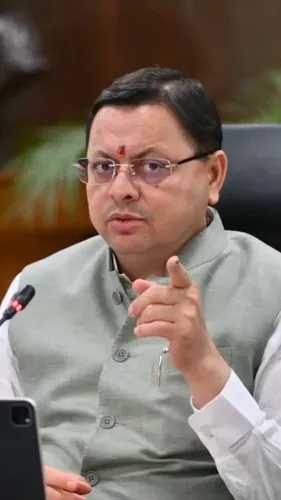
Chief Minister Pushkar Singh Dhami held a public grievance session at Khatima's Lohiyahead Helipad on November 2, meeting residents and local officials, and directing time-bound resolution of complaints under his governance mantra of simplification, resolution, and satisfaction.
Key Takeaways
CM Pushkar Singh Dhami conducted a public grievance meeting at Lohiyahead Helipad, Khatima on November 2, 2026 .
Dhami directed officials to resolve all received complaints on a priority and time-bound basis .
His governance mantra — 'simplification, resolution, and satisfaction' — framed the session's goals.
Senior officials including DM Nitin Singh Bhadauria , SSP Ajay Ganapati , and CDO Divesh Shashni were present alongside elected representatives.
Khatima in Udham Singh Nagar district is Dhami's own legislative constituency, lending political significance to the visit.
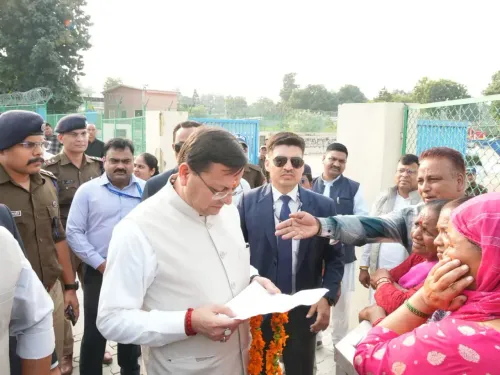
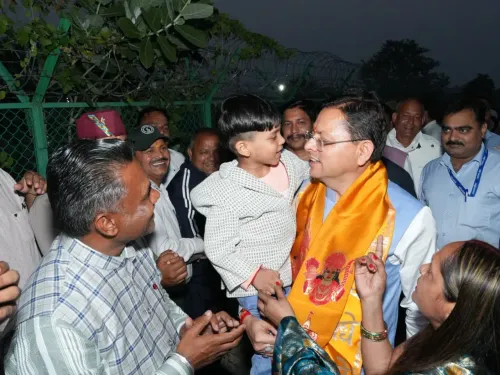
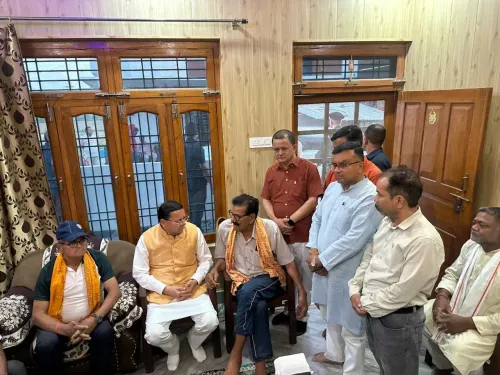
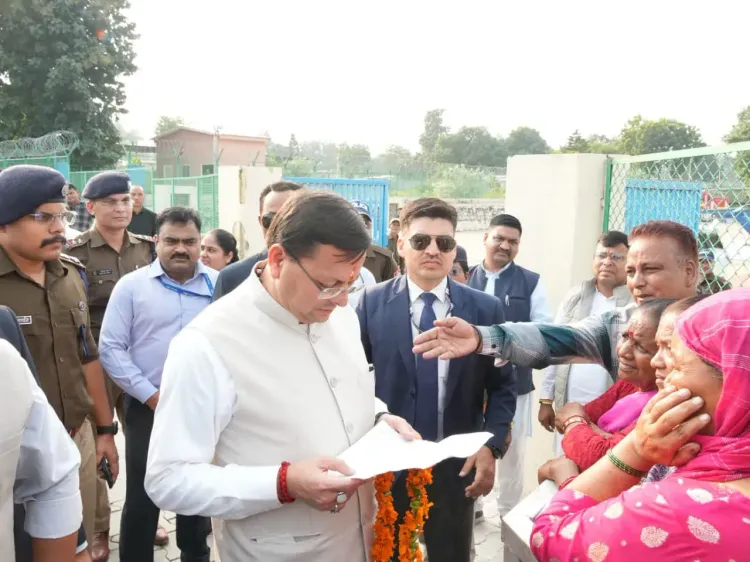
At a helipad in Khatima, Uttarakhand Chief Minister Pushkar Singh Dhami sat face-to-face with ordinary residents and elected representatives on Monday, November 2, 2026 — listening to their complaints and directing officials on the spot to resolve them as a matter of top priority.
Lohiyahead Helipad as an Open Durbar
The Lohiyahead Helipad in Khatima served as an impromptu public court. Dhami met with citizens and local public representatives, heard grievances directly, and issued clear instructions to district officials: every complaint received must be addressed on a time-bound basis. His stated governing mantra — 'saralīkaraṇ, samādhān aur santuṣṭi' ('simplification, resolution, and satisfaction') — framed the session's purpose. Administrative accountability, he told officials, is not optional.
Who Was in the Room
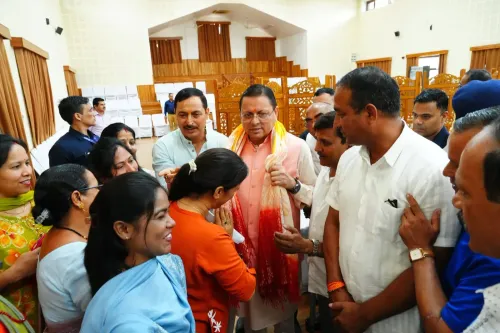
The gathering brought together a cross-section of local governance: Ajay Maurya (District Panchayat President), Ramesh Chandra Joshi (Municipal Council President), former MLAs Prem Singh Rana and Bhawani Bhandari, state minister-rank official Rampal Singh, Block Head Sarita Rana, BJP District Vice President Amit Kumar Pandey, District Magistrate Nitin Singh Bhadauria, SSP Ajay Ganapati, and CDO Divesh Shashni. The presence of both elected representatives and senior district officers in one space is deliberate — it signals that excuses about bureaucratic delay will be heard in public.
Khatima's Place in Dhami's Political Map
Khatima, a town in Udham Singh Nagar district near the Nepal border, holds particular significance: it is Dhami's own legislative constituency. Chief Ministers visiting their home turf for public outreach carries weight beyond routine administration — it is a visible demonstration that the state's top office remains accessible to the electorate that first sent the CM to the Assembly. The border-adjacent geography also gives such visits a dual purpose: civic grievance redressal and proximity to communities often at the margins of state services.
Dhami has since 2021 consistently emphasised direct public engagement as a governance tool, with helipad and district-level jan sunwais (public hearings) forming a recurring feature of his outreach calendar. The Khatima session reinforces a pattern: put the district machinery in front of the people, make commitments publicly, and create a record that can be followed up.
The real test, as always, lies in the follow-through — whether the complaints logged at Lohiyahead translate into closed files, or simply open ones with better paperwork.
Point of View
He reinforces his image as an accessible, ground-level administrator ahead of future electoral cycles. The 'simplification, resolution, satisfaction' framing also signals a technocratic rather than welfare-populist positioning — one that prioritises process reform over subsidy announcements. Whether the model produces measurable reductions in pending grievances, or remains largely performative, will define its long-term political value.
NationPress
2 Nov 2026
Frequently Asked Questions
Why did CM Dhami visit Khatima on November 2 2026?
CM Pushkar Singh Dhami visited Khatima to hold a public grievance session at Lohiyahead Helipad, meeting residents and elected representatives to hear their complaints and direct officials to resolve them on a priority basis.
What is CM Dhami's governance mantra mentioned at the Khatima meeting?
Dhami's stated governance mantra is 'saralīkaraṇ, samādhān aur santuṣṭi' — simplification, resolution, and satisfaction — with administrative accountability as a core pillar.
Where is Khatima and why is it significant to CM Dhami?
Khatima is a town in Udham Singh Nagar district, Uttarakhand, near the Nepal border. It is Chief Minister Pushkar Singh Dhami's own legislative constituency, making his outreach visits there both administratively and politically significant.
Who attended the public meeting at Lohiyahead Helipad in Khatima?
The meeting was attended by District Panchayat President Ajay Maurya, Municipal Council President Ramesh Chandra Joshi, former MLAs Prem Singh Rana and Bhawani Bhandari, District Magistrate Nitin Singh Bhadauria, SSP Ajay Ganapati, CDO Divesh Shashni, and other officials and representatives.
What instructions did CM Dhami give to officials at the Khatima jan sunwai?
Dhami instructed officials to treat the time-bound resolution of public grievances as the highest priority, emphasising that administrative accountability is central to the government's functioning.