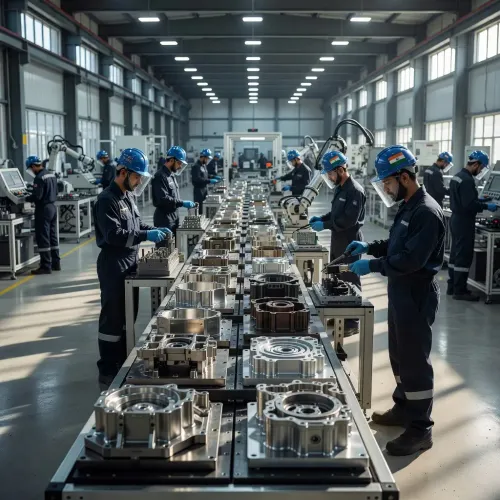
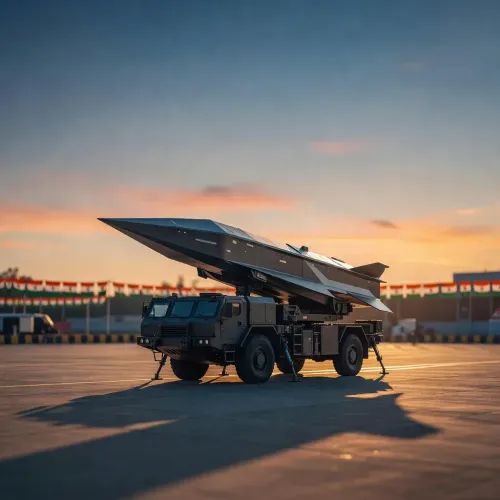
Giriraj Singh hails India's defence production surge under Modi
Synopsis
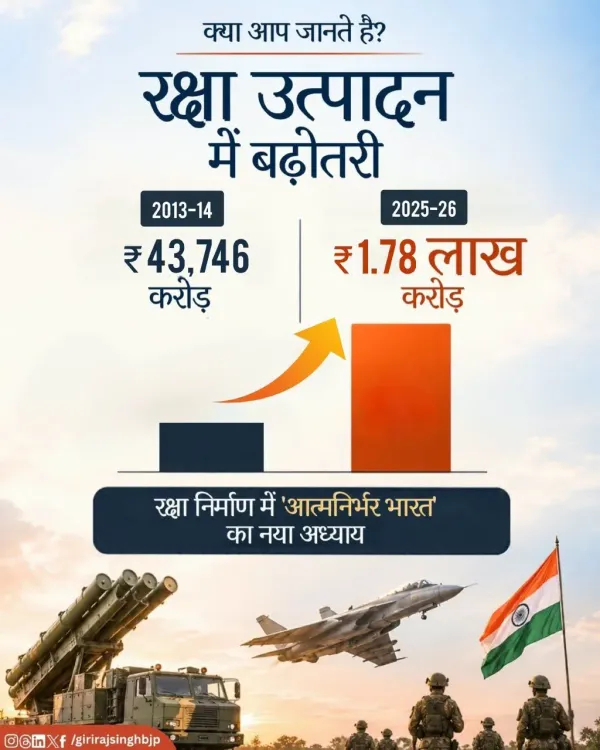
Union Textiles Minister Giriraj Singh on November 2 hailed India's defence production sector as reaching new heights under PM Modi, citing Atmanirbhar Bharat, indigenous technology development, and Make in India reforms dating back to 2014.
Key Takeaways
Union Textiles Minister Giriraj Singh posted on November 2, 2026 praising India's defence production growth under PM Narendra Modi .
He cited the Atmanirbhar Bharat campaign as proof of growing self-reliance and indigenous defence capability.
Make in India was launched in September 2014 with defence as a priority sector for indigenisation.
A negative import list for defence items was introduced in 2020 to force domestic manufacturing to scale up.
Defence industrial corridors were established in Uttar Pradesh and Tamil Nadu to anchor domestic production capacity.
Official production and export figures from the Ministry of Defence remain the definitive benchmark for the growth claims made.
India's push to manufacture its own weapons and military hardware is drawing fresh attention — and political energy. Union Textiles Minister Giriraj Singh on Monday, November 2, 2026 took to X to celebrate what he called an unprecedented rise in domestic defence production under Prime Minister Narendra Modi, framing it as the clearest proof yet of the Atmanirbhar Bharat mission taking root in the country's strategic sectors.
In his post, Giriraj Singh wrote: 'Under the leadership of honourable Prime Minister Shri Narendra Modi, India's defence production sector is touching new heights. There has been unprecedented growth in defence production in the country. This is proof of the growing strength of self-reliant India, the development of indigenous technology, and strong defence capability.'
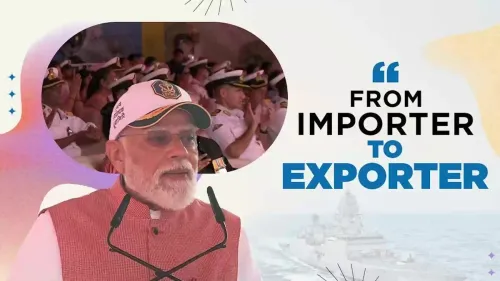
From import dependence to indigenous ambition
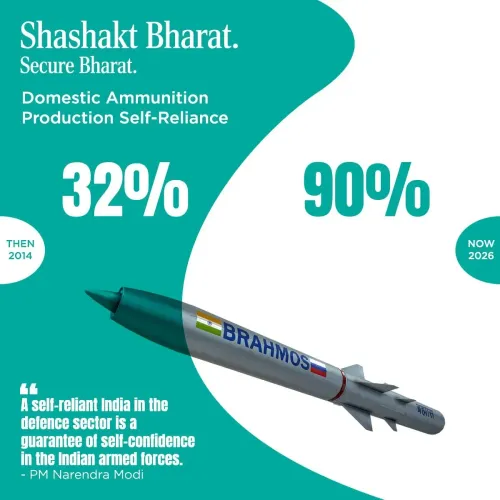
The political salience of this message traces back to a structural shift that began with the launch of Make in India in September 2014. Defence was among the earliest sectors earmarked for indigenisation — successive governments had long recognised that a country importing the bulk of its military hardware was, in effect, outsourcing a portion of its national security. The Atmanirbhar Bharat campaign, launched in 2020, sharpened that intent with a hard policy tool: a negative import list barring the procurement of specified defence items from abroad, forcing domestic industry to step in.
That list has been expanded in multiple tranches since, progressively closing the door on foreign sourcing for everything from ammunition to complex platforms. The message to Indian defence manufacturers — both public-sector giants and private players — has been consistent: the government will create the demand, the industry must supply it.
What 'unprecedented growth' means in practice
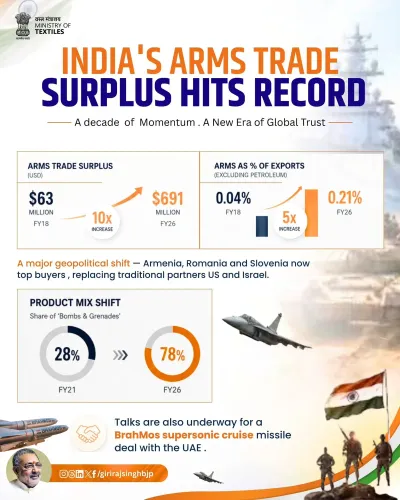
Giriraj Singh's post carries no specific figures, and the Ministry of Defence releases annual production and export data that serves as the definitive benchmark for such claims. What is established by policy record is the direction of travel: procurement reforms, dedicated defence industrial corridors in Uttar Pradesh and Tamil Nadu, and export promotion targets have all been active instruments of this agenda. The armed forces — as the primary customers — and a growing base of domestic manufacturers are the two groups most directly shaped by whether those policy levers deliver.
Upcoming defence budget allocations and the next official production data release will be the true test of the trajectory Giriraj Singh is pointing to.
A Cabinet voice amplifying a core government narrative
It is notable that the voice here belongs to the Textiles Minister, not a defence portfolio holder. That is not incidental — it reflects how the Atmanirbhar Bharat frame has become a whole-of-government political message, one that BJP leaders across portfolios are expected to reinforce. Self-reliance in manufacturing, whether in textiles, electronics, or defence, is the connective tissue of that narrative. Giriraj Singh, a senior party figure and Lok Sabha MP from Begusarai, Bihar, is lending his platform to a story the party considers central to its governance record going into future electoral cycles.
The numbers, when they arrive, will either validate the assertion — or invite the scrutiny it has now drawn attention to.
Point of View
Signalling that self-reliance messaging has been institutionalised across the entire Cabinet. The claim of 'unprecedented growth' in defence production carries political weight ahead of budget cycles, but remains unmoored from specific figures, making official Ministry of Defence data releases the critical next accountability moment. Historically, India's defence indigenisation drive has been a bipartisan aspiration, but the current government has operationalised it most aggressively through the negative import list and corridor investments. How much of that policy intent has translated into verified production benchmarks will define whether this narrative holds.
NationPress
2 Nov 2026
Frequently Asked Questions
What is Atmanirbhar Bharat in defence?
Atmanirbhar Bharat in defence refers to India's push for self-reliance in military manufacturing, launched in 2020, which includes a negative import list banning procurement of specified defence items from abroad to boost domestic production.
What did Giriraj Singh say about India's defence production?
On November 2, 2026, Union Textiles Minister Giriraj Singh said India's defence production sector is touching new heights under PM Modi, calling it proof of Atmanirbhar Bharat's growing strength and indigenous technology development.
What is India's negative import list in defence?
India's negative import list for defence, introduced in 2020 under Atmanirbhar Bharat, is a progressively expanded catalogue of military items that cannot be imported, requiring them to be sourced from Indian manufacturers instead.
When was Make in India launched for the defence sector?
Make in India was launched in September 2014, with defence identified as one of the key sectors for boosting domestic manufacturing and reducing India's heavy dependence on foreign arms imports.
Where are India's defence industrial corridors located?
India has established dedicated defence industrial corridors in Uttar Pradesh and Tamil Nadu to attract investment, anchor domestic manufacturing capacity, and support the indigenisation agenda.