Giriraj Singh: Surat Textile Hub Eyes Defence Production
Synopsis
Union Textiles Minister Giriraj Singh highlights Surat's emerging role in defence-grade textile production, connecting the city's traditional weaving clusters to India's Atmanirbhar Bharat indigenisation drive and the National Technical Textiles Mission.
Key Takeaways
Giriraj Singh flagged on 18 October 2026 that Surat is advancing into specialised defence textile production using new technology.
The shift links Surat's traditional synthetic-fabric industry to high-value defence materials such as ballistic and protective fabrics.
The move aligns with the National Technical Textiles Mission and Atmanirbhar Bharat Abhiyan , both launched in 2020 .
Singh cited indigenous production growth, new employment creation, and strengthened industrial capacity as key outcomes.
No specific production figures or confirmed defence contracts for Surat units have been officially announced yet.
Surat's large migrant labour workforce could benefit from better wages if the high-value pivot is supported by training and capital access.
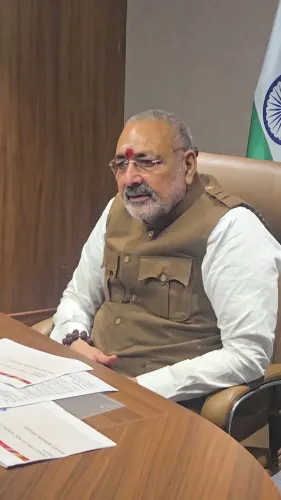
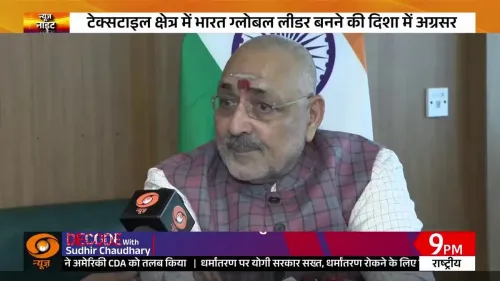
Surat — India's synthetic fabric capital — is threading its looms into the nation's defence supply chain, and Union Textiles Minister Giriraj Singh wants the country to notice. On Sunday, 18 October 2026, Singh posted on X flagging that Surat's traditional textile industry is now advancing into the production of specialised fabrics for the defence sector, blending new technology with modern manufacturing.
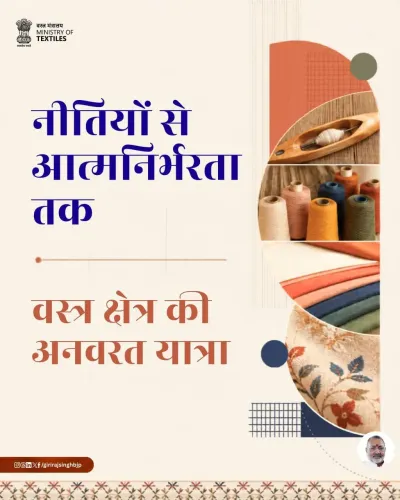
In his post, Singh wrote: 'Gujarat ka Surat apne paramparik vastra udyog ko nayi taknik aur aadhunik vinirman se jodte hue raksha kshetra ke liye vishesh vastron ke utpadan mein bhi aage badh raha hai' — 'Surat in Gujarat is connecting its traditional textile industry with new technology and modern manufacturing, and is also moving forward in producing specialised fabrics for the defence sector.' The minister added that this progress is strengthening indigenous production, creating new employment opportunities, and reinforcing industrial capacity — all in service of the Atmanirbhar Bharat vision.
Surat's Pivot from Silk Saris to Soldier-Grade Fabric
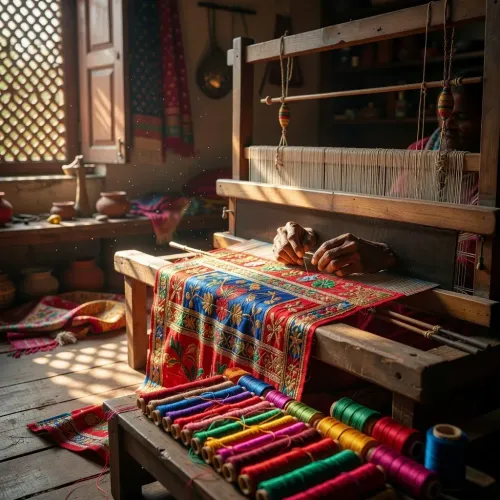
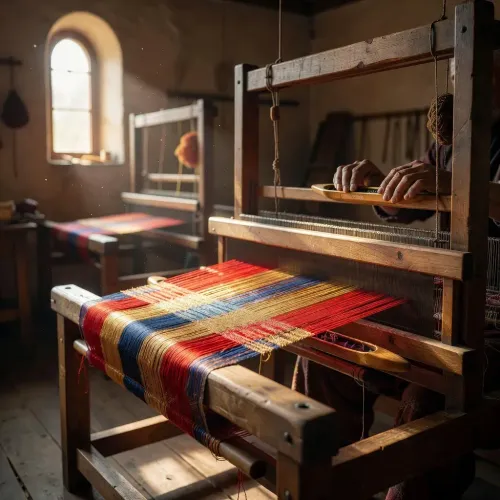
Surat has long been synonymous with synthetic weaving and bridal trousseau trades — a city where power-loom clusters have hummed for decades. The pivot toward technical textiles for defence is a significant shift in the city's industrial identity. Defence textiles include high-performance materials such as ballistic fabrics, camouflage cloth, flame-retardant uniforms, and protective gear for armed forces personnel — products that demand precision engineering far beyond conventional garment making.
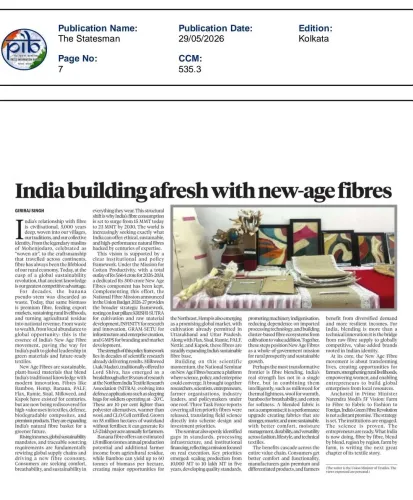
The move aligns with the National Technical Textiles Mission, approved in 2020 with a mandate to scale India's technical textiles output — including defence applications. Alongside it, the Atmanirbhar Bharat Abhiyan, also launched in May 2020, specifically targeted defence manufacturing as a sector where India must shrink its import dependence. Surat's existing industrial infrastructure — skilled labour, established logistics, and deep weaving expertise — makes it a logical launchpad for this ambition.
Indigenisation Drive Meets an Established Industrial Base
India's strategy of routing defence procurement toward indigenous manufacturers has been a consistent policy priority across budget cycles. For textile clusters like Surat, it opens a high-value order pipeline that conventional apparel exports cannot match. Specialised defence contracts offer stability, scale, and a compelling reason for mills to invest in upgraded machinery and certifications.
The employment dimension matters too. Surat's textile ecosystem employs hundreds of thousands of workers — many of them migrant labour from Bihar, Uttar Pradesh, and Odisha. A structural shift toward higher-value, defence-grade production could translate to better wages and more durable jobs, provided the transition is managed with training support and adequate capital access for small and medium mills.
What Singh's post does not detail — and what analysts will track — is whether specific technical textile parks or confirmed defence supply contracts are already in the pipeline for Surat units. The policy architecture exists; the execution trail is the story still to be written.
If Surat's looms do deliver defence fabric at scale, it will mark one of the more striking industrial pivots in modern Indian manufacturing — a city that dressed the subcontinent now dressing its soldiers.
Point of View
Making the political optics low-cost but the execution risk real. The Atmanirbhar framing gives the initiative ideological coherence, but the test will be whether defence procurement agencies actually formalise Surat-sourced contracts at volume. Until verified supply agreements emerge, the announcement sits in the aspirational column — significant in direction, still open on delivery.
NationPress
18 Oct 2026
Frequently Asked Questions
What is Surat's role in India's defence textile sector?
Surat is expanding beyond its traditional synthetic and bridal fabric trade into producing specialised defence textiles such as protective and high-performance materials for the armed forces, supported by national policy frameworks like the National Technical Textiles Mission.
What is the National Technical Textiles Mission?
The National Technical Textiles Mission was approved by the Indian government in 2020 to scale up domestic production of technical textiles, including those used in defence, agriculture, healthcare, and infrastructure applications.
How does Surat's defence textile push relate to Atmanirbhar Bharat?
The Atmanirbhar Bharat Abhiyan , launched in May 2020 , aims to reduce India's import dependence in strategic sectors including defence. Routing defence textile procurement to domestic clusters like Surat directly advances this self-reliance goal.
Will Surat's defence textile expansion create jobs?
Union Textiles Minister Giriraj Singh has stated that the expansion is creating new employment opportunities. Surat's textile sector already employs a large migrant workforce, and a shift to higher-value defence fabrics could support more stable and better-paying jobs if adequate training and investment follow.
What kinds of textiles are used in the defence sector?
Defence textiles include ballistic-resistant fabrics, camouflage materials, flame-retardant uniforms, tents and shelter systems, and protective gear — all requiring specialised manufacturing standards beyond conventional garment production.