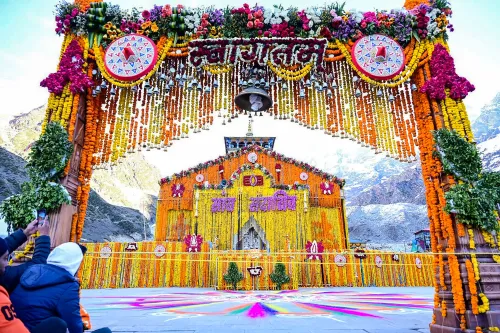
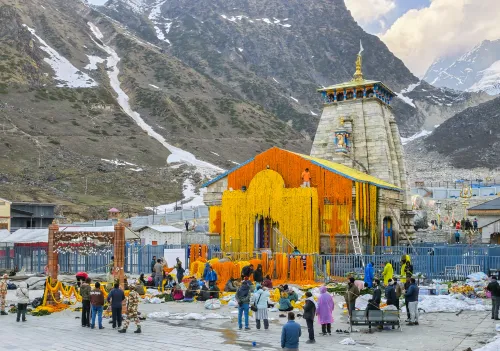
Yamunotri Dham draws large crowds on Navratri
Synopsis
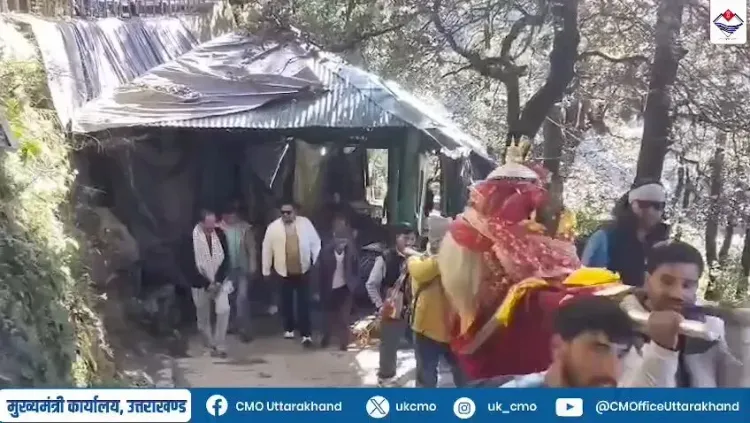
The Chief Minister's Office of Uttarakhand reports a large gathering of devotees at Yamunotri Dham in Uttarkashi district during Navratri, reflecting the enduring pull of the Char Dham Yatra circuit during Hindu festival seasons.
Key Takeaways
Yamunotri Dham in Uttarkashi is receiving a large number of pilgrims during Navratri 2026 .
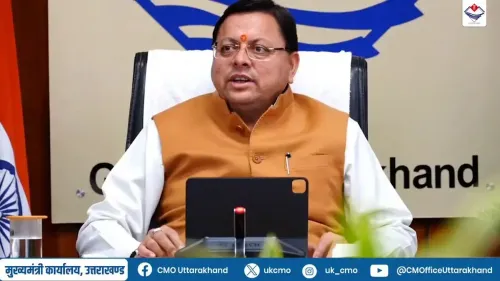
The Uttarakhand Chief Minister's Office shared the update on October 18, 2026 , accompanied by a video.
Navratri is one of the peak footfall periods for Himalayan shrines on the Char Dham Yatra circuit.
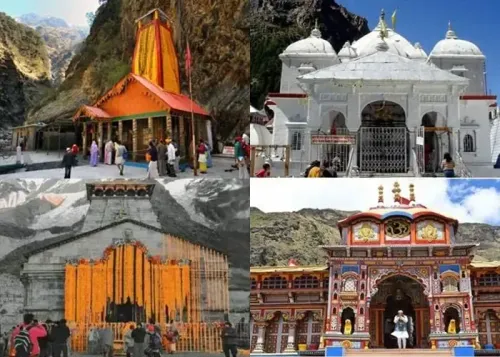
Yamunotri is the first shrine on the four-site Chardham Yatra , which also includes Gangotri, Kedarnath, and Badrinath.
Religious tourism at Char Dham sites is a major seasonal economic driver for hill districts like Uttarkashi .
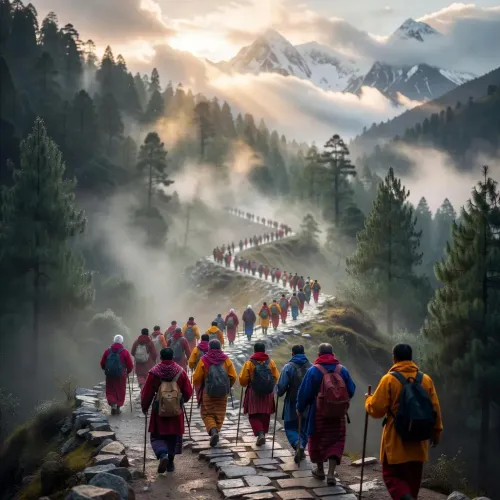
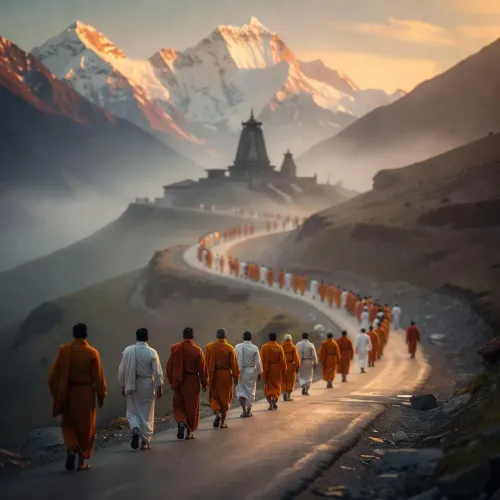
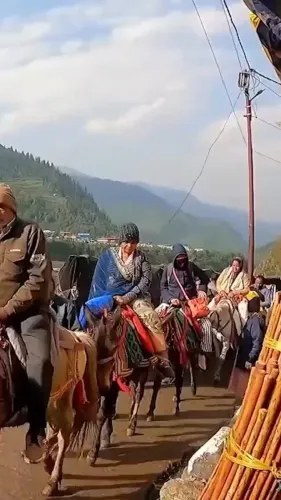
As the nine nights of Navratri unfold, Yamunotri Dham — the sacred seat of Goddess Yamuna high in the Uttarkashi district — is drawing devotees in large numbers, the Chief Minister's Office of Uttarakhand reported on Sunday, October 18, 2026.
The CMO's post, shared with the hashtags #Yamunotri #Navratri #ChardhamYatra #Uttarkashi #Uttarakhand, confirmed the surge in pilgrim footfall at one of Hinduism's most revered Himalayan shrines during the festival season.
Why Navratri turns Yamunotri into a pilgrimage magnet
Navratri, the nine-night festival honouring Goddess Durga, is one of the peak periods for Himalayan shrines. Yamunotri, dedicated to Goddess Yamuna and situated at the very source of the Yamuna river, draws devotees who believe visiting during the festival carries heightened spiritual merit. The combination of festival fervour and the tail end of the annual Char Dham Yatra season consistently amplifies footfall at this altitude.
Yamunotri's place in the Char Dham circuit
Yamunotri is the first of the four sacred shrines on the Chardham Yatra circuit — the others being Gangotri, Kedarnath, and Badrinath — all located in the Uttarakhand Himalayas. The annual yatra is not merely a spiritual exercise; it is the economic engine of hill districts like Uttarkashi, generating seasonal revenue and employment across hospitality, transport, and trade.
Uttarakhand's state authorities have made it a practice to amplify pilgrim arrivals and safe access updates on social media, signalling to the faithful that routes are open and shrines are accessible. Regular official communication during festival windows is part of a broader push to position Uttarakhand as India's foremost religious tourism destination.
As Navratri reaches its final days and the Char Dham season moves toward its annual closure, every additional devotee making the trek to Yamunotri writes a small chapter in a story that has defined this Himalayan state for centuries.
Point of View
Managed access to investors and tourism stakeholders. Navratri surges at Yamunotri are part of a longer arc in which successive Uttarakhand administrations have tied religious tourism directly to hill-district economic development. With infrastructure projects like the Char Dham all-weather road and the Yamunotri ropeway under various stages of progress, footfall data from peak festival windows carries policy weight beyond devotion. The CMO's timely post keeps the Char Dham brand visible and reassures pilgrims that the route is open — a message with real economic stakes.
NationPress
18 Oct 2026
Frequently Asked Questions
Why are pilgrims visiting Yamunotri during Navratri 2026?
Navratri, the nine-night Hindu festival honouring Goddess Durga, is traditionally a peak period for Himalayan shrines. Yamunotri, dedicated to Goddess Yamuna, sees higher footfall as devotees consider visits during the festival spiritually auspicious.
Where is Yamunotri Dham located?
Yamunotri Dham is located in the Uttarkashi district of Uttarakhand, at the source of the Yamuna river in the Himalayas. It is the first of the four sacred shrines on the annual Char Dham Yatra circuit.
What is the Char Dham Yatra?
The Char Dham Yatra is an annual Hindu pilgrimage covering four Himalayan shrines in Uttarakhand — Yamunotri, Gangotri, Kedarnath, and Badrinath. It is one of India's most significant religious journeys and a major economic driver for the state.
When does the Char Dham Yatra season close?
The Char Dham Yatra typically closes in late October or November with the winter closure of the shrines, which are situated at high Himalayan altitudes. The exact closure dates vary each year based on the Hindu calendar.
How important is religious tourism to Uttarakhand's economy?
Religious tourism, anchored by the Char Dham Yatra, is one of Uttarakhand's primary economic activities, generating significant seasonal revenue and employment in transport, hospitality, and local trade in hill districts such as Uttarkashi.