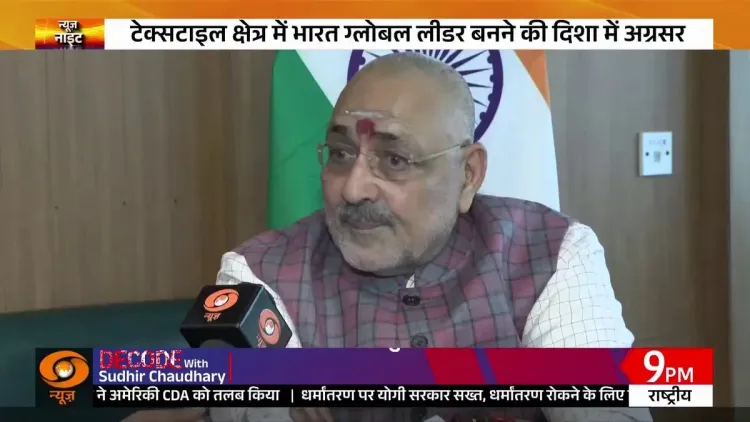
Giriraj Singh: FTAs to boost textile exports, create jobs
Synopsis
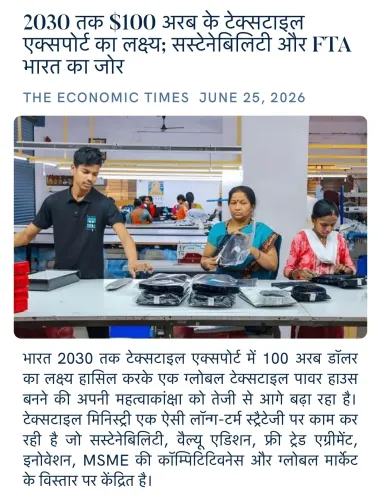
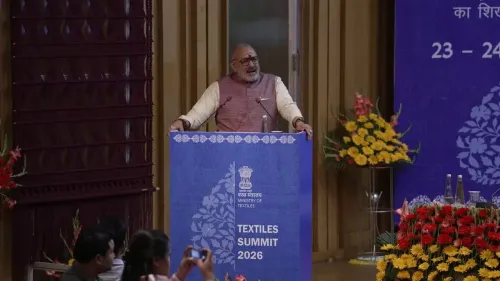
Union Textiles Minister Giriraj Singh on 12 June 2026 said India is negotiating FTAs with large-market countries to boost textile and apparel exports, create lakhs of jobs, and scale the sector to ₹33 lakh crore by strengthening the full fibre-to-finished-product value chain.
Key Takeaways
Union Textiles Minister Giriraj Singh stated on 12 June 2026 that India is pursuing FTAs to make its textile industry globally competitive.
The government aims to scale the textile sector to ₹33 lakh crore , citing a projected global textile market of approximately ₹16.76 lakh crore in 2026 .
The entire value chain — from fibre to finished product — is being strengthened under Make in India and Atmanirbhar Bharat .
The PLI Scheme for Textiles , approved in 2021 , targets man-made fibre and apparel to attract investment and raise export value.
FTA negotiations with the EU and UK are key near-term milestones for the textile and apparel export community.
The sector is among India's largest employers, with millions of workers across spinning, weaving, and garment manufacturing.
Union Textiles Minister Giriraj Singh on Friday, 12 June 2026 said the government is continuously working to prepare India's textile industry for global competition, pointing to ongoing free trade agreements with large-market countries as a key lever for export growth and employment generation.
Context
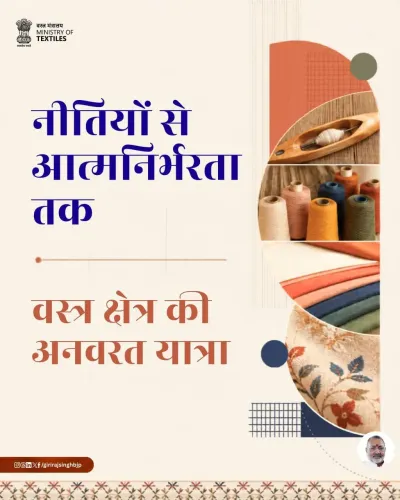
Posting on X, the minister wrote: 'सरकार भारतीय वस्त्र उद्योग को वैश्विक प्रतिस्पर्धा के लिए तैयार करने हेतु लगातार कार्य कर रही है' ('The government is continuously working to prepare the Indian textile industry for global competition'). He added that India is negotiating FTAs with countries that offer large markets for Indian products, which would give 'new momentum' to the textile and apparel sector, increase exports, and create 'lakhs of employment opportunities'.
The post also cited an ambition to scale the domestic textile sector to ₹33 lakh crore, framed against a projected global textile market of approximately ₹16.76 lakh crore in 2026. The minister stressed that the entire value chain — from fibre to finished product — is being strengthened to achieve this goal.
Policy Backdrop
The push aligns with two flagship government programmes: Make in India, launched in 2014 to encourage domestic manufacturing and foreign investment, and Atmanirbhar Bharat, announced in 2020 to build self-reliant supply chains and reduce import dependence. Both schemes have placed textiles among their priority sectors.
The Production Linked Incentive (PLI) Scheme for Textiles, approved in 2021, specifically targets man-made fibre and technical apparel segments, offering financial incentives to attract investment and raise the export share of higher-value products. Singh's statement signals that trade policy and domestic industrial policy are being pursued in tandem.
Since 2021, India has actively pursued multiple FTAs with partners that can offer preferential access for labour-intensive goods. Ongoing negotiations with the European Union and the United Kingdom are closely watched by the textile and apparel export community as potential game-changers for market access.
Stakeholders and Impact
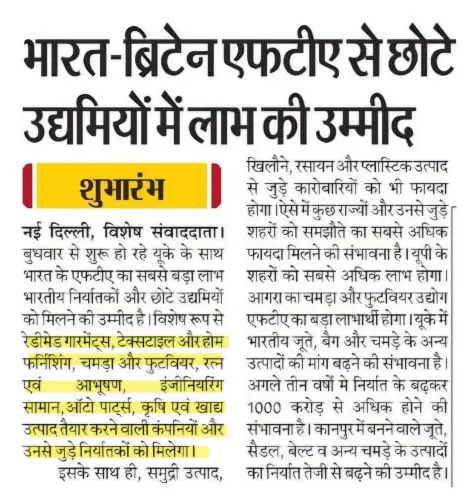
India's textile and apparel sector is one of the country's largest employers, supporting millions of workers — a significant share of them women — across spinning, weaving, processing, and garment manufacturing. Exporters and apparel manufacturers stand to benefit most directly from preferential tariff access under new FTAs.
The minister's emphasis on strengthening the full value chain — from raw fibre to ready-made garments — reflects a longstanding industry concern that India loses margin at the finishing and branding stages to competitor countries. Addressing this gap is central to both the PLI scheme and the broader sectoral ambition outlined in the post.
What's Next
The outcomes of FTA negotiations — particularly with the EU and the UK — will determine how quickly the minister's stated targets translate into tangible export gains. Any mid-term review of the PLI scheme for textiles will also signal whether the incentive structure is being recalibrated to meet the scale of the ₹33 lakh crore ambition. Industry bodies and state governments with large textile clusters are expected to engage closely with the ministry as these negotiations progress.
Point of View
The minister is signalling that the government sees textiles as a strategic export pillar, not merely a welfare sector. The emphasis on the full value chain suggests an awareness that India has historically ceded high-margin segments to competitors, and that the PLI scheme alone is insufficient without market-access breakthroughs. The post's timing, amid active EU and UK FTA negotiations, also reads as a confidence signal to industry stakeholders watching those talks closely.
NationPress
16 Sept 2026
Frequently Asked Questions
What is India's target for the textile sector?
The government has set a target of scaling the Indian textile sector to ₹33 lakh crore , framed against a projected global textile market of approximately ₹16.76 lakh crore in 2026, according to Union Textiles Minister Giriraj Singh.
How will FTAs help India's textile industry?
Free trade agreements with large-market countries are expected to provide preferential tariff access for Indian textile and apparel products, boosting exports, adding new momentum to the sector, and generating lakhs of employment opportunities.
What is the PLI scheme for textiles?
The Production Linked Incentive (PLI) Scheme for Textiles , approved in 2021 , offers financial incentives for investment in man-made fibre and technical apparel segments to attract capital and raise the export share of higher-value products.
Which FTAs is India currently negotiating that affect textiles?
India is engaged in ongoing FTA negotiations with the European Union and the United Kingdom , both of which are closely watched by textile and apparel exporters for the market-access benefits they could unlock.
What is Atmanirbhar Bharat and how does it relate to textiles?
Atmanirbhar Bharat , announced in 2020 , is a self-reliance initiative aimed at strengthening domestic value chains and reducing import dependence. Textiles is a priority sector under this programme, with efforts focused on building capacity from raw fibre through to finished garments.