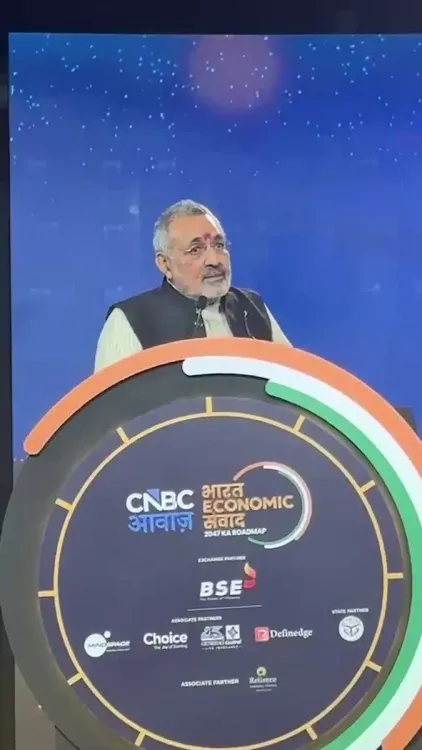
Giriraj Singh: New Age Fiber to drive textile export revolution
Synopsis
Union Textiles Minister Giriraj Singh has declared that India is ready to revolutionise global textile trade using 'New Age Fiber' technology, promising all-season apparel exports to cold-climate countries and historic growth in India's share of world markets under PM Modi's leadership.
Key Takeaways
Giriraj Singh on 27 May 2026 announced India's textile sector is set for a global revolution driven by 'New Age Fiber' technology.
India aims to export all-season, high-quality apparel to cold-climate countries across the world using modern textile technology.
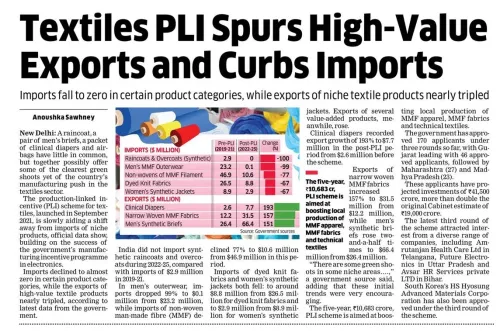
The push builds on the PLI Scheme for Textiles (2021) and the National Technical Textiles Mission (2020) , both targeting advanced fibre categories.
PM MITRA integrated textile parks are a key infrastructure plank supporting the shift toward technically advanced manufacturing.
Textile exporters and MSME manufacturers are the primary stakeholders expected to benefit from any resulting export surge.
Industry and investors are awaiting formal policy details — including PLI disbursement updates and PM MITRA commissioning timelines — to assess the plan's viability.
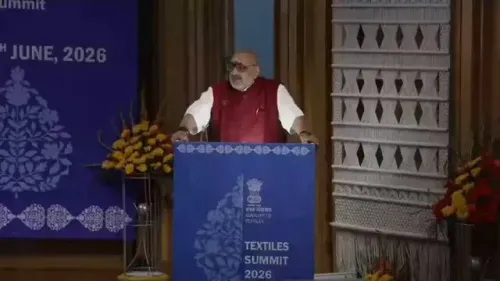
Union Textiles Minister Giriraj Singh on Wednesday, 27 May 2026 declared that Indian textiles are poised for a global revolution driven by 'New Age Fiber' technology, asserting that India will export all-season apparel to cold-climate countries worldwide under the leadership of Prime Minister Narendra Modi.
Context
Posting on X, the minister wrote: 'माननीय प्रधानमंत्री श्री नरेन्द्र मोदी जी के नेतृत्व में भारतीय टेक्सटाइल अब न्यू एज फाइबर के साथ वैश्विक पटल पर एक नई क्रांति लाने को तैयार है' — 'Under the leadership of honourable Prime Minister Narendra Modi, Indian textiles are now ready to bring a new revolution on the global stage with New Age Fiber.' Singh added that through modern technology, India will export high-quality, advanced garments suitable for year-round wear to cold countries across the world, and that innovation will take textile exports to 'historic heights' while multiplying India's share in global markets.
The post, tagged with #MakeInIndia, #TextileRevolution, #NewAgeFiber and #GlobalExport, was accompanied by a video and signals a renewed push by the Ministry of Textiles to position India as a supplier of technically advanced fabrics rather than conventional commodity textiles.
Policy Backdrop
The statement fits within a policy trajectory that began with the Make in India campaign launched in September 2014, which identified textiles and apparel as a priority sector for domestic manufacturing and export growth. The government followed this with the Production Linked Incentive (PLI) Scheme for Textiles, announced in 2021, specifically designed to incentivise investment in man-made fibre garments and technical textiles — the categories that underpin the 'New Age Fiber' framing.
The National Technical Textiles Mission, approved in 2020, further committed public resources to research and development in high-performance fibres used across defence, agriculture, medical and industrial applications. Together, these schemes represent a deliberate attempt to shift India's textile identity up the value chain, reducing dependence on traditional cotton-based exports and competing with dominant players such as China and Bangladesh in higher-margin product categories.
The government has also announced PM MITRA (PM Mega Integrated Textile Region and Apparel) parks to create integrated manufacturing clusters that can support technically complex fibre and fabric production at scale.
Stakeholders and Impact
Textile exporters and MSME manufacturers stand to be the primary beneficiaries if the envisioned export push materialises. India's textile and apparel sector is among the country's largest employers, supporting millions of workers — a significant proportion of them women — across spinning, weaving, processing and garmenting units concentrated in states such as Gujarat, Tamil Nadu, Maharashtra and Uttar Pradesh.
Cold-climate markets in Europe, North America, Japan and South Korea represent high-value destinations for functional, all-season apparel. Capturing a larger share of these markets would require Indian manufacturers to meet stringent quality, sustainability and traceability standards increasingly demanded by buyers in those regions.
What's Next
Attention will now turn to concrete policy announcements that translate Singh's vision into measurable targets — including disbursement progress under the PLI Scheme for Textiles, the commissioning timeline for PM MITRA parks, and any forthcoming revision to National Textile Policy export targets for 2030. The minister's emphasis on 'New Age Fiber' also raises expectations of a formal definitional and incentive framework for this emerging category. Whether the government follows the post with a dedicated scheme or budgetary allocation will be closely watched by industry bodies and investors tracking India's textile export ambitions.
Point of View
Using the hashtag-driven language of the Make in India era to frame textile modernisation as a nationalist project. The explicit focus on cold-climate export markets signals a strategic pivot away from India's traditional strength in cotton commodities toward technical and functional textiles — a segment where margins are higher but entry barriers, including R&D investment and buyer certification requirements, are also steeper. The timing, mid-term in the current government's tenure, suggests the Ministry is building a narrative ahead of potential budgetary asks or scheme expansions tied to the 2030 export target cycle. Whether this translates into actionable policy or remains aspirational rhetoric will depend on the pace of PLI disbursements and PM MITRA park operationalisation — both of which have faced implementation scrutiny.
NationPress
24 Sept 2026
Frequently Asked Questions
What is New Age Fiber in Indian textiles?
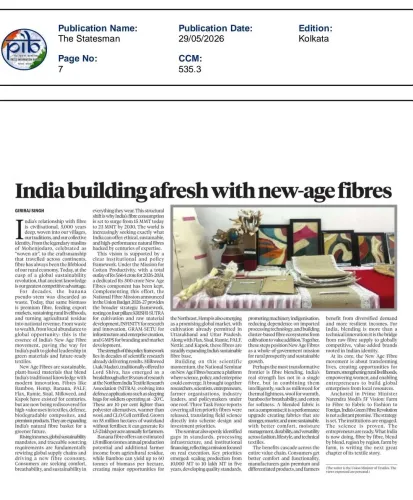
'New Age Fiber' refers broadly to man-made, technical and high-performance fibres — such as synthetic blends, functional fabrics and advanced composites — that go beyond traditional cotton or jute. The Indian government has been promoting this category through the PLI Scheme for Textiles and the National Technical Textiles Mission to move the sector up the value chain.
What did Giriraj Singh say about textile exports?
On 27 May 2026, Union Textiles Minister Giriraj Singh posted on X that India, under PM Modi's leadership, will use New Age Fiber and modern technology to export all-season advanced apparel to cold countries around the world, taking textile exports to historic heights and multiplying India's share in global markets.
What is the PLI Scheme for Textiles?
The Production Linked Incentive Scheme for Textiles, announced in 2021, offers financial incentives to manufacturers who achieve specified production thresholds in man-made fibre garments and technical textiles, with the goal of attracting large-scale investment and boosting exports in these higher-value categories.
What are PM MITRA textile parks?
PM MITRA — PM Mega Integrated Textile Region and Apparel — parks are government-planned industrial clusters designed to host the entire textile value chain, from fibre to finished garment, under one roof. They are intended to improve competitiveness and support technically advanced manufacturing in India.
How does India plan to compete with China and Bangladesh in textiles?
India's strategy involves shifting from commodity cotton exports toward man-made and technical fibres, backed by the PLI scheme, the National Technical Textiles Mission and PM MITRA parks. The aim is to capture higher-margin segments of global trade where China and Bangladesh currently hold dominant positions.