Giriraj Singh Pushes Green Textiles on World Environment Day
Synopsis
Union Textiles Minister Giriraj Singh marked World Environment Day on 5 June 2026 by calling for India's textile sector to advance through Natural Fibres, New Age Fibres, Circular Economy principles, and the 'Tex Eco' initiative, framing industrial growth as inseparable from environmental balance.
Key Takeaways
Union Textiles Minister Giriraj Singh posted on World Environment Day, 5 June 2026 , linking India's textile growth to environmental sustainability.
He cited Natural Fibres, New Age Fibres , and Circular Economy as the three pillars of a greener textile sector.
The 'Tex Eco' initiative was named as a specific vehicle for making textiles more sustainable and future-ready.
India's PLI scheme for textiles (2021) had already laid groundwork for sustainable and technical textile manufacturing.
India's net-zero target of 2070 and tightening EU eco-certification norms provide the broader policy and market context for the push.
Stakeholders include natural fibre growers (jute, silk, wool) and textile manufacturers investing in recycling and sustainable sourcing.
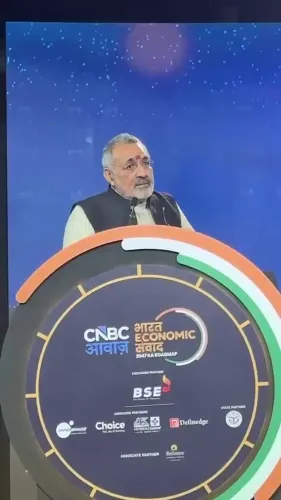
Union Textiles Minister Giriraj Singh on Friday, 5 June 2026 — World Environment Day — posted on X to highlight India's push to make its textile sector greener and future-ready, invoking the twin pillars of nature and progress.
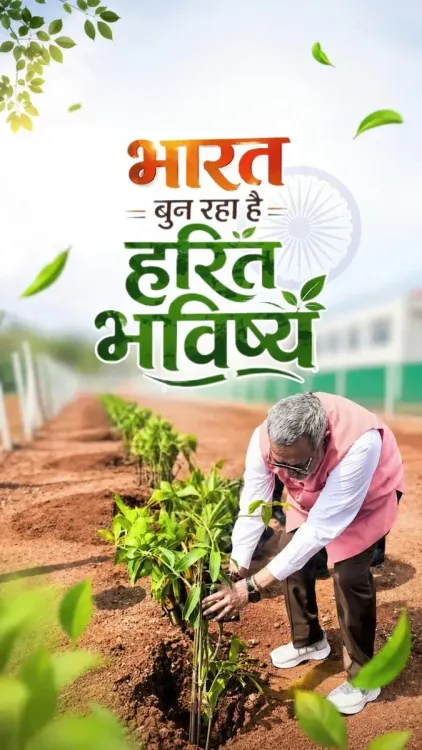
In his post, the minister stated: 'प्रकृति और प्रगति के संतुलन के साथ भारत का टेक्सटाइल क्षेत्र नई ऊंचाइयों की ओर अग्रसर है' — 'Balancing nature and progress, India's textile sector is moving towards new heights.' He specifically cited Natural Fibres, New Age Fibres, Circular Economy, and an initiative called 'Tex Eco' as key levers in this transformation.
Context
The post coincides with World Environment Day, the United Nations' principal platform for raising environmental awareness, observed globally on 5 June each year. This year's international theme centres on climate action, reflected in the minister's use of the hashtags #NowForClimate and #GreenGrowth. Singh's statement frames India's textile ambitions explicitly within a sustainability narrative rather than a purely industrial one.
India is among the world's largest textile producers and exporters, with the sector employing tens of millions of workers across spinning, weaving, and apparel manufacturing. The minister's emphasis on greening this sector carries significant economic weight.
Policy Backdrop
India's integration of sustainability into textile policy has been building over several years. The Production Linked Incentive (PLI) scheme for textiles, announced in 2021, included provisions to support technical textiles and sustainable manufacturing, signalling an early policy commitment to moving the sector beyond conventional cotton and synthetics.
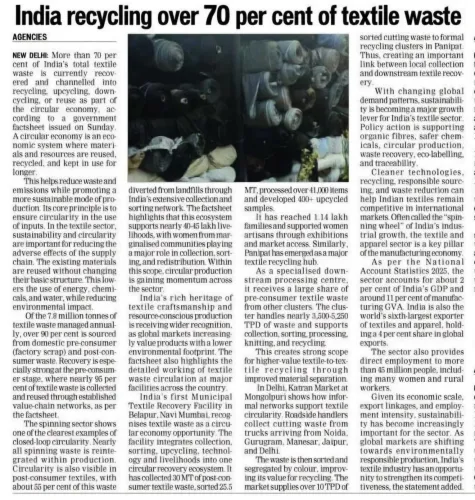
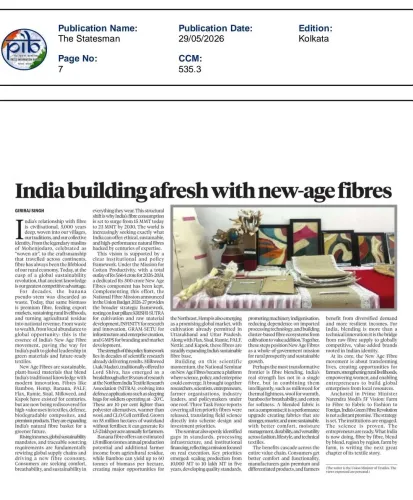
The push for Natural Fibres — such as jute, silk, and wool — aligns with India's broader climate commitments, including a stated goal of reaching net-zero emissions by 2070. New Age Fibres, which include recycled and bio-based materials, and Circular Economy models that emphasise reuse and waste reduction, are increasingly demanded by global buyers, particularly in the European Union, which has tightened eco-certification norms for imported textiles.
The 'Tex Eco' initiative referenced by the minister appears to be a dedicated programme to operationalise these goals within the textile value chain, though full scheme details are yet to be officially documented in the public domain.
Stakeholders and Impact
The primary beneficiaries of a greener textile roadmap are natural fibre growers — including jute farmers concentrated in West Bengal and Assam, and silk cultivators in Karnataka — who stand to gain from enhanced policy support and premium market access. Textile manufacturers investing in recycling infrastructure and sustainable sourcing would also benefit from any associated incentives.
For Indian exporters, alignment with global sustainability standards could unlock access to premium market segments in Europe and North America, where eco-certified products command higher margins. Conversely, smaller mills and power-loom units that have not yet transitioned to greener processes may face adjustment costs as policy nudges intensify.
What's Next
Observers will watch for the formal rollout of state-level green textile clusters and any new fiscal incentives for recycled or natural fibres in the next Union Budget. As India positions its textile sector as both a growth engine and a climate-responsible industry, the policy architecture around initiatives like Tex Eco will need to be fleshed out with funding commitments and measurable targets. The minister's World Environment Day messaging signals that sustainability will remain a central theme in the government's textile communications through the current parliamentary term.
Point of View
The minister is signalling that sustainability will be a key plank of the ministry's positioning ahead of any Budget cycle. The timing on a globally observed environmental day maximises the messaging reach among both domestic policy audiences and international buyers scrutinising India's green credentials. This fits a broader pattern of the BJP government seeking to align flagship industrial schemes with India's climate diplomacy commitments, using ministerial social media as a first-mover communication channel before formal policy announcements.
NationPress
21 Oct 2026
Frequently Asked Questions
What did Giriraj Singh say on World Environment Day 2026?
Giriraj Singh posted on X on 5 June 2026 stating that India's textile sector is advancing towards new heights by balancing nature and progress, and highlighted Natural Fibres, New Age Fibres, Circular Economy, and the 'Tex Eco' initiative as tools for a greener sector.
What is the 'Tex Eco' initiative in Indian textiles?
'Tex Eco' is an initiative referenced by Union Textiles Minister Giriraj Singh aimed at making India's textile sector more environmentally sustainable; full official details of the programme are yet to be publicly documented.
How is India making its textile sector sustainable?
India is promoting Natural Fibres such as jute and silk, New Age Fibres including recycled and bio-based materials, and Circular Economy models, supported by policy frameworks including the PLI scheme for textiles announced in 2021.
Why is sustainable textile policy important for India?
India is one of the world's largest textile producers and the sector employs tens of millions of workers; greening it aligns with India's net-zero by 2070 commitment and meets growing demand for eco-certified products from buyers in Europe and North America.
What is India's net-zero target and how does it relate to textiles?
India has committed to reaching net-zero greenhouse gas emissions by 2070, and the textile sector's shift towards natural and recycled fibres and circular production models is part of the broader effort to align industrial growth with that climate goal.