Giriraj Singh calls for balancing development and environment
Synopsis
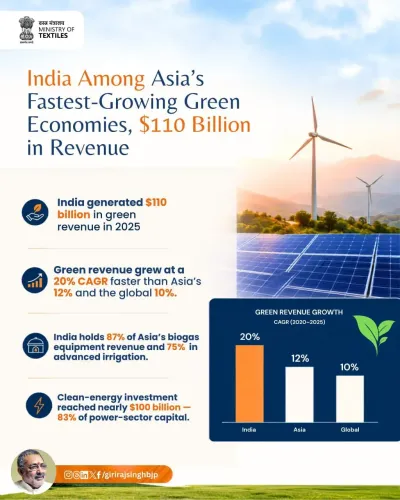
Union Textiles Minister Giriraj Singh on June 19, 2026 posted that development and environmental protection must advance together, and that small efforts form the foundation of large change — a stance aligned with India's broader sustainable-growth policy narrative.
Key Takeaways
Union Textiles Minister Giriraj Singh posted on June 19, 2026 calling for development and environment to advance simultaneously.
He stated that small, consistent efforts form the foundation of large-scale change.
The position aligns with India's Panchamrit commitments made at COP26 in 2021 , including a net-zero target by 2070 .
The Ministry of Textiles has increasingly linked green manufacturing norms with export competitiveness for MSME exporters.
Observers will watch for updates to the National Textile Policy that may embed environmental standards into the sector's framework.
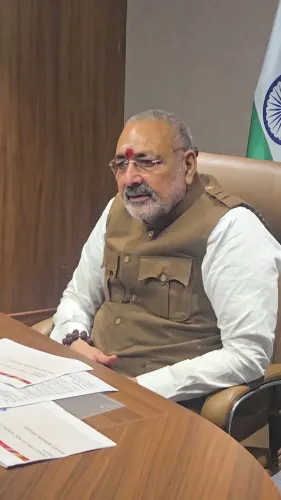
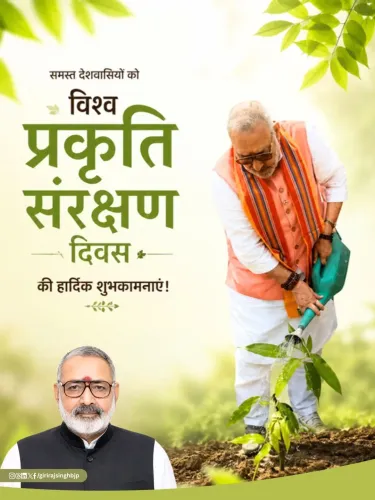
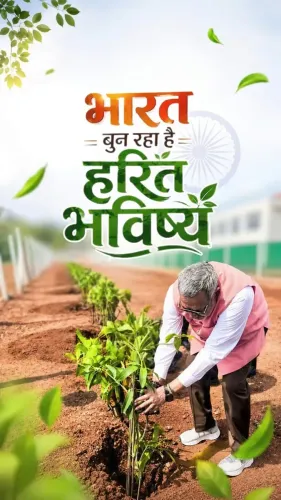
Union Textiles Minister Giriraj Singh on Friday, June 19, 2026 underscored the need to pursue economic development and environmental protection simultaneously, stating that small, consistent efforts form the foundation of large-scale change.
Posting on X, the minister wrote: 'Vikas aur paryavaran saath-saath chalein, yahi samay ki maang hai. Chhote-chhote prayas hi bade badlav ka aadhar bante hain.' ('Development and environment must go hand in hand — that is the demand of the times. Small efforts become the foundation of big change.')
Context
The statement reflects a position that has become central to India's official policy narrative: that rapid industrial growth and ecological responsibility are not mutually exclusive goals. Singh's remarks, though brief, align with a broader governmental emphasis on sustainable development that has shaped domestic policy discourse for several years.
As a senior BJP leader and Lok Sabha MP from Begusarai, Bihar, Singh has consistently been a vocal presence on issues that intersect governance, industry, and national development priorities.
Policy Backdrop
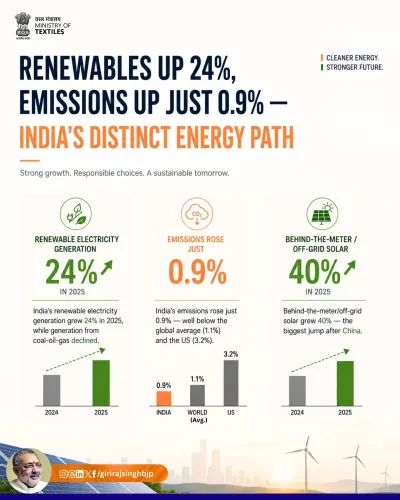
India's commitment to balancing growth with environmental stewardship gained international visibility when Prime Minister Narendra Modi announced the Panchamrit targets at COP26 in 2021, pledging net-zero emissions by 2070 while maintaining the country's development trajectory. Those commitments have since filtered into sectoral policy frameworks across ministries.
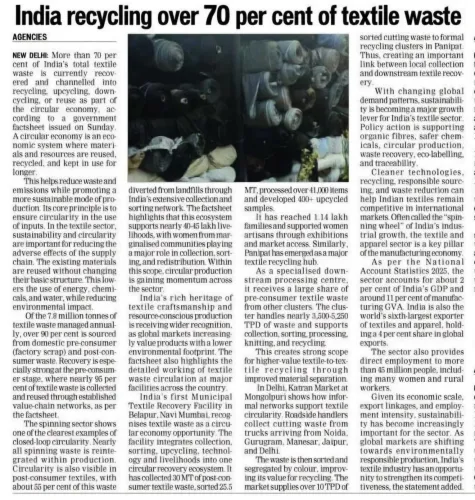
The Ministry of Textiles, which Singh heads, oversees one of India's most significant industrial sectors — one that is also among the more resource-intensive. Policy documents from the ministry have increasingly linked green manufacturing norms, resource efficiency, and export competitiveness, framing sustainability not as a constraint but as a competitive advantage for MSME exporters and large textile manufacturers alike.
Successive governments have reinforced the view that environmental standards and industrial expansion can be pursued in tandem, particularly in labour-intensive sectors where millions of livelihoods depend on continued growth.
Stakeholders and Impact
The textile and apparel sector is one of India's largest employers, with a workforce spanning weavers, mill workers, and MSME exporters spread across states including Gujarat, Tamil Nadu, Maharashtra, Uttar Pradesh, and West Bengal. Any policy shift toward mandatory green standards would directly affect this constituency.
Environmental groups and industry bodies have both noted that the transition to sustainable manufacturing requires investment in cleaner technologies, water recycling, and reduced chemical use — areas where smaller units often face capital constraints. Singh's framing of 'small efforts' as the bedrock of large change could be read as an acknowledgement of the incremental nature of this transition.
What's Next
Observers will watch for concrete policy signals, including any revision to the National Textile Policy that incorporates binding or incentive-linked environmental standards. India's participation in upcoming multilateral climate and trade forums will also be a gauge of how the ministry translates such statements into actionable commitments.
As global buyers increasingly demand sustainability certifications from Indian exporters, the minister's emphasis on development and environment moving together may presage a more structured push to embed green benchmarks within the sector's export promotion framework.
Point of View
Not in tension with, industrial growth — a framing that has become the BJP government's standard register on environmental questions. Coming from the minister who oversees one of India's most resource-intensive export sectors, the statement carries implicit policy weight beyond its philosophical tone. It fits a pattern in which senior ministers use social media to set a directional tone ahead of formal policy announcements, preparing stakeholders and the public for regulatory shifts. Whether this translates into enforceable green standards within the textile supply chain will be the real test of the sentiment expressed.
NationPress
18 Sept 2026
Frequently Asked Questions
What did Giriraj Singh say about development and environment?
On June 19, 2026, Union Textiles Minister Giriraj Singh posted on X that development and environmental protection must go hand in hand, adding that small efforts become the foundation of big change.
What is Giriraj Singh's role in the Indian government?
Giriraj Singh is the Union Minister of Textiles, a senior BJP leader, and a Lok Sabha MP representing Begusarai constituency in Bihar.
How does India's textile sector relate to environmental policy?
The textile sector is one of India's largest employers and is also resource-intensive. The Ministry of Textiles has been linking green manufacturing norms and resource efficiency with export competitiveness, particularly for MSME exporters.
What are India's Panchamrit climate commitments?
At COP26 in 2021, Prime Minister Narendra Modi announced the Panchamrit targets, which include achieving net-zero carbon emissions by 2070 while continuing India's economic development.
What policy changes could follow Giriraj Singh's environment statement?
Analysts are watching for revisions to the National Textile Policy that could incorporate environmental standards, as well as India's stance at upcoming climate and trade forums that may shape green benchmarks for textile exporters.