Giriraj Singh calls for cleanliness, green India via youth power
Synopsis
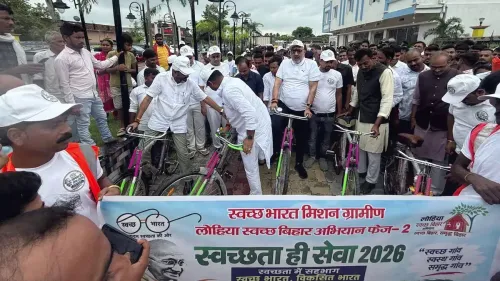
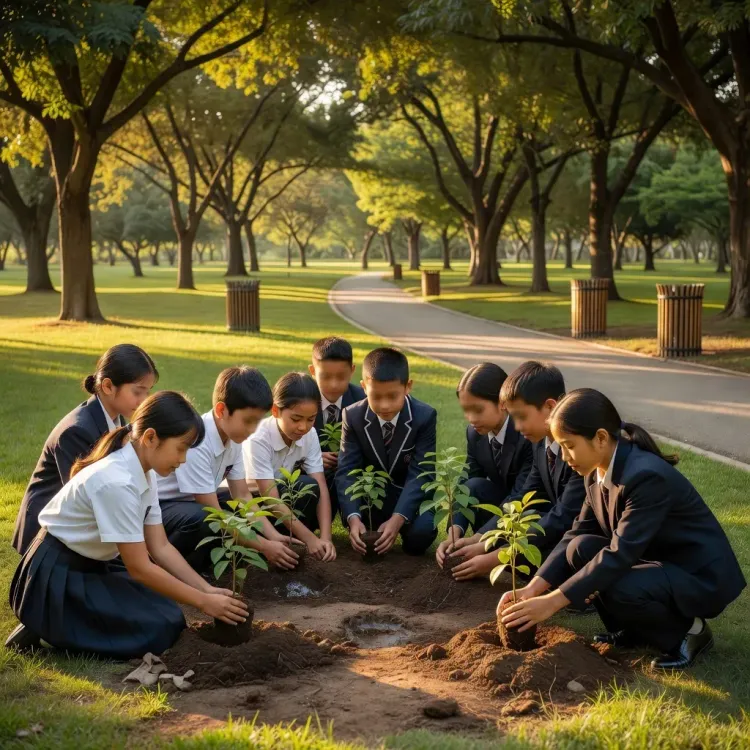
Union Textiles Minister Giriraj Singh posted a call on 26 September 2026 for cleanliness and environmental awareness to become part of daily life, highlighting the role of children and youth in inspiring future generations toward a clean and green India built on public participation.
Key Takeaways
Union Textiles Minister Giriraj Singh posted on 26 September 2026 calling for cleanliness and environmental conservation to become embedded in everyday life.
He specifically highlighted the participation of children and youth as central to sending a lasting message to future generations.
The post invoked jan bhagidari (public participation) as the primary vehicle for advancing a clean and green India .
The messaging aligns with the Swachh Bharat Abhiyan , launched on 2 October 2014 , which has progressively expanded from sanitation to broader environmental stewardship.
A strategic shift toward youth-focused environmental awareness — including potential integration in school curricula — is flagged as a key area to watch.
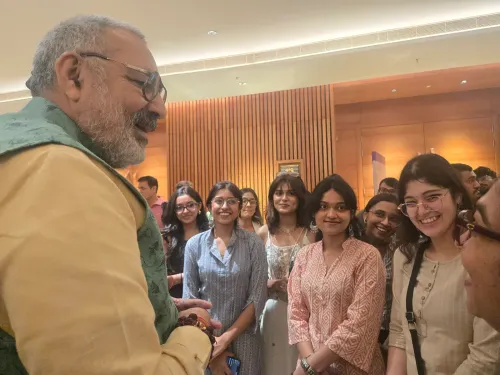
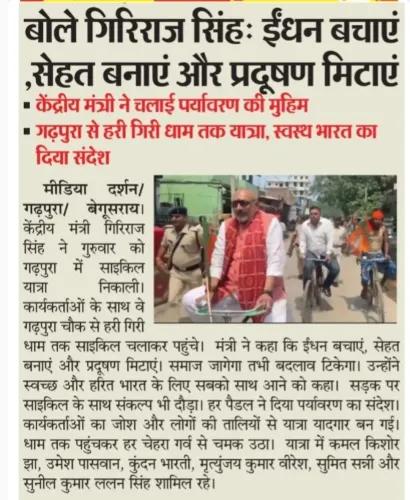
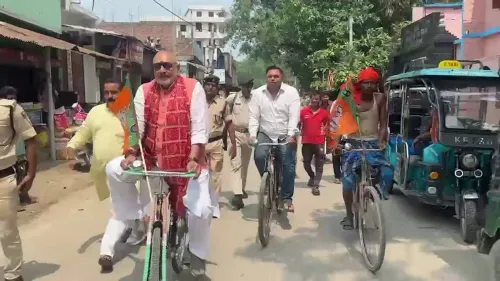
The message was clear and the audience was deliberate: Union Textiles Minister Giriraj Singh on Saturday, 26 September 2026, invoked children and youth as the primary torchbearers of a cleaner, greener India — arguing that awareness of sanitation and environmental protection must become a part of everyday life, not a seasonal campaign.
Posting in Hindi, the Minister wrote: 'Swachhata aur paryavaran sanrakshan ke prati jagrukta hamare jeevan ka hissa bane, yahi is pahal ka uddeshya hai' — 'The goal of this initiative is for awareness about cleanliness and environmental conservation to become a part of our lives.' He specifically highlighted the participation of children and youth, saying their involvement sends a message that will inspire future generations to stay alert about cleanliness, nature, and their surroundings. His closing line — 'Advancing a clean and green India through public participation is our priority' — framed the effort as a collective national resolve, not a top-down directive.
Why youth engagement is the strategic bet
Behavioural change at scale rarely happens through policy alone — it travels through classrooms, playgrounds, and dinner-table conversations. That logic has anchored Swachh Bharat Abhiyan since its launch on 2 October 2014, when Prime Minister Narendra Modi flagged public participation — jan bhagidari — as the non-negotiable engine of the mission. Over a decade on, campaigns have increasingly shifted focus toward embedding cleanliness and green habits in school curricula and youth groups, recognising that children who internalise these norms carry them into adult civic life. Giriraj Singh's post fits squarely into that arc. By framing children's involvement as a message to 'coming generations,' he is pointing at something governments and educators worldwide have long understood: environmental values absorbed early are values that stick.Clean India, green India — one linked resolve
The Minister's coupling of swachh (clean) and harit (green) is itself significant. Early iterations of the Swachh Bharat Mission concentrated heavily on open-defecation-free villages and urban sanitation infrastructure. Over successive years, the campaign broadened to absorb afforestation awareness, plastic reduction, and broader environmental stewardship — themes that now travel together under the 'clean and green' banner in official communication. Singh's emphasis on 'jan bhagidari' — public participation — as the primary vehicle echoes that broadened mandate. An initiative anchored in community ownership, and filtered through the energy of children and young people, carries a different institutional weight than one driven purely by bureaucratic targets. The next move to watch: whether this translates into deeper integration of environmental and cleanliness modules in state school curricula, or into expanded youth-led Swachhata drives at the district level.Point of View
Builds cross-party resonance, and creates a moral continuity that bridges one election cycle to the next. The pairing of 'swachh' and 'harit' (clean and green) in a single resolve also signals a continued effort to absorb climate and afforestation priorities into a mission that began narrowly focused on open-defecation-free targets. Whether this social-media messaging converts into concrete programmatic action — curriculum integration, youth-corps mobilisation, state-level drives — will determine whether it lands as policy or stays as sentiment.
NationPress
26 Sept 2026
Frequently Asked Questions
What did Giriraj Singh say about cleanliness and environment on 26 September 2026?
Union Textiles Minister Giriraj Singh posted that awareness of cleanliness and environmental conservation must become part of daily life. He stressed the role of children and youth in inspiring future generations and said advancing a clean and green India through public participation is the government's priority.
What is Swachh Bharat Abhiyan and when was it launched?
Swachh Bharat Abhiyan is India's national cleanliness campaign, launched on 2 October 2014. It aims to eliminate open defecation and promote sanitation and hygiene through mass public participation across the country.
Why does Giriraj Singh focus on children and youth for environmental awareness?
Engaging children and youth is a long-standing strategy in the Swachh Bharat Mission because habits and values formed early tend to persist into adult life. Young participants also act as ambassadors within their families, accelerating behavioural change at the household level.
What does 'jan bhagidari' mean in the context of Swachh Bharat?
'Jan bhagidari' means public participation. It is the foundational principle of the Swachh Bharat Mission, which holds that government-led infrastructure alone cannot drive behavioural change — community ownership and individual accountability are essential.
How has the Swachh Bharat Mission expanded beyond basic sanitation?
While Swachh Bharat initially focused on eliminating open defecation and building toilets, it has progressively incorporated plastic reduction, afforestation awareness, and broader environmental stewardship — themes now bundled under the 'clean and green India' framing used by government ministers.