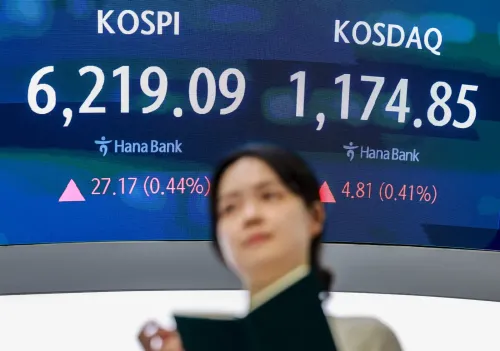
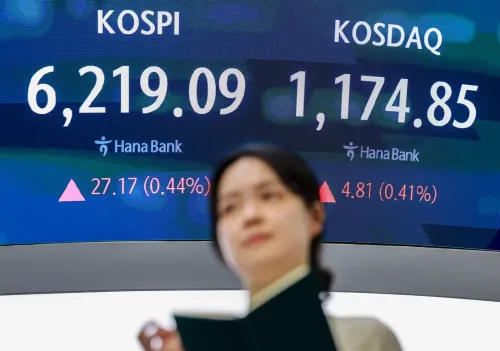
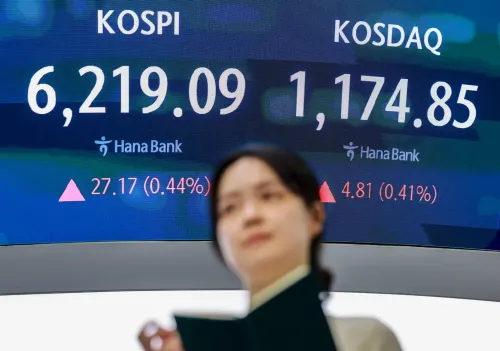
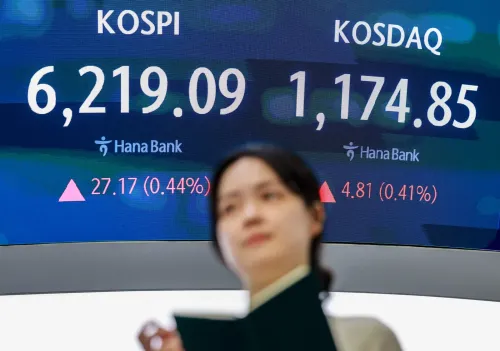
KOSPI surges 4.39% on 10 Nov, snapping 3-day slide as tech stocks rally
Synopsis
South Korea's KOSPI bounced back with its sharpest single-session gain in weeks — up 4.39 percent to 5,239.13 — as Samsung and SK hynix surged on a global semiconductor rally, while Trump's signal that he won't resume strikes on Iran sent oil prices tumbling and airline stocks soaring. The rebound snaps three bruising sessions, but Nvidia's 4.2 percent fall over a CEO scandal hangs over the chip sector's near-term outlook.
Key Takeaways
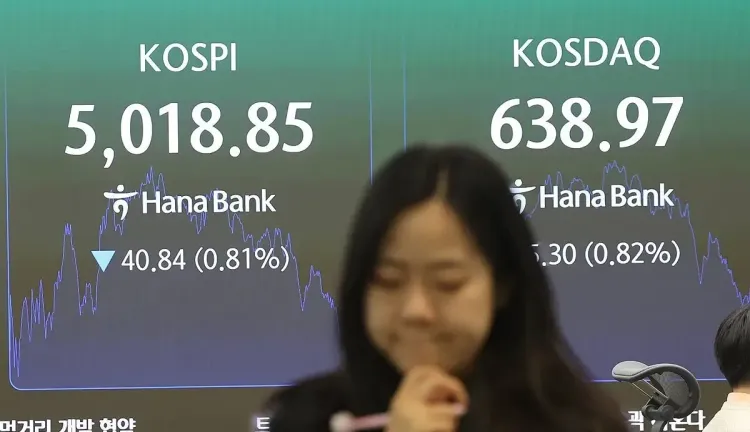
KOSPI closed up 220.28 points (4.39%) at 5,239.13 on 10 November 2026 , ending a three-session losing streak.
Samsung Electronics rose 4.74% to 198,000 won ; SK hynix jumped 6.69% to 1.2 million won .
Korean Air and Asiana Airlines each surged over 11% as crude oil prices fell after President Trump ruled out renewed strikes on Iran .
Nvidia fell 4.2% after its board launched a probe into CEO Jensen Huang over an admitted affair with an alleged Chinese spy.
Foreign investors were net buyers of 365.9 billion won ; retail investors sold a net 1.3 trillion won .
The Korean won strengthened to 1,337.5 per US dollar, up 9.6 won from the prior session.
South Korea's benchmark Korea Composite Stock Price Index (KOSPI) closed 220.28 points, or 4.39 percent, higher at 5,239.13 on Tuesday, 10 November 2026, snapping three consecutive sessions of sharp losses. The rebound was driven by a surge in technology and semiconductor shares, while a sharp fall in crude oil prices — triggered by signals of a potential de-escalation in the Middle East — provided an additional tailwind.
Tech Stocks Lead the Charge
Market bellwether Samsung Electronics jumped 4.74 percent to 198,000 won, while chipmaker SK hynix soared 6.69 percent to 1.2 million won. Samsung Electro-Mechanics advanced 4.63 percent to 882,000 won and SK Square, the parent company of SK hynix, climbed 5.26 percent to 760,000 won.
The gains tracked a strong overnight session on Wall Street, where the PHLX semiconductor index rose 6.85 percent. Kim Seok-hwan, an analyst at Mirae Asset Securities, noted that 'U.S. semiconductor shares rose for the second consecutive session and the PHLX semiconductor index increased sharply, boosting South Korean stocks within the semiconductor value chain.'
Oil Price Drop Lifts Airlines
US President Donald Trump told reporters overnight that he is not prepared to resume military strikes against Iran, a statement that pulled crude oil prices sharply lower. The development proved a major windfall for South Korean airlines, which are heavily exposed to jet fuel costs.
Korean Air surged 11.51 percent to 32,450 won and Asiana Airlines spiked 11.68 percent to 8,700 won, ranking among the session's biggest winners. Defence major Hanwha Aerospace rose 3.13 percent to 659,000 won, and battery maker LG Energy Solution advanced 3.93 percent to 330,500 won.
Nvidia Slump Clouds Semiconductor Outlook
Not all semiconductor news was positive. Nvidia slumped 4.2 percent after the company's board announced it would launch a probe into Chief Executive Officer Jensen Huang following his admission of an affair with a purported Chinese spy. The development injected uncertainty into the broader chip sector, though South Korean chipmakers remained insulated on the day.
Market Mechanics and Currency
After opening 4.55 percent higher, the Korea Exchange activated a buy-side sidecar for the main bourse at 9:06 a.m., suspending programme trading for KOSPI-listed shares for five minutes — a circuit-breaker mechanism triggered by rapid upward movement. Trade volume was relatively light at 241 million shares worth 16.2 trillion won (approximately US$12.1 billion). Winners sharply outnumbered losers, 714 to 174.
Foreign investors returned to net buying, scooping up a net 365.9 billion won worth of shares, while institutions purchased a net 489 billion won. Retail investors, however, sold a net 1.3 trillion won. The Korean won strengthened to 1,337.5 against the US dollar as of 3:30 pm, up 9.6 won from the previous session's close. Bond yields eased marginally, with the three-year Treasury yield falling 0.6 basis points to 3.633 percent.
Whether the rally sustains will depend on the trajectory of US-Iran diplomacy and the next wave of US semiconductor earnings guidance.
Point of View
Semiconductors and airlines, were each driven by external shocks (Wall Street chip momentum and an Iran ceasefire signal) rather than domestic earnings catalysts. That makes the rally fragile: Trump's diplomatic posture on Iran can shift overnight, and the Nvidia CEO probe injects fresh governance risk into the very sector that led today's gains. South Korean markets have consistently amplified US semiconductor cycles, and with global chip valuations stretched, any guidance miss from a major US player could quickly unwind what was built today.
NationPress
10 Nov 2026
Frequently Asked Questions
Why did the KOSPI rise sharply on 10 November 2026?
The KOSPI surged 4.39 percent to 5,239.13 on 10 November 2026, driven by a global technology rally — particularly in semiconductors — and a sharp fall in oil prices after US President Donald Trump indicated he would not resume military strikes against Iran. The index snapped three consecutive sessions of steep declines.
Which stocks led the KOSPI rally?
Samsung Electronics gained 4.74 percent and SK hynix soared 6.69 percent, leading the semiconductor surge. Korean Air and Asiana Airlines each rose over 11 percent, benefiting from the drop in crude oil prices.
What happened with Nvidia during this session?
Nvidia fell 4.2 percent after its board announced a probe into CEO Jensen Huang following his admission of an affair with a purported Chinese spy. The development weighed on Nvidia even as the broader PHLX semiconductor index rose 6.85 percent.
How did foreign and retail investors behave on the KOSPI?
Foreign investors returned to net buying, purchasing a net 365.9 billion won worth of shares, while institutions added a net 489 billion won. Retail investors moved in the opposite direction, selling a net 1.3 trillion won during the session.
What is a buy-side sidecar and why was it triggered?
A buy-side sidecar is a circuit-breaker mechanism that temporarily suspends programme trading when the market rises too rapidly. The Korea Exchange activated it at 9:06 am after the KOSPI opened 4.55 percent higher, halting automated buy-programme trades for five minutes to prevent an overshoot.