KOSPI surges 4.52% as Samsung, SK hynix lead tech rally on oil price drop
Synopsis
The KOSPI posted one of its strongest single-session gains in recent months, surging 4.52% as Samsung and SK hynix led a tech charge fuelled by falling oil prices and Wall Street optimism tied to US-Iran war ceasefire hopes. Separately, data showed South Korea's top 10 exporters now command 60.9% of total shipments — up from 40.5% a year ago — highlighting just how concentrated the country's export engine has become.
Key Takeaways
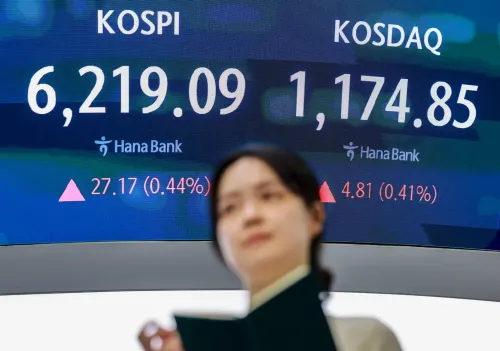
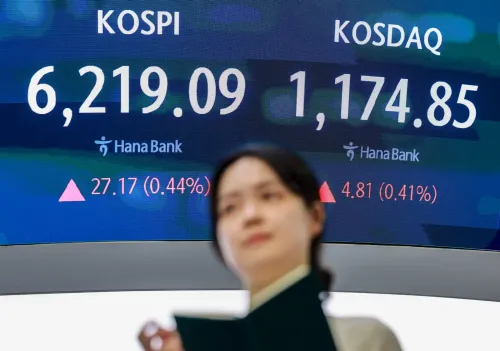
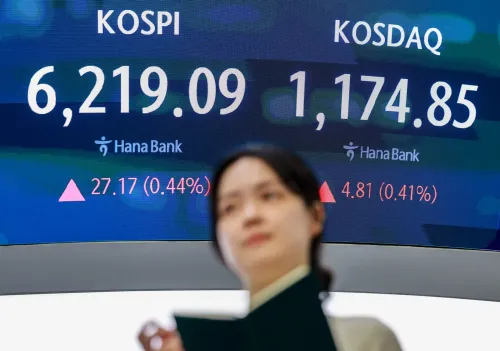
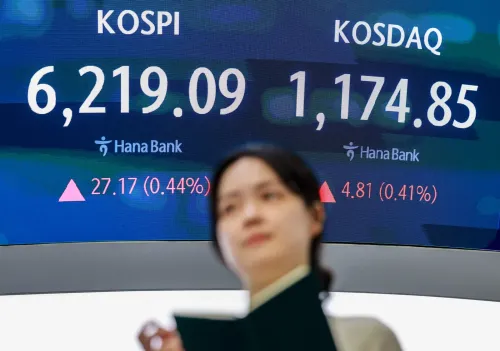
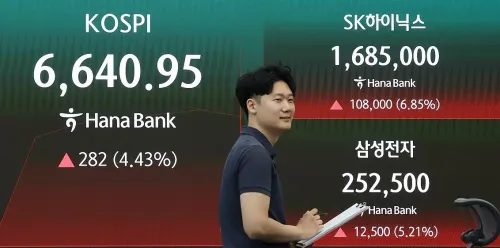
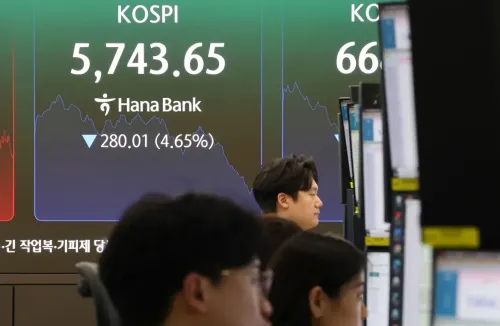
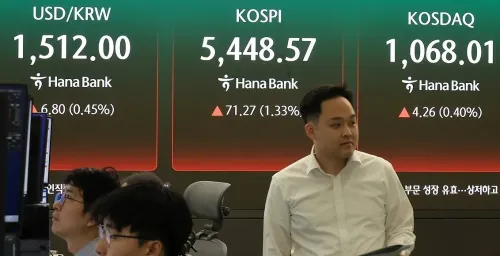
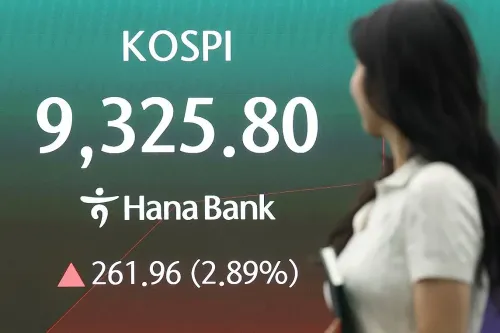
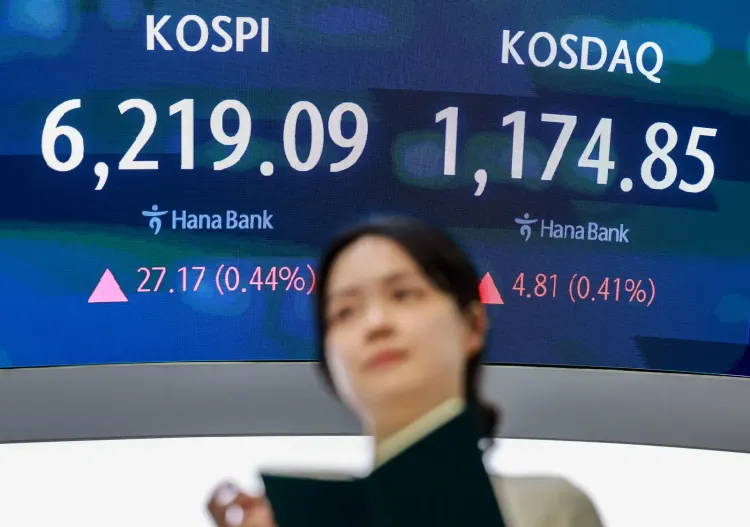
The KOSPI gained 226.87 points (4.52%) to 5,245.72 as of 11:20 am on 10 November 2026 .
Samsung Electronics rose 5.11% ; SK hynix jumped 6.78% ; Hanmi Semiconductor soared 7.16% .
Korean Air surged 11.34% and Asiana Airlines climbed 12.07% on the back of lower oil prices.
The rally was catalysed by Wall Street gains tied to hopes for an end to the US-Iran war and falling oil prices.
South Korea's top 10 exporters accounted for 60.9% of total exports in Q3 2026 , up sharply from 40.5% a year earlier.
Total South Korean exports hit US$318.6 billion in Q3 2026, a 72.3% year-on-year increase.
South Korean stocks surged sharply on Tuesday, 10 November 2026, with the benchmark Korea Composite Stock Price Index (KOSPI) climbing 226.87 points, or 4.52 percent, to 5,245.72 as of 11:20 am local time. The rally was driven by a broad-based tech rebound and a pullback in global oil prices, lifting investor sentiment across the Seoul bourse.
Tech Giants Power the Surge
Large-cap technology shares led the charge in Seoul. Market bellwether Samsung Electronics jumped 5.11 percent, while chipmaking rival SK hynix vaulted 6.78 percent. Chip equipment maker Hanmi Semiconductor soared 7.16 percent, and SK Square, the parent company of SK hynix, advanced 5.26 percent. The index opened 4.55 percent higher, signalling strong early conviction among buyers.
Airlines Soar on Cheaper Oil
Lower oil prices delivered a separate tailwind to South Korea's aviation sector. Korean Air surged 11.34 percent and Asiana Airlines climbed 12.07 percent, among the session's biggest individual gainers. For airlines, fuel costs represent one of the largest operating expenses, making oil price declines an immediate earnings-positive signal.
Wall Street and Oil Provide the Catalyst
Overnight on Wall Street, all three major US stock indexes finished higher after hopes for an end to the US-Iran war dragged down oil prices and eased inflation fears. The positive cues from American markets fed directly into Asian trading sentiment, with Seoul among the clearest beneficiaries. The Korean won traded at 1,345.75 won against the US dollar as of 11:20 am, down 5.75 won from the previous session's close — a marginal depreciation that did not appear to dampen equity enthusiasm.
Export Concentration Rises Sharply
Separately, data released on Tuesday showed that South Korea's top 10 exporters accounted for 60.9 percent of the country's total outbound shipments in the third quarter (July–September), a sharp rise from 40.5 percent in the same period a year earlier, according to figures compiled by the Ministry of Data and Statistics. The top 100 exporters collectively accounted for 79.4 percent of total exports, up from 67.9 percent a year earlier. South Korea's total exports reached US$318.6 billion in the third quarter, an increase of 72.3 percent year-on-year. Exports by the mining and manufacturing sector surged 82.8 percent to US$291.5 billion, driven predominantly by strong global demand for semiconductors and other technology products.
What This Signals
The concentration of export value among a small group of conglomerates underscores South Korea's structural dependence on a handful of tech and industrial firms — a double-edged dynamic that amplifies gains in upturns but creates systemic risk in downturns. This comes amid a broader global rotation back into technology stocks, partly on expectations that easing inflation could allow central banks more flexibility. All eyes will now be on whether oil prices sustain their decline and whether Wall Street momentum holds through the week.
Point of View
The export concentration data tells a more structural story: when just 10 companies account for 61 of every 100 dollars South Korea ships abroad, any stumble at Samsung or SK hynix becomes a national economic event, not just a corporate one. The 72.3% jump in total exports looks impressive, but investors should ask how much of that is a base effect and how durable semiconductor demand really is heading into 2027.
NationPress
10 Nov 2026
Frequently Asked Questions
Why did the KOSPI surge on 10 November 2026?
The KOSPI surged 4.52% to 5,245.72 on 10 November 2026, driven by a tech-led rally and a decline in global oil prices. Positive overnight cues from Wall Street, where all three major US indexes gained on hopes for an end to the US-Iran war, boosted investor sentiment in Seoul.
Which South Korean stocks gained the most during the rally?
Asiana Airlines led individual gains at 12.07%, followed by Korean Air at 11.34%, Hanmi Semiconductor at 7.16%, SK hynix at 6.78%, SK Square at 5.26%, and Samsung Electronics at 5.11%. Airlines benefited from falling oil prices, while tech stocks rode the global risk-on mood.
What do the South Korea export concentration figures show?
Data released on 10 November showed South Korea's top 10 exporters accounted for 60.9% of total exports in Q3 2026, up sharply from 40.5% a year earlier, according to the Ministry of Data and Statistics. Total exports rose 72.3% year-on-year to US$318.6 billion, driven largely by semiconductors and technology products.
How did oil prices affect South Korean markets?
Falling oil prices triggered double-digit gains in South Korea's airline sector, with Korean Air and Asiana Airlines surging over 11% and 12% respectively, as lower fuel costs directly improve airline profit margins. The oil decline also eased inflation fears globally, supporting the broader equity rally.
What should investors watch following the KOSPI rally?
Investors will be watching whether the US-Iran ceasefire hopes translate into a confirmed agreement, as any reversal could push oil prices back up and unwind the gains. South Korea's tech-export dependence also means upcoming global semiconductor demand data and US Federal Reserve signals will be closely monitored.