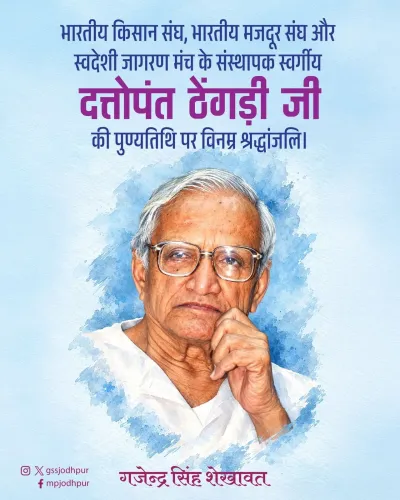
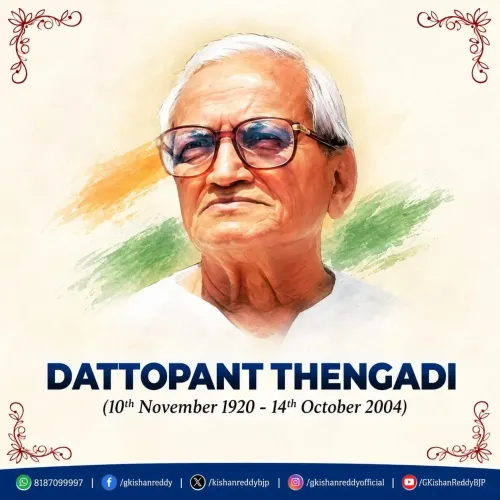
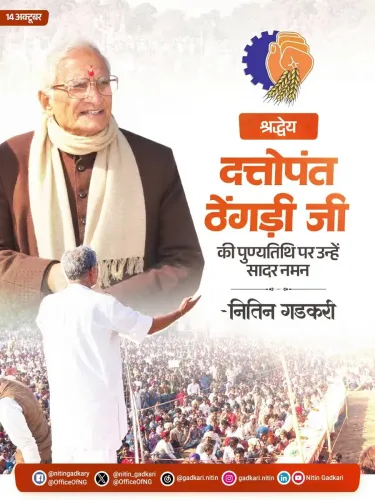
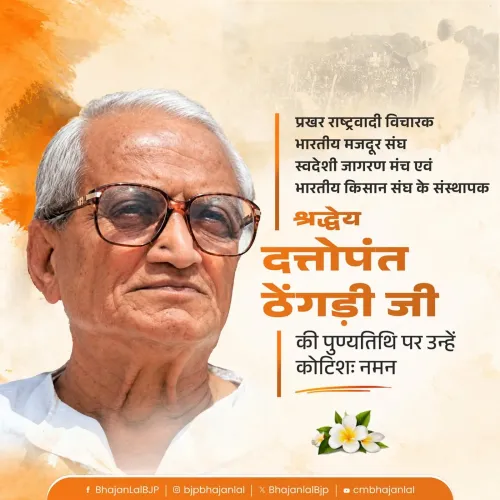
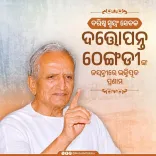
CM Vishnu Deo Sai pays tribute to Dattopant Thengadi on birth anniversary
Synopsis
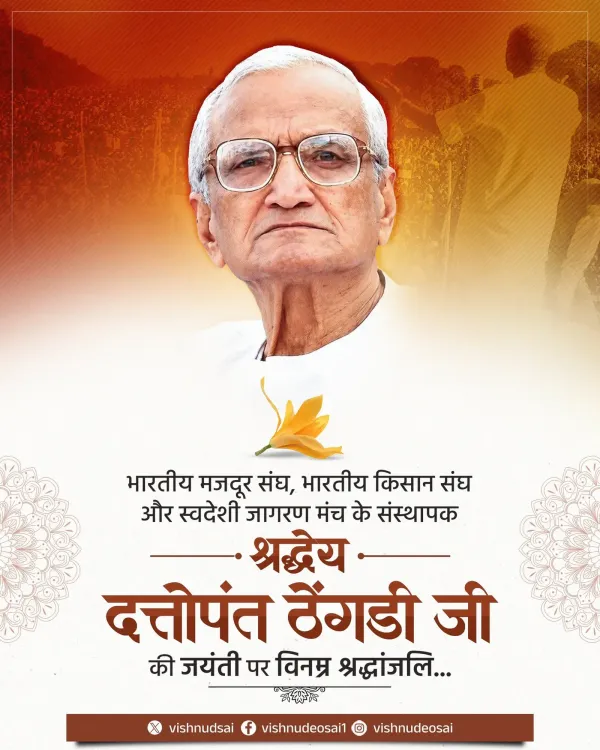
Chhattisgarh CM Vishnu Deo Sai pays tribute to RSS ideologue and labour movement architect Dattopant Thengadi on his birth anniversary, honouring his founding of BMS, BKS and Swadeshi Jagran Manch and his lifelong commitment to workers, farmers and indigenous economics.
Key Takeaways
Chhattisgarh CM Vishnu Deo Sai posted a tribute to Dattopant Thengadi on his birth anniversary on 10 November 2026 .
Thengadi ( 1920–2004 ) was an RSS pracharak who founded three major nationalist mass organisations over three decades.
He established the Bharatiya Mazdoor Sangh in 1955 , which grew into India's largest trade union federation.
The Bharatiya Kisan Sangh was founded in 1978 to represent farmers through a nationalist lens of rural self-reliance.
The Swadeshi Jagran Manch , co-founded in 1991 , was created to oppose economic liberalisation and promote indigenous industry.
BJP leaders' public tributes to Sangh ideologues signal the party's alignment with economic nationalism over market-first approaches.
A founding architect of India's nationalist labour and farmer movements is remembered on his birth anniversary — Chhattisgarh Chief Minister Vishnu Deo Sai on Tuesday, 10 November 2026, offered his respects to Dattopant Thengadi, the RSS pracharak who built three of independent India's most consequential mass organisations from the ground up.
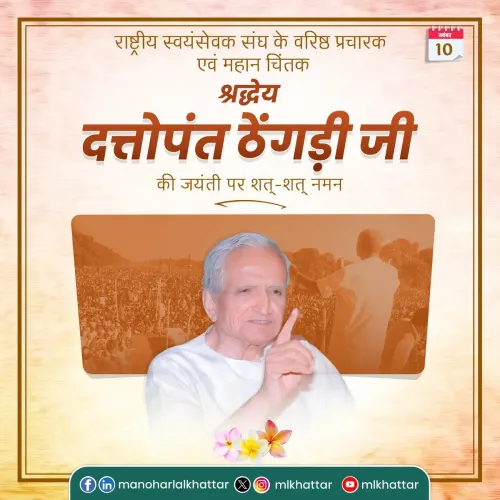
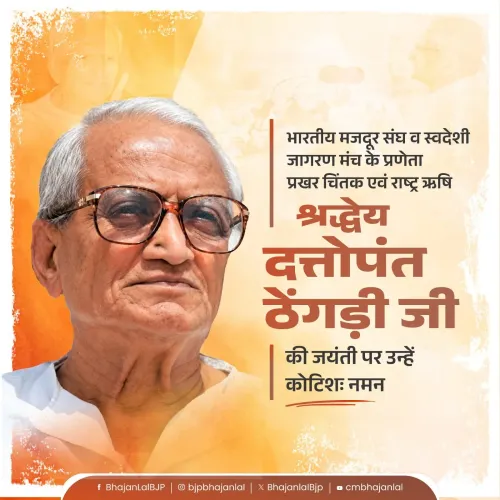
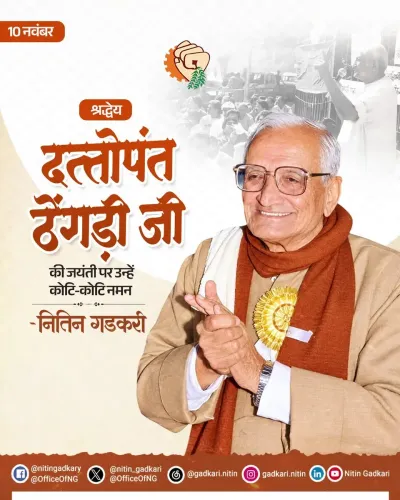
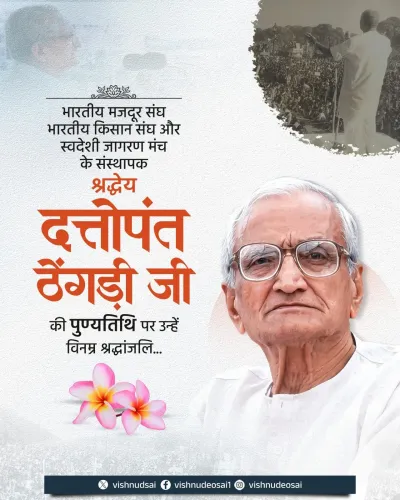
Posting on X in Hindi, CM Sai wrote: 'Bharatiya Mazdoor Sangh, Bharatiya Kisan Sangh evam Swadeshi Jagran Manch ke sansthapak...' — 'On the birth anniversary of the revered Dattopant Thengadi ji, founder of the Bharatiya Mazdoor Sangh, Bharatiya Kisan Sangh and Swadeshi Jagran Manch, a profound thinker and great nationalist visionary, I offer him my respectful salutations. His dedication to national interest, workers' welfare and Swadeshi will always be remembered.'
The man who built three movements
Dattopant Thengadi (1920–2004) was no ordinary ideologue — he was an institution-builder. In 1955, he founded the Bharatiya Mazdoor Sangh (BMS), envisioning a labour movement rooted in national interest rather than class conflict, deliberately offering an alternative to the Left-aligned union federations that dominated post-Independence India. The BMS grew to become the largest trade union federation in India by membership.
He did not stop there. In 1978, Thengadi established the Bharatiya Kisan Sangh (BKS) to channel rural self-reliance and give India's farming communities an organised nationalist voice. Then, as economic liberalisation swept the country, he co-founded the Swadeshi Jagran Manch (SJM) in 1991 — a platform explicitly designed to critique globalisation and advocate for indigenous industry. Three organisations. Three decades. One consistent thread: the primacy of the nation over market or ideology.
Why BJP leaders mark this anniversary
Birth anniversary tributes to RSS ideologues are a deliberate act of political signalling, not mere ceremony. When a sitting Chief Minister publicly invokes Thengadi's legacy of worker welfare and Swadeshi economics, it reinforces the BJP government's alignment with a distinct economic nationalism — one that holds indigenous enterprise and labour dignity above purely liberalised market outcomes. For Chhattisgarh, a state with a large tribal workforce and significant industrial activity, that framing carries real policy weight.
Thengadi's influence on the Sangh Parivar's economic thinking remains alive in debates over foreign investment limits, domestic manufacturing mandates, and the structure of agricultural support — all live policy questions in 2026.
Point of View
With its large industrial workforce and tribal agrarian base, those signals can translate into concrete policy preferences. The tribute also reflects a broader BJP pattern of building a parallel pantheon of Sangh heroes alongside mainstream nationalist icons.
NationPress
10 Nov 2026
Frequently Asked Questions
Who was Dattopant Thengadi?
Dattopant Thengadi (1920–2004) was an RSS pracharak and institution-builder who founded the Bharatiya Mazdoor Sangh in 1955, the Bharatiya Kisan Sangh in 1978, and co-founded the Swadeshi Jagran Manch in 1991. He advocated labour rights rooted in national interest and opposed purely market-driven economic policies.
What did Dattopant Thengadi found?
He founded three major organisations: the Bharatiya Mazdoor Sangh (India's largest trade union federation), the Bharatiya Kisan Sangh (a nationalist farmers' union), and the Swadeshi Jagran Manch (a body promoting indigenous industry and opposing liberalisation).
When was Bharatiya Mazdoor Sangh founded and by whom?
The Bharatiya Mazdoor Sangh was founded in 1955 by Dattopant Thengadi with the aim of building an RSS-aligned labour movement focused on national interest rather than class conflict. It grew into India's largest trade union federation.
Why did CM Vishnu Deo Sai pay tribute to Dattopant Thengadi?
CM Vishnu Deo Sai posted the tribute on 10 November 2026, Thengadi's birth anniversary, honouring his contributions to workers' welfare, farmers' rights, and Swadeshi economics — values the BJP government publicly aligns itself with.
What is the Swadeshi Jagran Manch?
The Swadeshi Jagran Manch is an RSS-linked organisation co-founded by Dattopant Thengadi in 1991 to oppose economic liberalisation and advocate for indigenous industry and self-reliant economic policies in India.