COP31: Coal Transition Partnerships launched to shift nations to clean power
Synopsis
With $23 billion in coal-transition finance sitting largely undeployed, the PPCA used COP31 in Antalya to launch a bespoke partnership model aimed at fixing the implementation gap — not the money gap. If it works, 10 of the world's 21 most coal-dependent economies could be on a credible clean-power path by 2028.
Key Takeaways
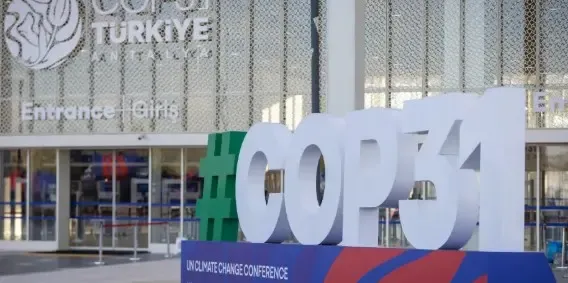
The Powering Past Coal Alliance (PPCA) launched the Coal Transition Partnerships initiative at COP31 in Antalya, Türkiye on 10 November 2026 .
At least $23 billion is already allocated to coal transitions globally, but much remains unused, according to the PPCA's October 2026 Finance Catalogue.
Eight partners have joined, including the ADB , EBRD , Climate Investment Funds , and RMI ; political backing comes from Canada, France, Germany, Indonesia, the Netherlands , and Britain .
Oman joined the PPCA at COP31, bringing total membership to 184 national and subnational governments, businesses, and organisations.
The first country-led partnerships are expected by 2027 ; by COP33 in 2028 , the initiative aims to support around 10 of the world's 21 most coal-dependent nations .
The Powering Past Coal Alliance (PPCA) on Tuesday, 10 November 2026, launched the Coal Transition Partnerships initiative at the UN Climate Summit (COP31) in Antalya, Türkiye, offering tailored and coordinated support to countries seeking to move away from coal toward cleaner, more affordable power systems. The initiative responds directly to what organisers describe as a central challenge of COP31: accelerating the implementation of climate commitments amid a global energy crisis.
What the Coal Transition Partnerships Offer
Each partnership will be tailored to individual countries' priorities and circumstances, providing rapid support to power sector decision-makers — including governments and utilities — at the critical early stages of a coal-to-clean transition. The partnerships aim to help nations develop robust transition plans and prepare investable projects capable of tapping at least $23 billion already allocated to the coal transition globally, much of which reportedly remains unused.
That figure comes from the Coal-to-Clean Finance Catalogue published by the PPCA in October 2026, which identified a significant financing gap between available funds and deployed capital. The partnerships are designed to bridge precisely that gap by connecting countries with existing technical and financial support.
Eight Partners and Political Backing
Eight finance and technical organisations have joined the initiative: the Asian Development Bank (ADB), the Climate Investment Funds (CIF), the European Bank for Reconstruction and Development (EBRD), RMI, the Carbon Trust, TransitionZero, the Asia Investor Group on Climate Change (AIGCC), and Clean Energy Bridge. They will work alongside the PPCA to connect participating countries with these existing support structures.
Politically, the initiative has the backing of PPCA government members including Canada, France, Germany, Indonesia, the Netherlands, and Britain. Oman, which has never operated coal-fired power, also joined the PPCA at COP31, pledging to maintain a coal-free power system. The alliance now counts 184 national and subnational governments, businesses, and organisations among its members.
The Energy Crisis Complication
The launch comes against a backdrop of acute energy market stress. Scarce and expensive natural gas has pushed energy security to the top of government agendas, with some nations turning back to coal as a short-term fix. Organisers warn that such short-term decisions risk locking countries into coal for decades through new investments and infrastructure, pushing up both costs and emissions.
Notably, while clean power is projected to be substantially cheaper over the long term, navigating the transition during an ongoing energy crisis — while managing rising electricity demand — is what the partnerships specifically aim to address. This is the third major multilateral coal-transition mechanism launched under PPCA auspices since the alliance's formation, reflecting persistent gaps between ambition and implementation.
Key Voices: UK and Indonesia
Katie White, UK Minister for Climate Transition and PPCA Co-Chair, said, 'Britain has already moved beyond coal power, and we're far from alone. Countries around the world are joining forces to make the switch to cleaner, cheaper energy. Working with Canada and other partners, we're sharing what we've learned and helping more countries make that change, cutting costs and strengthening energy security for us all.'
Farah Heliantina, Assistant Deputy for the Acceleration of Energy Transition in Indonesia's Coordinating Ministry of Economic Affairs and Co-Chair of the Coal Transition Commission, said the transition was 'essential not only for enhancing competitiveness and developing a more modern energy system, but also for supporting sustainable economic growth.' She acknowledged that 'our experience has taught us how challenging this transition can be, particularly as we navigate rapidly rising electricity demand and global energy market uncertainties.'
Timeline and Scale
The first country-led partnerships are expected to be announced in 2027. By COP33 in 2028, the initiative aims to support around 10 of the world's 21 most coal-dependent countries identified by the International Energy Agency (IEA), with a focus on those at the earliest planning stages of the transition. Organisers say that, combined with countries already developing transition plans, this would put the large majority of the world's most coal-dependent economies on a clear path to clean power.
Point of View
Not because the money is insufficient but because countries lack the planning capacity and investment-ready projects to access it. Tailored partnerships are a more honest model than blanket pledges, but the initiative's credibility will depend on whether the first 10 country partnerships announced by 2028 show actual megawatts shifted — not just plans signed. COP commitments have a consistent gap between launch-day ambition and on-the-ground delivery, and the energy crisis provides governments a ready-made excuse to defer. The real test will come when a government faces a winter energy crunch and must choose between a new coal plant and a partnership roadmap.
NationPress
10 Nov 2026
Frequently Asked Questions
What are the Coal Transition Partnerships launched at COP31?
The Coal Transition Partnerships are a new initiative launched by the Powering Past Coal Alliance (PPCA) at COP31 in Antalya on 10 November 2026, designed to give coal-dependent countries tailored, coordinated support to shift to clean power. Each partnership connects governments and utilities with technical and financial partners at the early stages of planning their transition.
How much financing is available for the coal-to-clean transition?
At least $23 billion has already been allocated globally to the coal-to-clean transition, according to the PPCA's Coal-to-Clean Finance Catalogue published in October 2026. Much of this funding reportedly remains unused because countries lack the planning capacity and investment-ready projects to access it — a gap the new partnerships aim to close.
Which countries and organisations are backing the Coal Transition Partnerships?
Eight technical and finance partners have joined, including the Asian Development Bank, Climate Investment Funds, EBRD, RMI, Carbon Trust, TransitionZero, AIGCC, and Clean Energy Bridge. Political backing comes from Canada, France, Germany, Indonesia, the Netherlands, and Britain.
When will the first country partnerships be announced?
The first country-led partnerships are expected to be announced in 2027. By COP33 in 2028, the initiative aims to support around 10 of the world's 21 most coal-dependent countries, as identified by the International Energy Agency.
Why is the transition from coal to clean energy so difficult during an energy crisis?
Scarce and expensive natural gas has forced many governments to prioritise energy security, with some turning back to coal as a short-term measure. The risk, according to the PPCA, is that emergency coal decisions lead to decades of lock-in through new infrastructure and policy, raising long-term costs and emissions even as clean power is projected to be significantly cheaper over time.