COP31 opens in Antalya with call to close gap between climate pledges and action
Synopsis
COP31 kicked off in Antalya with its president declaring this must be an 'implementation COP' — not another round of promises. With the WMO confirming the last 12 years as the warmest on record and $1.3 trillion in annual climate finance on the table, the pressure on negotiators to deliver tangible outcomes has never been higher.
Key Takeaways
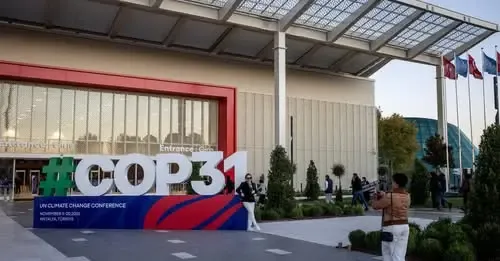
COP31 opened in Antalya, Turkey on 9 November 2026 , with nearly 200 countries in attendance.
COP31 President Murat Kurum called for an 'implementation COP', focused on closing the gap between climate pledges and real-world outcomes.
The WMO State of the Climate Update 2026 confirmed the past 12 years as individually the warmest on record, with the last four years as the top four hottest.
The Paris Agreement 's 1.5°C target was reaffirmed as the guiding benchmark for international climate action.
Climate finance goals include at least $300 billion annually for developing countries by 2035 , scaling to $1.3 trillion from all sources.
UN Climate Change Executive Secretary Simon Stiell said global renewables saved an estimated $265 billion in the first half of 2026 alone.
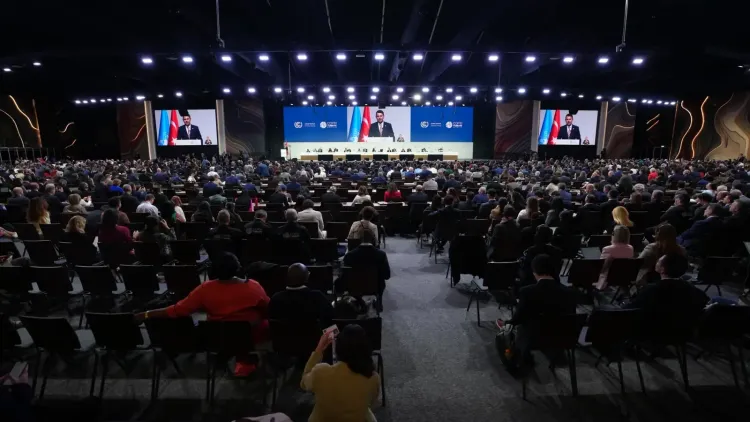
The 31st Conference of Parties (COP31) to the United Nations Climate Change Conference opened in Antalya, Turkey, on Monday, 9 November 2026, with COP31 President Murat Kurum urging nearly 200 countries to transform climate commitments into measurable, on-the-ground results. Kurum framed the two-week summit as an 'implementation COP' — a deliberate shift from pledge-making to delivery.
Key Themes at the Opening
Kurum told delegates that climate change can no longer be treated in isolation from other global pressures. 'Each crisis makes the others worse,' he said, pointing to conflict, geopolitical tensions, economic uncertainty, food insecurity and unequal access to technology as forces compounding planetary heating.
He highlighted how climate impacts are crossing borders, with drought, flooding, water scarcity and extreme heat disrupting food production, supply chains, migration patterns and public health. 'A drought in one part of the world is felt at the dinner table in another,' Kurum said.
The 1.5°C Target and Climate Data
Kurum reaffirmed the Paris Agreement's goal of limiting global temperature increases to 1.5 degrees Celsius above pre-industrial levels, calling it 'our guide' and pledging that COP31 'will be frank about what the science tells us.' This comes as the World Meteorological Organisation (WMO) State of the Climate Update 2026, released on the summit's opening day, confirmed that the past 12 years have each individually been the warmest on record, with the last four years ranking as the top four hottest ever.
The Belém Mission to 1.5 report, jointly published ahead of COP31 by the COP Presidencies of Turkey, Australia, Brazil and Azerbaijan, outlines key opportunities, barriers and solutions to keep the 1.5°C threshold within reach while strengthening adaptation and resilience.
Electrification, Finance and Turkey's Role
Kurum highlighted Turkey's '35-by-35' Global Electrification Pledge, which targets raising electricity's share of final energy consumption to 35 per cent by 2035. Renewable energy, stronger grids, energy storage, energy efficiency, clean transport and green industry were all cited as 'mutually reinforcing components' of the energy transition.
On climate finance, Kurum recalled the goal agreed in Baku of at least $300 billion annually for developing countries by 2035, alongside a broader call to scale finance from all sources to at least $1.3 trillion annually. 'Now our promises must be backed by capital. That capital must fund investment. And that investment must deliver results,' he said.
Kurum also invoked Turkey's geopolitical positioning, pledging that 'Turkey has long served as a bridge — we are ready to take on that responsibility again.'
What Other Leaders Said
Chris Bowen, President of Negotiations for COP31, described the summit as 'an opportunity to show what cooperation can deliver at this crucial time for both our climate and global energy security.' He called for unlocking finance and investment, accelerating electrification and boosting action on the ocean, which he called 'nature's greatest climate regulator.'
UN Climate Change Executive Secretary Simon Stiell pointed directly at the costs of fossil fuel dependency, saying: 'This year's fossil fuel cost chaos has delivered a global shockwave, hitting households hard and spreading inflation like a cancer.' Stiell noted that global renewables reportedly saved $265 billion in the first half of this year alone, arguing that the economic case for the energy transition is now beyond dispute.
What Comes Next
Over the next two weeks, negotiators will work to translate broad commitments on finance, electrification and adaptation into binding or operational frameworks. The Presidency's stated priority is ensuring that decisions taken in Antalya produce visible results — from more resilient urban infrastructure and productive farmland to cleaner industrial production and lower household energy costs. Whether COP31 can live up to its 'implementation' billing will depend largely on whether wealthy and emerging economies can bridge long-standing divides over finance and technology transfer.
Point of View
While donor countries have yet to demonstrate reliable disbursement mechanisms. Turkey's role as host and self-styled geopolitical bridge is intriguing, but the real test is whether Antalya can produce operational frameworks rather than further aspirational language.
NationPress
9 Nov 2026
Frequently Asked Questions
What is COP31 and where is it being held?
COP31 is the 31st Conference of Parties to the UN Climate Change Conference, a two-week summit bringing together nearly 200 nations to advance global climate action. It is being held in Antalya, Turkey, opening on 9 November 2026.
What does 'implementation COP' mean?
COP31 President Murat Kurum used the term 'implementation COP' to signal a shift in focus from making new pledges to actually delivering on existing ones. The goal is to ensure decisions taken in Antalya translate into tangible improvements — such as cleaner energy, resilient infrastructure and lower household costs — rather than remaining as commitments on paper.
What does the WMO climate update released at COP31 show?
The WMO State of the Climate Update 2026, released on the opening day of COP31, shows that each of the past 12 years has individually been the warmest on record. The past four years rank as the top four hottest years ever measured.
What are the climate finance targets being discussed at COP31?
The summit is working from a finance goal agreed in Baku of at least $300 billion annually for developing countries by 2035, with a broader call to scale climate finance from all sources to at least $1.3 trillion per year. COP31 President Kurum emphasised that pledges must now be 'backed by capital' that delivers measurable results.
What is Turkey's '35-by-35' electrification pledge?
Turkey's '35-by-35' Global Electrification Pledge sets an objective of increasing electricity's share of final energy consumption to 35 per cent by 2035. COP31 President Kurum highlighted it as part of a broader energy transition strategy involving renewables, grid upgrades, energy storage and clean transport.