COP31 kicks off in Antalya: 200 nations push for climate finance, clean energy scale-up
Synopsis
COP31 in Antalya is not a routine climate summit — it opens under UNEP's stark warning that even tripling international finance flows would cover less than 30% of what developing nations need to survive intensifying climate impacts. With 1.5°C overshoot now described as unavoidable by scientists, the pressure on 200 nations to move from pledges to delivery has never been higher.
Key Takeaways
COP31 opened on 8 November 2026 in Antalya, Turkey , with representatives from nearly 200 countries attending a two-week summit ending 20 November .
UNEP's 2026 Adaptation Gap Report warns that global warming is on course to exceed 1.5°C , with adaptation finance needs estimated at $305 billion annually by 2035.
Even tripling public finance flows — the COP30 aspiration — would cover only 20–29% of developing countries' actual climate adaptation needs.
154 countries have submitted 2035 climate targets covering 71% of global emissions, but the UN says emissions reduction progress remains 'substantially off track.' India's lead climate negotiator Ajay Mathur called for a clear baseline and monitoring mechanism to reach $300 billion in adaptation finance by 2035.
Turkey leads the host Presidency; Australia's Minister Chris Bowen serves as President of Negotiations.
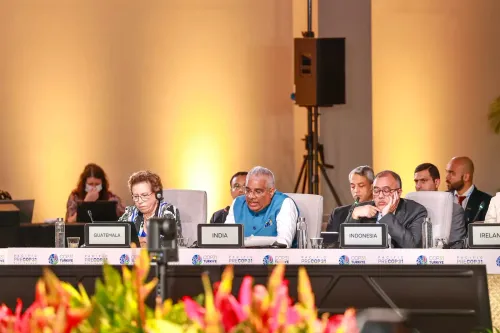
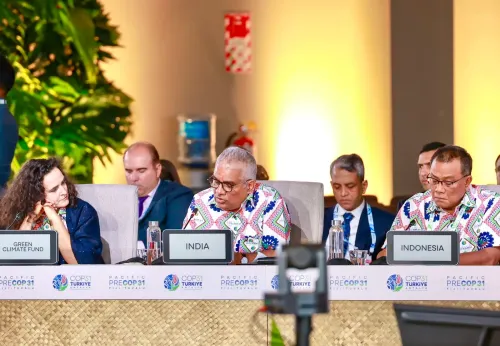
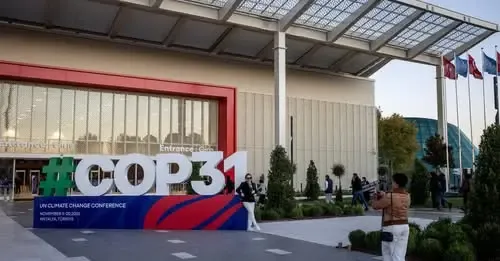
Nearly 200 nations — including India — have converged on the Mediterranean resort city of Antalya, Turkey, for the 31st Conference of the Parties (COP31) to the United Nations Framework Convention on Climate Change (UNFCCC), which opened on Monday, 8 November 2026. The two-week summit, running until 20 November, centres on accelerating clean energy deployment, scaling up climate finance, and strengthening resilience in the face of mounting climate impacts.
The Stakes at COP31
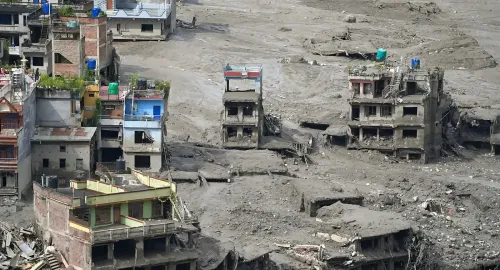
This year's summit unfolds against a sobering scientific backdrop. The United Nations Environment Programme's (UNEP) 2026 Adaptation Gap Report — titled 'Ready? Not' — warns that global warming is set to exceed 1.5 degrees Celsius, adaptation finance falls far short of requirements, and losses and damages are mounting across vulnerable nations. The report finds that international public adaptation finance flows from developed to developing countries remain well below the estimated need of $305 billion annually by 2035.
Critically, even if the aspiration set at COP30 — to triple international public finance flows to developing countries by 2035 — is fully realised, it would cover only 20 to 29 per cent of what those countries actually need to manage intensifying climate impacts. This yawning gap between commitment and requirement frames much of the negotiating agenda in Antalya.
Governance Structure and Key Roles
Turkey holds the COP31 host Presidency and leads the global climate action agenda, while Australia has exclusive authority over the political negotiations. Minister Chris Bowen serves as President of Negotiations. The World Meteorological Organisation (WMO) will support proceedings by providing authoritative scientific observations, including the launch of its flagship State of Climate Update 2026 on the summit's opening day — an annual science-based assessment of key climate indicators and their real-world impacts.
What Negotiators and Experts Expect
Progress at Antalya is expected to be incremental rather than transformative. UN climate chief Simon Stiell set the tone in September, saying: 'No single COP can fix this global crisis, but each takes meaningful steps forward.'
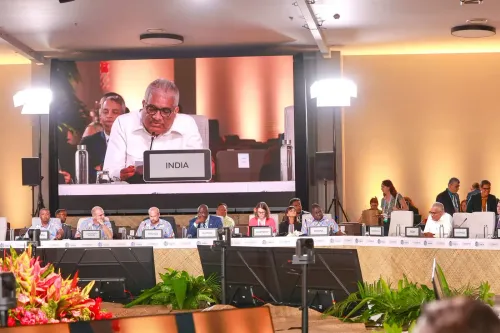
Ajay Mathur, India's Lead Negotiator at the Paris Agreement and former Director General of the International Solar Alliance, told reporters that adaptation finance remains a central but contested issue. 'If we want to hit $300 billion in adaptation finance by 2035, we need a clear baseline and a monitoring mechanism that reflects real needs on the ground. Public money has to go where markets can't — deep adaptation, urban resilience and small enterprise,' he said.
Mathur also highlighted Article 6 carbon markets as a critical lever. 'I look at Article 6 carbon markets not just as an accounting device, but as the honey, the nucleus around which international capital can flow for domestic decarbonisation. In India, we've now institutionalised this through our carbon market, the CCTS (Carbon Credit Trading Scheme). The key question now is how we make it work,' he added.
Aarti Khosla, Director of Climate Trends, characterised this as an extraordinary moment. 'We are not in an ordinary year. It's taking place against a backdrop of deep geopolitical fragmentation, cost-of-living pressures being felt across the world, and tightening national and international budgets,' she said. Khosla also flagged one of the strongest El Niño events seen this year — driving floods, droughts, wildfires, landslides, melting glaciers, and extreme heat — as an urgent physical reality facing negotiators. 'The latest science is unambiguous: we are in an era of overshoot, and exceeding 1.5 degree Celsius is now unavoidable,' she said.
Where Nations Stand on Climate Plans
The UN's annual review of national climate plans, released on 27 October, shows that 154 countries have lodged 2035 targets with the UN, covering 71 per cent of global emissions, excluding land use. The UN's own assessment offered a mixed verdict: 'The good is that the quality of plans is much better, legislation is tighter, tracking is clearer. The bad is that the progress in lowering projected emissions from the 1.5 degree Celsius targets remains substantially off track.'
Leading climate advocacy organisation Climate Action Network (CAN) Europe argues that the direction of travel has largely been agreed upon — what is missing is delivery: transitioning away from fossil fuels, scaling up renewable-powered electrification, operationalising a just transition, and channelling adequate finance to developing countries.
Spotlight Issues: Clean Cooking, Youth, and Solar
Beyond the high-level finance and emissions debates, COP31 will also put a spotlight on grassroots and youth dimensions of climate action. Nearly two billion people worldwide still lack access to clean cooking — a gap with direct consequences for climate, health, household costs, and livelihoods. Solar Cookers International (SCI) will present solar cooking as a scalable, practical solution at the summit.
The Children and Youth Pavilion (CYP), first established at COP27, returns as the only fully youth-led space within the UN Climate Conference. At COP31, it brings together 10 young spokespersons aged 14 to 31 from diverse backgrounds — spanning Indigenous climate advocacy, environmental research, policy, and community organising — to inject youth perspectives into formal negotiations.
Whether Antalya delivers a credible step change on finance and fossil fuel commitments, or ends as another round of deferred action, will be determined over the coming two weeks.
Point of View
Fiscal austerity, and a physical climate system that has already crossed into overshoot territory. The numbers are unambiguous: tripling public finance flows, the headline ambition from COP30, still leaves developing nations with barely a quarter of what they need. What mainstream coverage tends to gloss over is that the gap is structural, not cyclical — no single COP can close it without fundamentally rethinking who bears the cost of a crisis caused disproportionately by the developed world. India's push to operationalise Article 6 carbon markets through the CCTS is a pragmatic hedge, but it also reflects a deeper anxiety: that multilateral public finance will remain insufficient, forcing developing nations to build alternative pipelines for private capital. The real test of Antalya will not be the communiqué — it will be whether monitoring mechanisms with teeth are attached to any finance commitment made.
NationPress
8 Nov 2026
Frequently Asked Questions
What is COP31 and where is it being held?
COP31 is the 31st Conference of the Parties to the United Nations Framework Convention on Climate Change (UNFCCC), the highest-level annual global climate summit. It is being held in Antalya, Turkey, from 8 to 20 November 2026, with nearly 200 nations participating.
What are the main goals of the COP31 summit?
The summit aims to accelerate clean energy deployment, scale up climate finance for developing nations, and strengthen resilience against worsening climate impacts. Key agenda items include bridging the adaptation finance gap, advancing Article 6 carbon market rules, and pressing for faster fossil fuel transition commitments.
How large is the climate adaptation finance gap highlighted at COP31?
According to UNEP's 2026 Adaptation Gap Report, developing countries need an estimated $305 billion annually in adaptation finance by 2035. Even if the COP30 goal of tripling international public finance flows is achieved, it would cover only 20–29% of that need.
What is India's position at COP31?
India is represented at COP31 by lead negotiator Ajay Mathur, who has called for a clear baseline and monitoring mechanism to reach $300 billion in adaptation finance by 2035. India has also institutionalised its carbon market through the Carbon Credit Trading Scheme (CCTS), positioning Article 6 carbon markets as a key tool for channelling international capital into domestic decarbonisation.
Why do experts say progress at COP31 will be incremental?
UN climate chief Simon Stiell has acknowledged that no single COP can resolve the global climate crisis, and analysts point to deep geopolitical fragmentation, constrained national budgets, and the structural shortfall in finance as reasons progress will be gradual. While 154 countries have submitted 2035 climate targets, the UN's own review says projected emissions reductions remain substantially off track from 1.5°C pathways.