India offers Pacific partners coastal resilience and space tech ahead of COP31
Synopsis
India's environment minister didn't just attend the Pre-COP31 meeting in Fiji — he arrived with a concrete offer. From ISRO's Earth-observation tools to coastal management frameworks, New Delhi is positioning itself as a climate technology partner for Pacific Island nations most threatened by rising seas, while pushing hard for equity and adaptation finance to take centre stage at COP31 in Turkey.
Key Takeaways
Union Minister Bhupender Yadav offered India's coastal resilience and space-based climate expertise to Pacific partners at the Pre-COP31 meeting in Suva, Fiji on 6 October 2026 .
India's offer covers shoreline monitoring, inundation assessment, cyclone early warning, and climate-risk assessment using ISRO , NCSCM , and NCCR capabilities.
Yadav reiterated India's position on CBDR-RC , calling for equal emphasis on adaptation, mitigation, and means of implementation ahead of COP31 .
The Tuvalu Coastal Adaptation Project was cited as a working model of effective international climate cooperation.
COP31 is scheduled to be held in Turkey in November 2026 , co-hosted by Australia, Fiji, and Tuvalu at the preparatory stage.
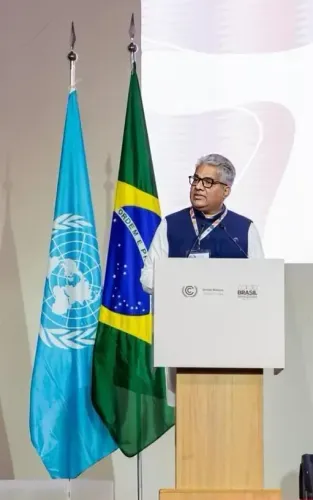
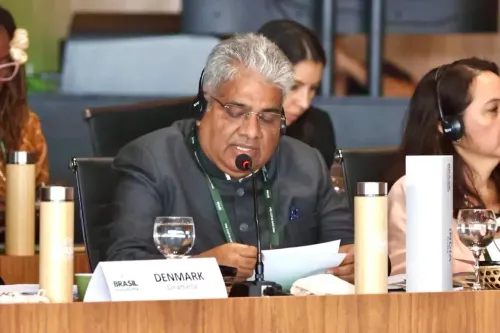
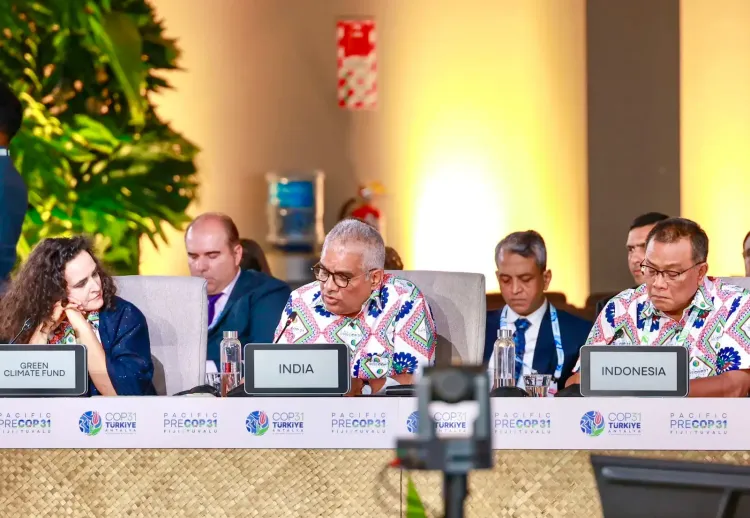
Union Environment, Forest and Climate Change Minister Bhupender Yadav on Tuesday, 6 October 2026, offered to share India's expertise in coastal resilience, climate-risk assessment, and space-based applications with Pacific Island nations, as New Delhi looks to deepen climate cooperation ahead of the COP31 conference scheduled in Turkey in November.
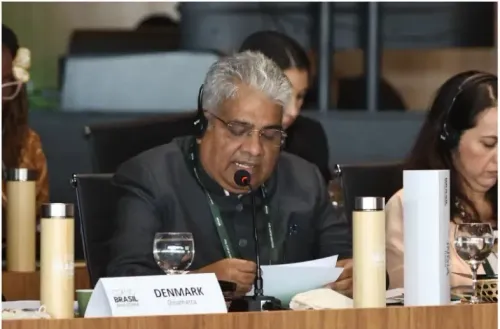
Yadav is leading the Indian delegation at the Pre-COP31 preparatory meetings under the United Nations Framework Convention on Climate Change (UNFCCC), co-hosted by Australia, Fiji, and Tuvalu. The Pre-COP is a multilateral forum held weeks before the annual UN climate summit to align positions and build consensus.
Key Offer to Pacific Nations
Addressing the Leaders' Plenary in Suva, Fiji, Yadav underscored that India, with its extensive coastline and island territories, has firsthand understanding of the vulnerabilities confronting Pacific Island Countries. He highlighted a robust national knowledge base developed through premier institutions including the Indian Space Research Organisation (ISRO), the National Centre for Sustainable Coastal Management (NCSCM), and the National Centre for Coastal Research (NCCR).
India's capabilities on offer include vulnerability assessments of coasts, mapping of shoreline changes, development of marine spatial plans, integrated coastal management strategies, and Blue Economy frameworks, according to the Ministry of Environment, Forest and Climate Change.
Space and Earth-Observation Capabilities
Yadav noted that India is deploying its space ecosystem and Earth-observation tools for shoreline monitoring, inundation assessment, cyclone tracking, and extreme-weather early warning systems. He formally offered to extend these space-based solutions to Pacific partners, framing it as a concrete expression of South-South cooperation on climate technology transfer.
This comes amid growing calls from small island nations for developed countries to deliver on long-promised climate finance and technology commitments before COP31 — where adaptation financing is expected to be a defining flashpoint.
India's Equity Push at Pre-COP
The minister reiterated India's longstanding position that the principle of Equity and Common but Differentiated Responsibilities and Respective Capabilities (CBDR-RC) must be upheld in both letter and spirit. He called for balanced attention across adaptation, mitigation, and means of implementation — a formulation that reflects developing-country frustration that mitigation targets receive far more global attention than adaptation finance or technology transfer.
Notably, India has consistently championed the cause of climate-vulnerable nations at multilateral forums, positioning itself as a bridge between the Global South and developed economies on climate diplomacy.
Tuvalu Visit and On-Ground Cooperation
Referring to his visit to Tuvalu, Yadav cited the Tuvalu Coastal Adaptation Project as a model of how international cooperation — particularly the provision of means of implementation — can produce tangible outcomes on the ground. He said the experience had reinforced the value of locally grounded solutions to climate challenges.
Beyond climate technology, India is reportedly working with Pacific partners across health and wellness, renewable energy, resilient infrastructure, early warning systems, IT, agriculture, and capacity building — signalling that New Delhi views the Pacific as a strategic partner, not merely a diplomatic constituency ahead of COP31.
With COP31 weeks away, all eyes are on whether India's offers of knowledge-sharing will translate into formal bilateral agreements and whether the Pre-COP process will produce unified developing-country positions on adaptation finance.
Point of View
And framing South-South cooperation as a substitute risks obscuring that deficit. India's CBDR-RC push is legitimate, but its credibility depends on whether New Delhi can also pressure developed nations on climate finance rather than simply positioning itself as a benevolent middle power. The Tuvalu Coastal Adaptation Project is a genuine success story; the question is whether it is a model or an exception.
NationPress
6 Oct 2026
Frequently Asked Questions
What did India offer to Pacific nations at the Pre-COP31 meeting?
India offered to share expertise in coastal resilience, climate-risk assessment, and space-based applications including shoreline monitoring, inundation assessment, and cyclone early warning systems. The offer covers tools developed by ISRO, NCSCM, and NCCR, and was made by Environment Minister Bhupender Yadav at the Leaders' Plenary in Suva, Fiji on 6 October 2026.
What is Pre-COP31 and where is it being held?
Pre-COP31 is a preparatory meeting held under the UNFCCC ahead of the main COP31 climate summit, designed to align national positions before formal negotiations begin. It is being co-hosted by Australia, Fiji, and Tuvalu, with the main COP31 conference scheduled in Turkey in November 2026.
What is India's position on climate equity at COP31?
India has called for strict adherence to the principle of Equity and Common but Differentiated Responsibilities and Respective Capabilities (CBDR-RC). Minister Yadav urged equal attention to adaptation, mitigation, and means of implementation, reflecting developing-country concerns that adaptation finance and technology transfer have been underprioritised.
What is the Tuvalu Coastal Adaptation Project?
The Tuvalu Coastal Adaptation Project is a climate resilience initiative cited by Minister Yadav as an example of effective international cooperation delivering tangible on-ground results for one of the world's most climate-vulnerable nations. Yadav visited Tuvalu as part of his pre-COP engagements and described the project as a model for locally grounded climate solutions.
Which Indian institutions are involved in coastal and climate research?
India's climate and coastal capabilities are anchored by the Indian Space Research Organisation (ISRO) for Earth-observation and space-based applications, the National Centre for Sustainable Coastal Management (NCSCM), and the National Centre for Coastal Research (NCCR). These bodies have developed expertise in shoreline mapping, vulnerability assessments, and integrated coastal management plans.