Bhupender Yadav at COP31: Climate action must match negotiations with ground-level results
Synopsis
At COP31's final phase in Antalya, India's Environment Minister Bhupender Yadav delivered a pointed message: climate negotiations mean nothing without ground-level action. Speaking at the CDRI Ministerial Dialogue, he linked affordable finance and technology access to resilience outcomes — placing India squarely at the centre of the developing-world push for real climate delivery.
Key Takeaways
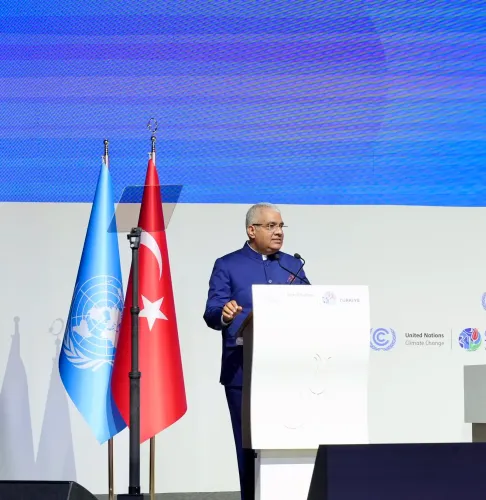
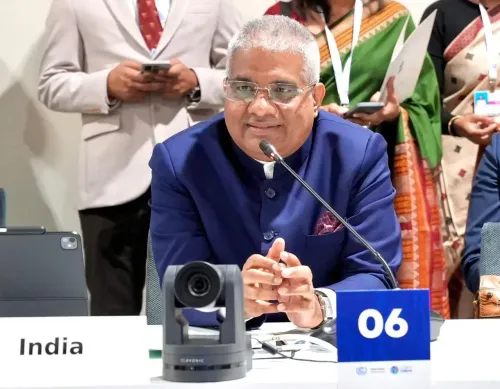
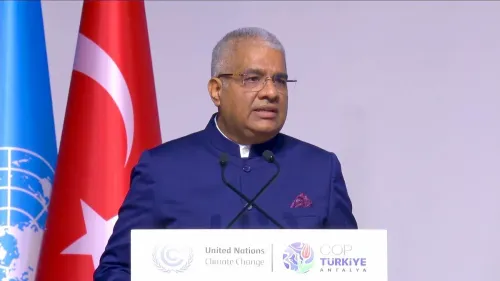
Union Minister Bhupender Yadav spoke at the CDRI Ministerial Dialogue at COP31 in Antalya, Turkey on 18 November 2026 .
Yadav stressed that climate action must go hand in hand with climate negotiations, measured by on-the-ground outcomes .
He called for affordable and sustainable finance , knowledge sharing, and capacity building for developing countries .
India co-founded the Coalition for Disaster Resilient Infrastructure (CDRI) in 2019 , described by Yadav as a unique global initiative.
Nations including Namibia , Trinidad and Tobago , Japan , Guatemala , and Jordan raised distinct resilience and finance priorities at the dialogue.
COP31 is in its final phase , with pressure mounting to finalise a credible global climate finance framework.
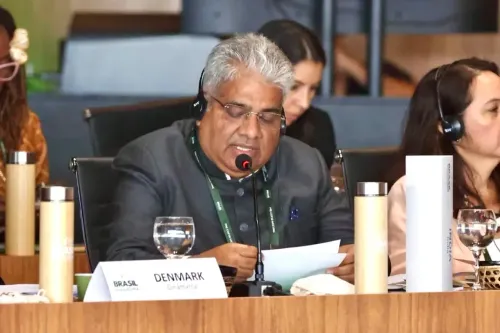
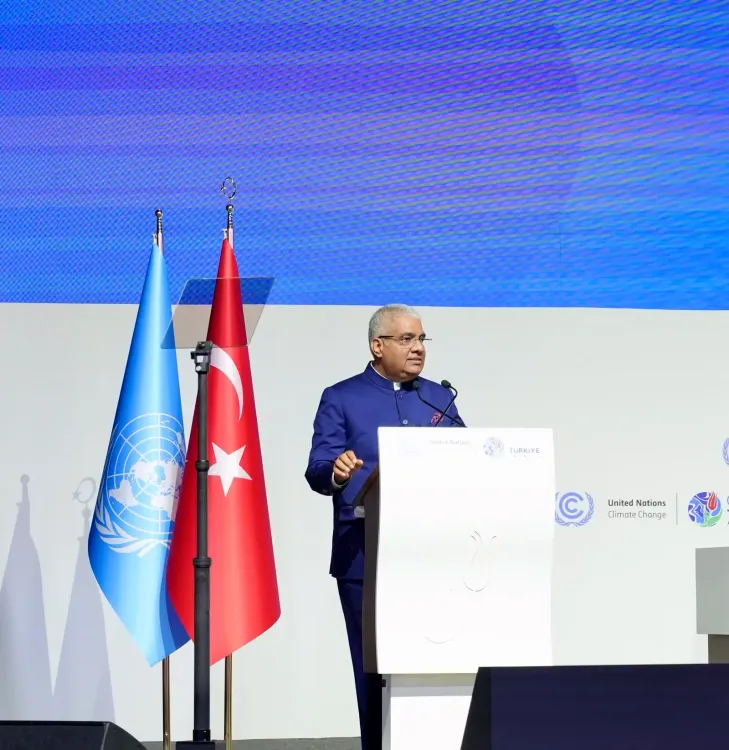
Union Minister for Environment, Forest and Climate Change Bhupender Yadav on Wednesday, 18 November 2026, called for climate action to keep pace with climate negotiations at the UN Climate Change Conference (COP31) in Antalya, Turkey, stressing that the true measure of international commitments lies in their translation into concrete, on-the-ground outcomes. Speaking at the Coalition for Disaster Resilient Infrastructure (CDRI) Ministerial Dialogue on 'Disaster Resilient Infrastructure for Climate Adaptation' — a high-profile side event as COP31 entered its final phase — Yadav underscored India's leadership in mobilising global cooperation on resilient infrastructure.
Key Demands: Finance, Technology and Capacity Building
Yadav emphasised the urgent need for practical outcomes across three pillars: adaptation, mitigation, and resilience. He called for stronger international cooperation backed by affordable and sustainable finance, robust institutional frameworks, and enhanced technical capacities. The Minister specifically highlighted the importance of knowledge sharing and capacity building for developing countries, arguing that access to proven technologies remains a critical bottleneck for nations striving to strengthen their institutional capabilities.
India's Role in CDRI and Global Resilience
Describing the Coalition for Disaster Resilient Infrastructure (CDRI) as a unique and transformative global initiative, Yadav highlighted its role in convening governments, international institutions, development partners, and technical experts under a common framework. The CDRI — co-founded by India in 2019 at the UN Climate Action Summit — has since grown into a multilateral platform focused on exchanging best practices and fortifying infrastructure against climate-induced disasters. Notably, Yadav observed that discussions at COP31 had firmly placed resilience at the top of the global climate agenda, reinforcing the need to convert shared commitments into collaborative, measurable initiatives.
What Participating Nations Said
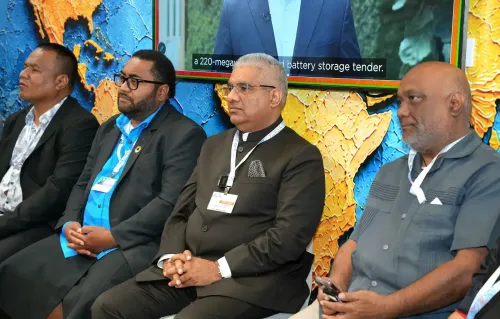
The ministerial dialogue drew candid interventions from several nations, each surfacing distinct vulnerabilities and priorities. Trinidad and Tobago stressed the importance of grant-based and affordable finance, as well as risk assessment tools and cooperation in agro-processing. Namibia drew attention to the devastating impact of drought on rural livelihoods and demanded adequate funding to shore up infrastructure resilience. Japan focused on accelerating the deployment of early warning systems, sharing disaster risk reduction expertise, and strengthening regional networks in vulnerable countries. Guatemala reiterated the need for affordable finance, while Jordan called for greater facilitation of finance access and strengthened infrastructure planning.
What This Signals for COP31's Final Phase
The CDRI dialogue came as COP31 moved into its concluding stretch, where negotiators face mounting pressure to finalise a credible global framework on climate finance — particularly the successor to the $100 billion annual developed-country pledge that developing nations argue has been chronically underfunded. India's consistent messaging at this conference links financing ambition directly to implementation capacity, a position that places it at the centre of the broader North-South fault line running through the talks. With the conference's final sessions underway, observers will watch whether the resilience agenda translates into binding commitments or remains aspirational language in the final text.
Point of View
But the gap between resilience rhetoric and bankable finance deals at COP31 remains wide. The absence of concrete disbursement timelines from developed countries — even as the $100 billion pledge saga lingers — risks making ministerial dialogues like this one another entry in a long record of aspirational statements. India's real leverage will come from whether CDRI's membership translates into a unified negotiating bloc that demands verifiable finance flows, not just expressions of solidarity.
NationPress
18 Nov 2026
Frequently Asked Questions
What did India's Minister Bhupender Yadav say at COP31?
Yadav called for climate action to go hand in hand with climate negotiations, insisting that the success of international commitments must be judged by concrete outcomes on the ground. He also stressed affordable finance, technology access, and capacity building for developing countries.
What is the Coalition for Disaster Resilient Infrastructure (CDRI)?
The CDRI is a multilateral platform co-founded by India in 2019 that brings together governments, international institutions, development partners, and technical experts to promote resilient infrastructure. It was described by Yadav at COP31 as a unique global initiative for sharing best practices and strengthening infrastructure against climate-induced disasters.
Where is COP31 being held and what stage is it at?
COP31 is being held in Antalya, Turkey, and had entered its final phase as of 18 November 2026. The conference is a UN Climate Change Conference where nations negotiate global climate commitments.
Which countries raised concerns at the CDRI Ministerial Dialogue?
Namibia highlighted the severe impact of drought on rural livelihoods and called for adequate funding. Trinidad and Tobago stressed grant-based finance and risk assessment tools. Japan focused on early warning systems, while Guatemala and Jordan both called for more affordable and accessible climate finance.
Why does India's stance on climate finance matter at COP31?
India consistently links financing ambition to implementation capacity, positioning itself as a voice for developing nations in the North-South divide over climate finance. With the successor to the $100 billion developed-country pledge still unresolved, India's push for affordable finance and technology transfer is central to the final-phase negotiations at COP31.