COP31: India pushes India-SIDS partnership for resilient coasts and oceans
Synopsis
At COP31 in Antalya, India's Environment Minister Bhupender Yadav didn't just show up — he came with a concrete four-pillar agenda for India-SIDS climate cooperation, drawing on India's 11,099-km coastline experience and pitching frameworks like CDRI and IRIS to vulnerable island nations whose very existence is at stake from rising seas.
Key Takeaways
Bhupender Yadav addressed a high-level ministerial event at COP31 in Antalya, Turkey on 17 November 2026 .
India called for deeper partnership with Small Island Developing States (SIDS) on coastal resilience, citing its 11,099-km coastline experience.
India's MISHTI (Mangrove Initiative for Shoreline Habitats and Tangible Incomes) and early warning systems in Odisha and Andhra Pradesh were highlighted as models for knowledge exchange.
Four priority areas identified: coastal risk assessment, ecosystem-based approaches, island-context technology partnerships, and institutional capacity-building.
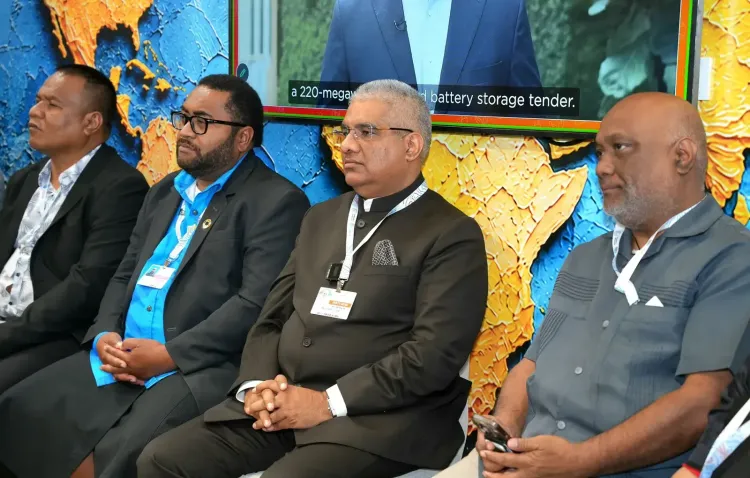
Ministerial representatives from Mauritius , Kiribati and the Marshall Islands participated, alongside officials from Fiji , TERI and ISA .
Existing frameworks — CDRI , IRIS and FIPIC — were cited as platforms for renewable energy and disaster resilience cooperation.
Union Minister for Environment, Forest and Climate Change Bhupender Yadav on Tuesday, 17 November called for deepening India's partnership with Small Island Developing States (SIDS) to build resilient coasts and oceans, stressing the need for knowledge-sharing, technology partnerships and practical cooperation at the UN Climate Change Conference (COP31) in Antalya, Turkey.
Yadav was addressing a high-level ministerial event titled 'India–SIDS Partnership for Resilient Coasts and Oceans: Sharing Knowledge, Technology and Solutions', organised jointly by The Energy and Resources Institute (TERI) and the Ministry of Environment, Forest and Climate Change in partnership with the International Solar Alliance (ISA), as COP31 entered its final week at the Mediterranean resort city.
Why Oceans Are at the Heart of This Partnership
Yadav underscored that healthy oceans and resilient coastlines are fundamental to economic security, ecological stability and the well-being of coastal populations. He highlighted the mounting challenges confronting island nations: sea-level rise, coastal erosion, ocean warming, coral bleaching, more intense storms and marine pollution — threats that affect homes, infrastructure, livelihoods and, in some cases, the long-term habitability of entire territories.
Guided by Prime Minister Narendra Modi's vision and the principle of Vasudhaiva Kutumbakam (the world is one family), India 'believes that environmental protection and development must advance together, with climate resilience centred on people, livelihoods and ecosystems,' the minister said.
India's Coastal Experience on the Table
The minister drew attention to India's approximately 11,099-km coastline and the country's work in scientific coastal assessment, ecosystem conservation, shoreline management and disaster preparedness. He specifically cited the Mangrove Initiative for Shoreline Habitats and Tangible Incomes (MISHTI), which advances mangrove conservation and restoration while supporting coastal livelihoods.
India's experience in ocean forecasting and early warning systems — particularly in the states of Odisha and Andhra Pradesh — was highlighted as a key area for knowledge exchange with SIDS.
Four Priority Areas for Enhanced Cooperation
Yadav outlined four concrete pillars for strengthened India-SIDS collaboration:
1. Coastal risk and early warning: Joint work on coastal risk assessment, shoreline monitoring and early warning systems.
2. Ecosystem-based approaches: Mangrove conservation, coral reef and seagrass protection, wetland restoration and sustainable management of coastal and marine resources.
3. Technology partnerships for island contexts: Solar-powered solutions, decentralised renewable energy, water security and climate-resilient infrastructure tailored to island geographies.
4. Institutional and capacity-building partnerships: Support for joint project preparation and country-led pilot initiatives.
Yadav emphasised that cooperation must be guided by each country's own priorities and national circumstances, with solutions adapted to local geography, ecosystems and institutional capacities.
Who Was in the Room
The event drew ministerial-level participation from Mauritius (represented by Rajesh Anand Bhagwan), Kiribati (Tokaibure Rabaua) and the Marshall Islands (Jess Gasper), along with senior officials from Fiji, TERI and ISA. India's existing multilateral frameworks — the Coalition for Disaster Resilient Infrastructure (CDRI), Infrastructure for Resilient Island States (IRIS) and Forum for India-Pacific Islands Cooperation (FIPIC) — were cited as platforms through which deeper cooperation on renewable energy and disaster resilience is being pursued.
As COP31 moves toward its closing sessions, the ministerial exchange signals India's intent to position itself as a knowledge and technology partner of choice for vulnerable island states navigating the accelerating impacts of climate change.
Point of View
But the real test lies in follow-through — CDRI and FIPIC have existed for years with modest on-the-ground impact in Pacific islands. What SIDS actually need is fast-disbursing adaptation finance, not more institutional architecture; India's pitch on technology and knowledge is valuable but cannot substitute for the loss-and-damage finance that remains the unresolved flashpoint of this COP.
NationPress
17 Nov 2026
Frequently Asked Questions
What did India announce at COP31 regarding Small Island Developing States?
At COP31 in Antalya on 17 November, Environment Minister Bhupender Yadav called for strengthened India-SIDS partnership focused on resilient coasts and oceans, proposing four priority areas: coastal risk assessment, ecosystem-based conservation, island-context technology partnerships, and institutional capacity-building. The event was co-organised by TERI and the Ministry of Environment in partnership with the International Solar Alliance.
What is the MISHTI initiative that India cited at COP31?
MISHTI stands for Mangrove Initiative for Shoreline Habitats and Tangible Incomes. It is India's national programme for mangrove conservation and restoration that also supports coastal livelihoods, and was highlighted by Minister Yadav as a model that could be shared with SIDS facing coastal erosion and habitat loss.
Which island nations participated in India's COP31 coastal resilience event?
Ministerial-level representatives from Mauritius (Rajesh Anand Bhagwan), Kiribati (Tokaibure Rabaua) and the Marshall Islands (Jess Gasper) attended the high-level event, along with senior officials from Fiji, TERI and the International Solar Alliance.
What multilateral frameworks is India using to deepen SIDS cooperation?
India cited the International Solar Alliance (ISA), Coalition for Disaster Resilient Infrastructure (CDRI), Infrastructure for Resilient Island States (IRIS) and Forum for India-Pacific Islands Cooperation (FIPIC) as the key platforms through which it seeks to advance renewable energy, disaster resilience, resilient infrastructure and climate adaptation with SIDS.
Where is COP31 being held and what stage has it reached?
COP31 — the UN Climate Change Conference — is being held in Antalya, Turkey's Mediterranean resort city. As of 17 November, the conference had entered its final week, with high-level ministerial events running alongside negotiating sessions on climate finance, adaptation and loss and damage.